Understanding how students think about math goes far beyond simply checking if an answer is right or wrong. It’s about delving into their problem-solving strategies, uncovering misconceptions, and identifying those pivotal “aha” moments. This is precisely where a well-designed math running record template becomes an invaluable tool for educators seeking to gain deeper insights into their students’ mathematical journeys. It allows us to move beyond surface-level assessment and truly understand the cognitive processes at play.
Gone are the days when a test score alone was deemed sufficient to gauge a student’s mathematical proficiency. While summative assessments have their place, they often fail to capture the nuances of a child’s thinking. Do they understand the concept but make a computational error? Are they relying on inefficient strategies? Are they guessing, or do they have a solid grasp of the underlying principles? These are the kinds of questions a traditional test might leave unanswered.
By observing students as they engage with math tasks, we can gather rich qualitative data that informs our teaching in profound ways. This article will explore the power of using a structured template to document these observations, offering practical guidance on what to look for and how to leverage this information to foster stronger mathematical understanding in every learner.
Unpacking the Power of a Math Running Record
At its heart, a math running record is an observational assessment tool designed to document a student’s thinking and strategies as they solve mathematical problems, much like a reading running record tracks a reader’s fluency and comprehension. Instead of just marking an answer correct or incorrect, the focus shifts to the *process* a student uses. This includes observing their verbalizations, their use of manipulatives, their written work, and even their body language, all providing clues to their internal thought processes.
This approach offers a stark contrast to many traditional paper-and-pencil tests, which often only reveal the final product. Imagine a student struggling with a multi-step problem. A traditional test would simply show a wrong answer. A math running record, however, would allow an educator to pinpoint exactly *where* the breakdown occurred—was it misunderstanding the question, an error in calculation, or difficulty with a specific strategy? This diagnostic power is truly transformative for targeted instruction.
For the student, this type of assessment feels less like a high-stakes test and more like a collaborative problem-solving session. This reduces anxiety and encourages them to articulate their thinking, which is a crucial skill in itself. When students feel comfortable explaining their methods, even if incorrect, it opens a window for teachers to guide them more effectively towards correct understanding.
For the teacher, the data collected from these records is gold. It moves beyond generic classroom observations, providing specific evidence of individual student strengths and areas for growth. This evidence then directly informs instructional decisions, allowing teachers to differentiate lessons, plan small group interventions, and select appropriate scaffolding for each learner. It helps educators meet students where they are.
Implementing a math running record typically involves a one-on-one interaction between the teacher and the student. The teacher presents a specific math task or series of tasks, ranging from basic fact recall to complex word problems, and carefully notes the student’s responses and strategies on the pre-designed template. This careful documentation ensures consistency and allows for easy comparison over time.
What sorts of things are we looking for during these observations? We might be documenting a student’s counting strategies (e.g., counting all, counting on), their approach to addition or subtraction (e.g., using fingers, drawing pictures, mental math, regrouping), their understanding of place value, or their ability to apply a particular concept in a problem-solving scenario. The beauty is that the template can be customized to focus on specific learning objectives.
Essential Elements of a Functional Math Running Record Template
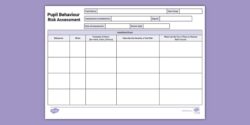
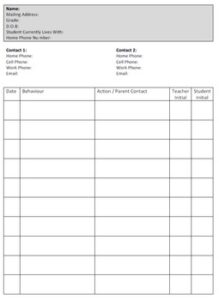
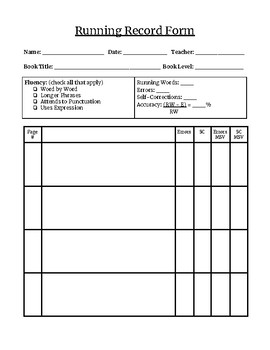
An effective math running record template provides a structured way to capture all this rich information. It typically includes dedicated sections for various types of observations and analyses.
First, there’s the student information section, usually at the top, which includes the student’s name, date, and the specific math concept or skill being assessed. This provides context for the observation.
Next, and most crucially, is the task area where the specific math problem or prompt is written. Adjacent to this, there are sections for “Student Response” where you can note the student’s answer, and “Teacher Notes/Observation” where you record the strategies used, verbalizations, errors made, and any prompts or questions the teacher provided. This observation section is critical for capturing the qualitative data.
Finally, a good template will often include a “Reflection and Next Steps” section. This is where the teacher can synthesize their observations, identify patterns in the student’s thinking, and plan future instruction based on the insights gained. This forward-looking component makes the running record an actionable tool, not just a data collection exercise.
Practical Tips for Implementing Your Math Running Record Template
Getting started with a math running record template might seem a little daunting at first, but with a bit of preparation and practice, it quickly becomes an intuitive and indispensable part of your assessment toolkit. The key is to approach it systematically, ensuring both you and the student are comfortable with the process.
Before you begin, choose a specific mathematical concept or skill you want to assess. Don’t try to cover too much in one session. Select a problem or a set of problems that specifically targets that skill. For instance, if you’re assessing addition with regrouping, choose problems that require regrouping. Having your template ready and customized for the task at hand will streamline the observation process considerably.
During the actual running record session, create a calm and supportive environment. Remind the student that you’re interested in *how* they think, not just if they get the right answer. Encourage them to “think aloud” as they work. Your role is to observe and record, intervening only minimally with neutral prompts like, “Tell me what you’re thinking,” or “How did you get to that step?” Avoid leading questions or correcting them during the task itself.
After the session, take time to analyze your notes. Look for recurring patterns in strategies, common misconceptions, or particular areas of strength. This reflective process is where the true power of the math running record template comes to life. It helps you identify specific teaching points and differentiate instruction effectively.
* Choose specific math concepts to assess in each session.
* Practice using the template beforehand to ensure smooth notation.
* Create a comfortable and low-pressure environment for the student.
* Focus primarily on listening and observing, rather than immediate correction.
* Use open-ended prompts to encourage students to articulate their thinking.
* Regularly review your notes to identify patterns and inform instruction.
Embracing this observational assessment method can profoundly impact your teaching and your students’ learning. By focusing on the *how* of mathematical thinking, rather than just the *what*, you gain an unparalleled understanding of each student’s unique needs. This depth of insight empowers you to tailor your instruction, target interventions, and celebrate the growth of every mathematician in your classroom. It’s a powerful step towards fostering a deeper, more meaningful engagement with mathematics for all.