Embarking on any project, whether it is a small renovation or a large-scale construction, demands meticulous planning and a strong commitment to safety. Neglecting these crucial aspects can lead to costly delays, accidents, and even legal repercussions. Every task, no matter how routine it seems, carries inherent risks that need to be identified, understood, and effectively managed to protect your team, assets, and reputation.
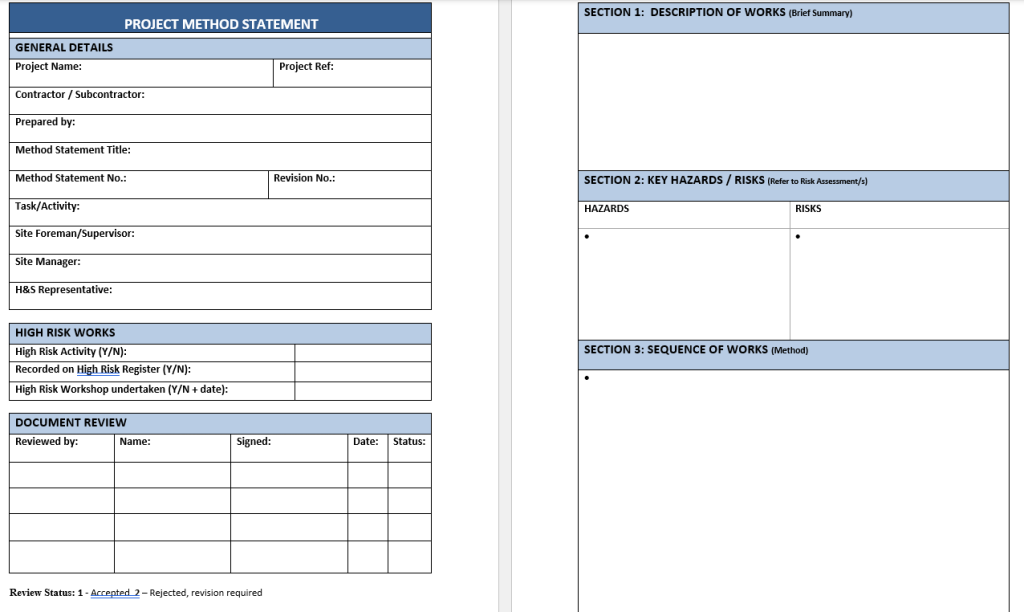
This is where essential documentation comes into play. Tools like method statements and risk assessments are not just bureaucratic hurdles; they are fundamental building blocks for a safe and efficient working environment. They provide a clear roadmap for how work will be performed and how potential dangers will be mitigated. Fortunately, creating these vital documents doesn’t have to be an overwhelming task, especially when you have access to a well-structured method statement and risk assessment template.
Understanding the Essentials: Method Statements and Risk Assessments
A method statement is essentially a detailed blueprint of how a specific job or task will be carried out safely and efficiently. It outlines the sequence of operations, the equipment to be used, the personnel involved, and the control measures put in place to manage any identified risks. Think of it as a step-by-step guide that ensures everyone involved understands their role and the procedures to follow, minimizing confusion and promoting a consistent approach to work. It’s particularly vital for complex or hazardous activities, providing clarity before work even begins.
Complementing the method statement is the risk assessment, which is a systematic process of identifying potential hazards in the workplace, evaluating the likelihood and severity of harm from those hazards, and then deciding on appropriate measures to eliminate or control the risks. These two documents work hand-in-hand: the risk assessment identifies the dangers, and the method statement details *how* those dangers will be managed during the actual work. Together, they form a robust safety strategy that is both proactive and preventative, ensuring that potential issues are addressed long before an incident can occur.
The importance of these documents cannot be overstated. Beyond legal compliance, they serve as critical tools for protecting workers, enhancing operational efficiency, and fostering a culture of safety within your organization. They provide a clear communication channel regarding safety protocols, empower employees to take responsibility for their own safety and that of their colleagues, and ultimately help prevent accidents and injuries. A thorough method statement and risk assessment not only safeguard your people but also protect your project timelines and financial stability from unforeseen disruptions.
While the concept of creating these detailed plans might seem daunting, especially for those new to safety management, utilizing a good method statement and risk assessment template can dramatically simplify the process. These templates are designed to guide you through each necessary step, ensuring that no critical information is overlooked. They provide a standardized format, making the documents easier to understand and review, and helping to maintain consistency across all your projects.
Key Components of a Robust Method Statement
- Project Details: Clear identification of the project, location, and key contacts.
- Scope of Work: A precise description of the tasks to be performed.
- Resources Required: Details of personnel, plant, equipment, and materials.
- Sequence of Operations: A step-by-step breakdown of how the work will proceed.
- Control Measures: Specific actions to manage risks identified in the risk assessment.
- Emergency Procedures: What to do in case of an accident or unforeseen event.
- Roles and Responsibilities: Who is responsible for what during the task.
Elements of an Effective Risk Assessment
- Hazard Identification: Pinpointing anything that could cause harm.
- Who Might Be Harmed: Identifying the people at risk and how.
- Existing Control Measures: Documenting what is already in place to reduce risk.
- Further Actions Required: What additional steps need to be taken to control risks.
- Responsible Person: Who is accountable for implementing new control measures.
- Completion Date: A target date for the implementation of new controls.
- Review Date: When the risk assessment will be re-evaluated.
Streamlining Your Safety Process with a Template
The primary advantage of using a dedicated method statement and risk assessment template is the incredible efficiency it brings to your safety planning. Instead of starting from scratch every time, which can be time-consuming and prone to omissions, a template provides a pre-structured framework. This not only saves valuable time but also ensures consistency across different projects and teams. Everyone working within your organization can adopt the same high standards of documentation, leading to a more coherent and reliable approach to safety management.
A well-designed template acts like an expert guide, prompting you for all the necessary information, even if you’re not a seasoned safety professional. It minimizes the chances of forgetting crucial details, such as specific hazards, necessary personal protective equipment (PPE), or emergency contact information. This structured approach helps in building comprehensive and legally compliant documents, ensuring that all bases are covered and that your team is adequately prepared for any eventuality on site. It transforms a potentially daunting task into a manageable and systematic process.
Furthermore, a good method statement and risk assessment template isn’t just a blank form to fill in. Many effective templates incorporate examples, explanatory notes, or suggested control measures that can be adapted to your specific situation. This guidance is invaluable, especially for unique or complex tasks where identifying all potential risks might be challenging. These built-in prompts serve as a learning tool, helping users develop a deeper understanding of safety principles while simultaneously creating high-quality documentation.
While templates provide a solid foundation, their true power lies in their adaptability. A robust template should be customizable, allowing you to tailor it to the specific nuances of each project, industry, or even individual task. You can add unique project details, specific site conditions, or particular equipment requirements without losing the core structure that ensures comprehensive coverage. Finding a reliable method statement and risk assessment template that offers this balance of structure and flexibility is key to its long-term utility and effectiveness within your organization.
-
Ensuring Legal Compliance: Templates help you meet statutory obligations by including all required fields and information.
-
Fostering a Safety Culture: Consistent use of templates promotes a proactive attitude towards safety planning across all levels of an organization.
-
Improving Project Efficiency: Streamlined documentation means less time spent on paperwork and more time on actual project execution.
-
Training and Onboarding: Templates serve as excellent training aids for new employees or those unfamiliar with safety documentation requirements.
Thorough preparation and a proactive approach to risk management are the cornerstones of successful and safe operations. By systematically identifying potential hazards and planning how to mitigate them, businesses can protect their most valuable assets: their people. This dedication to safety not only prevents accidents but also enhances overall productivity, builds trust, and upholds a strong reputation within the industry and among employees.
Embracing effective tools and systematic processes empowers organizations to navigate the complexities of modern projects with confidence. A well-designed, comprehensive template for method statements and risk assessments is more than just a document; it’s a strategic asset that supports a culture of excellence, ensuring that every task is executed safely, efficiently, and with the utmost care for everyone involved.