Working through the night is a reality for millions, spanning critical sectors from healthcare and manufacturing to logistics and emergency services. While essential for keeping our world running 24/7, night shifts introduce a unique set of challenges that extend far beyond simply working when the sun is down. Employees on night duty face altered biological rhythms, potential social isolation, and distinct safety considerations that differ significantly from daytime operations.
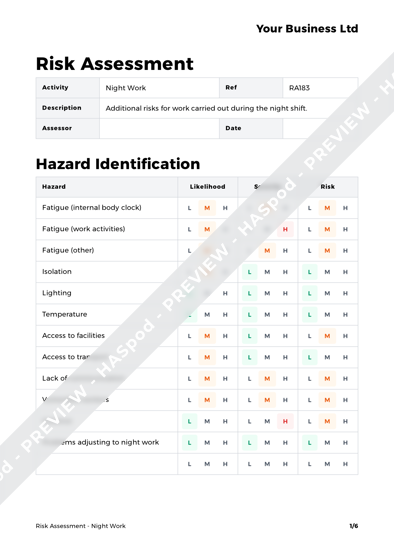
Understanding and mitigating these specific risks is not just a regulatory requirement; it’s a fundamental commitment to employee well-being and operational efficiency. That’s where a comprehensive approach to identifying, evaluating, and controlling hazards becomes indispensable. Having a tailored night shift risk assessment template can be the cornerstone of a proactive strategy, ensuring that the unique pressures of nocturnal work are thoroughly addressed and managed effectively.
Understanding the Unique Challenges of Night Work
The human body is naturally programmed to be active during the day and rest at night, a cycle known as the circadian rhythm. Night work directly disrupts this rhythm, leading to various health and safety implications. Workers often struggle with sleep deprivation, which can manifest as chronic fatigue, reduced alertness, and impaired cognitive function. These factors significantly increase the risk of errors, accidents, and even long-term health issues like cardiovascular disease, digestive problems, and mental health struggles.
Beyond the biological impact, night shifts can also present significant social and psychological challenges. Employees may feel isolated due to reduced interaction with colleagues and difficulties maintaining a social life or participating in family activities. Access to services like canteens, medical support, or even management oversight can also be limited during night hours, potentially leaving workers feeling less supported and more vulnerable. These aspects contribute to a distinct work environment that demands specific attention.
Furthermore, operational risks can be heightened. Reduced staffing levels, less experienced supervision, and slower emergency response times are common considerations. The physical environment itself might pose different hazards at night, such as inadequate lighting in certain areas, increased security concerns, or a higher likelihood of lone working. It’s clear that simply applying a standard day-shift risk assessment falls short when addressing the multifaceted nature of night operations.
This is why a dedicated approach is vital. It acknowledges that the context of night work fundamentally alters the risk profile, requiring a specific focus on areas that might be overlooked during typical daytime assessments. A robust night shift risk assessment template will guide you through these unique considerations systematically.
Key Areas for Focused Assessment
- Fatigue Management: Assessing shift patterns, break times, and individual worker fitness for duty.
- Environmental Factors: Evaluating lighting levels, temperature control, and noise, especially in areas where day and night operations differ.
- Emergency Procedures: Ensuring all emergency protocols, including first aid and fire safety, are robust and clearly understood by night staff, considering potentially reduced personnel.
- Communication and Support: Checking that effective communication channels are open, and adequate managerial and peer support is available.
- Security Measures: Reviewing site security, access control, and personal safety protocols for lone workers or those in isolated areas.
- Access to Facilities: Confirming availability of welfare facilities, healthy food options, and medical assistance.
- Mental Health and Well-being: Considering the psychological impact and ensuring resources for stress management are accessible.
Building Your Effective Night Shift Risk Assessment Template
Creating an effective night shift risk assessment template isn’t just about ticking boxes; it’s about fostering a culture of safety and care for your nocturnal workforce. A well-designed template provides a structured framework that guides you through identifying potential hazards, evaluating their risks, and implementing appropriate control measures. It should encourage a systematic review of all aspects of the night shift, from the physical environment to the psychological demands placed on employees.
Start by clearly defining the scope of the assessment. What specific roles, departments, or tasks are being evaluated? Involve the night shift workers themselves in this initial phase. Their firsthand experiences and insights are invaluable for pinpointing real-world hazards that might not be immediately obvious from a management perspective. This collaborative approach not only leads to a more accurate assessment but also empowers employees, making them feel heard and valued.
Once hazards are identified, the next step is to assess who might be harmed and how. This involves considering the potential severity of the harm and the likelihood of it occurring. For instance, insufficient lighting in a loading bay at night poses a different risk than during the day. Similarly, the risk of a lone worker experiencing a medical emergency is heightened if response times are slow. Your night shift risk assessment template should include sections to document these details thoroughly.
Finally, the template must facilitate the planning and implementation of control measures. This could involve adjusting shift schedules, improving lighting, enhancing security, providing specific training for night staff, or ensuring access to healthy meals and rest facilities. It’s crucial to prioritize controls using the hierarchy of controls principle: eliminate, substitute, engineer, administrate, and finally, use personal protective equipment. The template should also include provisions for assigning responsibilities, setting deadlines for implementation, and scheduling regular reviews to ensure the controls remain effective and relevant.
Implementing a tailored approach to managing the unique risks associated with night work demonstrates a strong commitment to employee welfare and operational excellence. By systematically addressing potential hazards with a dedicated night shift risk assessment template, organizations can significantly reduce incidents, improve employee health outcomes, and enhance overall productivity. It’s an investment that pays dividends in both human well-being and business resilience.
Regularly reviewing and updating your risk assessments is paramount. As work practices evolve, new technologies are introduced, or personnel changes occur, the risk profile can shift. Treating your risk assessment as a living document, rather than a one-off exercise, ensures that it remains relevant and effective in safeguarding your night shift employees. This ongoing commitment is key to maintaining a safe and healthy environment for everyone working during the darker hours.