Stepping into a client’s home is arguably one of the most insightful parts of an occupational therapist’s job. It’s where we truly see the interplay between an individual, their daily tasks, and the environment. This crucial visit helps us understand firsthand the challenges and opportunities for independence in their most familiar setting. Without this real-world perspective, our recommendations might miss the mark, making a truly client-centered approach difficult to achieve.

However, these assessments are incredibly detailed and involve observing numerous aspects of a client’s living space and routines. It’s easy to overlook a critical detail or forget a key question amidst the various observations and client interactions. That’s where a well-structured tool, specifically an occupational therapy home assessment template, becomes an invaluable asset. It acts as a comprehensive guide, ensuring consistency, thoroughness, and ultimately, more effective and personalized care plans.
The Indispensable Value of a Structured Home Assessment
A home assessment isn’t just about identifying hazards; it’s about understanding how a person genuinely lives, moves, and interacts with their surroundings. This in-depth look allows occupational therapists to tailor interventions that are practical, meaningful, and sustainable for the client. We’re not just recommending grab bars; we’re considering the client’s reach, their balance, their cognitive abilities, and their specific daily routines, all within the context of their unique home.
Using a template elevates this process from a series of observations to a systematic investigation. It ensures that every relevant area is considered, from the front door to the bathroom, and every aspect of daily living is accounted for. This structured approach helps prevent oversights, standardizes data collection, and streamlines the documentation process, freeing up more time for direct client interaction and clinical reasoning rather than scrambling to remember what to ask next.
Moreover, a consistent framework aids in communication with other healthcare professionals, caregivers, and even insurance providers. When everyone involved can easily understand the findings and recommendations, it fosters a more collaborative and efficient care journey. This shared understanding is vital for successful implementation of modifications and strategies that truly enhance a client’s quality of life and safety at home.
Key Areas to Consider in Your Template
When developing or choosing an occupational therapy home assessment template, think broadly about all the spaces and activities that contribute to a client’s independence and safety. A good template will prompt you to evaluate:
- **Entryways and Exits:** Are there steps, ramps, railings, or uneven surfaces? How accessible are the doors?
- **Living Areas:** What is the furniture arrangement like? Is there adequate lighting? Are there tripping hazards like rugs or clutter?
- **Kitchen:** Can the client safely access food, prepare meals, and use appliances? Consider counter heights, reach, and storage.
- **Bathroom:** Is the toilet accessible? Are there grab bars in the shower or next to the toilet? Is the shower entrance safe?
- **Bedroom:** What is the bed height? Is there enough space to maneuver around the bed? Is lighting adequate for nighttime navigation?
- **General Home Environment:** Evaluate flooring types, lighting, presence of smoke detectors, and emergency exits.
- **Cognitive Cues:** For clients with cognitive impairments, note opportunities for visual cues, organization, and safety reminders.
- **Social Support:** Consider the presence and involvement of family or caregivers, and how they interact with the home environment.
Remember, while a template provides structure, it should also allow for flexibility and the inclusion of client-specific goals and observations. It’s a tool to guide your expert eye, not to replace it.
Customizing and Implementing Your Home Assessment Template Effectively
While the core purpose of a home assessment remains consistent, the specific details and priorities will always vary based on the individual client and their unique needs. Therefore, a truly effective occupational therapy home assessment template isn’t just a static document; it’s a dynamic guide that allows for personal customization. Therapists should feel empowered to adapt sections, add specific questions, or highlight areas that are particularly pertinent to a client’s diagnosis or personal goals, ensuring the assessment truly reflects their situation.
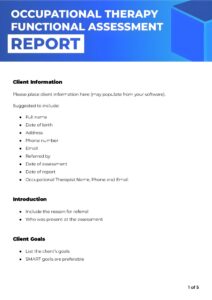
Beyond simply filling out sections, consider how the template integrates with your overall clinical practice. Does it have dedicated spaces for client self-report on their challenges and priorities? Is there a clear section for immediate, short-term, and long-term recommendations? Including fields for patient goals directly within the assessment helps to ensure that all proposed modifications and strategies are directly tied to what matters most to the client, fostering greater engagement and adherence.
Think about the practical application during the visit itself. A well-designed template can minimize the need for extensive note-taking on a separate pad, allowing you to focus more on observation and interaction. Digital templates, for instance, can offer checkboxes, dropdown menus, and even photo insertion capabilities, making documentation more efficient and comprehensive. For paper-based versions, clear headings and ample space for narrative comments are essential for capturing the nuances of the home environment.
Finally, the value of an occupational therapy home assessment template extends beyond the visit itself. It serves as a foundational document for developing the intervention plan, educating family members, and advocating for necessary home modifications or assistive technology. It becomes a critical reference point, not only for tracking progress but also for justifying the need for services and demonstrating the tangible benefits of occupational therapy in promoting independence and safety within a client’s most important environment.
Ultimately, a structured approach to home assessments allows occupational therapists to provide the highest quality of care. By meticulously evaluating the home environment, we gain unparalleled insight into a client’s daily life, enabling us to offer practical, tailored solutions that genuinely make a difference. This thoroughness is key to empowering individuals to live safely and independently in the comfort of their own homes.
Embracing a systematic home assessment process, supported by a robust template, strengthens our ability to address barriers and capitalize on opportunities within the client’s natural context. It transforms potential challenges into pathways for greater participation and wellbeing, affirming the profound impact of occupational therapy in facilitating a meaningful and fulfilling life for every individual.