Navigating the world of social care can feel overwhelming, whether you’re seeking support for yourself, a family member, or looking to provide assistance professionally. At its core, effective social care begins with a clear understanding of an individual’s unique circumstances, challenges, and aspirations. This initial step, known as a needs assessment, is absolutely crucial for tailoring support that genuinely makes a difference in someone’s life.
Think of a needs assessment as the foundation upon which all future care plans are built. It’s not just about identifying what someone can’t do, but also about recognizing their strengths, preferences, and what matters most to them. A good assessment ensures that care is person-centered, respectful, and effective. Having a structured approach, like using a well-designed social care needs assessment template, can greatly streamline this process, making it more thorough and consistent.
What Goes Into a Comprehensive Social Care Needs Assessment?
A truly comprehensive social care needs assessment isn’t just a checklist; it’s a holistic exploration of an individual’s life. It aims to paint a full picture, considering not only their physical health but also their mental wellbeing, social connections, environmental factors, and personal goals. The process should be collaborative, involving the individual as much as possible, along with their family or carers if appropriate, to ensure their voice is heard and respected throughout.
The initial stages often involve gathering basic but vital information. This includes personal details, contact information for emergency purposes, and any relevant medical history that might impact their care. Understanding who they are, where they live, and their immediate support network forms the bedrock of the assessment. This also helps to establish trust and a rapport with the individual, making them more comfortable sharing deeper insights into their needs.
Gathering Essential Information
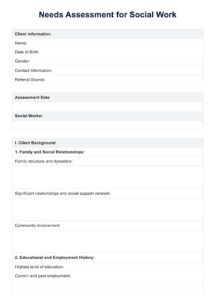
Before diving into specific needs, a template helps ensure all preliminary information is collected systematically. This often includes:
- Demographic details: Name, address, date of birth, contact information.
- Emergency contacts: Names and phone numbers of trusted individuals.
- Relevant professionals: Details of their GP, specialists, or other care providers.
This segment is less about specific care needs and more about administrative readiness and knowing who to communicate with. It sets the stage for a more detailed discussion.
Understanding Daily Living and Personal Care
Once the foundational information is in place, the assessment delves into the practical aspects of daily living. This is where a social care needs assessment template truly shines, by guiding the assessor through various domains to ensure nothing is overlooked. It’s about understanding the individual’s abilities and difficulties across a range of activities that most of us take for granted.
This includes assessing areas such as personal hygiene, meal preparation, mobility, and managing household tasks. It’s important to capture not just whether someone *can* do something, but *how* they do it, and if it causes them distress, pain, or takes an excessive amount of time and effort. For instance, someone might be able to dress themselves, but if it takes an hour and leaves them exhausted, that’s a significant need for support.
Furthermore, this section often explores an individual’s medication management, their ability to get out and about in their community, and how they manage their finances. Understanding these daily realities helps to identify specific areas where practical support or adaptations might be beneficial. It also helps in distinguishing between needs that can be met with minor adjustments and those requiring more intensive intervention.
- Personal care: Washing, dressing, grooming, toileting.
- Domestic tasks: Cooking, cleaning, laundry, shopping.
- Mobility: Moving around the home, accessing the community, use of aids.
- Health management: Taking medication, attending appointments, managing conditions.
- Social engagement: Hobbies, community involvement, maintaining relationships.
The Indispensable Advantages of a Well-Structured Assessment Template
Using a specific social care needs assessment template brings a host of benefits that extend beyond mere organization. It fundamentally enhances the quality and consistency of the assessment process, leading to more accurate care plans and better outcomes for individuals requiring support. Imagine trying to build a complex structure without a blueprint – it would be chaotic and likely unstable. A template serves as that essential blueprint in social care.
One of the primary advantages is ensuring comprehensiveness. A good template acts as a detailed guide, prompting assessors to cover all relevant areas of an individual’s life. This minimizes the risk of overlooking critical needs or strengths, which could otherwise lead to gaps in support or an incomplete understanding of the person’s situation. It standardizes the information-gathering process, meaning that even if different assessors are involved, the core data collected will be consistent and comparable.
Moreover, a structured template significantly improves efficiency. Assessors can work through the process more quickly and effectively, knowing exactly what information they need to gather and in what format. This saves valuable time that can then be dedicated to direct interaction with the individual, building rapport, and delving deeper into specific concerns, rather than struggling with how to structure the assessment itself. It also simplifies data entry and subsequent analysis, making it easier to share information securely with other care professionals when necessary.
Finally, templates are invaluable for compliance and accountability. Many regulatory bodies require specific information to be captured during a needs assessment. A well-designed template can be crafted to ensure that all legal and ethical requirements are met, providing a clear audit trail of the assessment process. This not only protects the care provider but, more importantly, ensures that the individual receiving care is afforded all their rights and receives support that adheres to best practice standards.
- Ensures all essential areas are covered systematically.
- Promotes consistency across different assessments and assessors.
- Increases efficiency in the information gathering process.
- Facilitates accurate and timely care planning.
- Supports compliance with legal and ethical guidelines.
Ultimately, a thorough and empathetic needs assessment is the cornerstone of effective social care. It transforms a potentially complex and daunting process into a manageable and meaningful interaction, ensuring that every individual receives the tailored support they deserve. By taking the time to truly understand someone’s situation, we lay the groundwork for care that empowers them to live their best possible life.