Beginning the journey with a new client in social work is a pivotal moment. It’s the very first step in understanding their unique world, their challenges, their strengths, and their aspirations. This initial conversation isn’t just about gathering facts; it’s about building trust, establishing rapport, and laying the groundwork for a successful helping relationship. Without a clear, structured approach, it’s easy to miss crucial details or overlook areas that might be vital for effective intervention.
That’s where a well-designed framework comes into play. Imagine having a reliable guide that helps you navigate these complex initial interactions, ensuring you cover all essential areas while still allowing for genuine, person-centered engagement. Such a tool doesn’t mechanize the process; rather, it empowers you to be more thorough and thoughtful, ultimately leading to a more accurate understanding of the client’s situation. This guide will explore the utility and components of a comprehensive social work initial assessment template.
The Cornerstones of a Comprehensive Initial Assessment
A truly effective initial assessment in social work goes far beyond a simple checklist of questions. It’s an artful blend of structured inquiry and empathetic listening, designed to paint a holistic picture of the client. The goal is to understand not just the presenting problem, but the context in which it exists, including the client’s history, environment, support systems, and personal resources. This comprehensive view is essential for developing interventions that are genuinely tailored to their needs.
To achieve this breadth and depth, an assessment needs to systematically cover several key areas. Think of it as mapping out a new territory; you need to understand the geography, the climate, the resources available, and any potential obstacles. Similarly, in social work, we need to explore various life domains to gain a complete understanding. A robust social work initial assessment template provides the structure to ensure no stone is left unturned, guiding you through these critical information-gathering phases without making the interaction feel rigid.
Key Information Domains
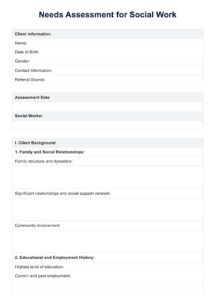
When developing or utilizing a template, consider including these essential domains to ensure a thorough assessment:
- Demographic Information: Basic details about the client, including age, gender, ethnicity, and living situation.
- Presenting Problem and History: What brought the client to seek services, their perspective on the issue, and how long it has been a concern.
- Client Strengths and Resources: Identifying internal strengths, coping mechanisms, and external support networks like family, friends, or community groups.
- Risk Assessment: Screening for any immediate safety concerns, including self-harm, harm to others, or exploitation.
- Psychosocial History: Exploring relevant aspects of their life journey, such as family background, educational achievements, employment history, physical and mental health status, substance use history, and any legal involvement.
- Cultural and Spiritual Factors: Understanding the client’s cultural background, spiritual beliefs, and how these influence their worldview and coping strategies.
- Client Goals and Expectations: What the client hopes to achieve through services and their readiness for change.
Having these areas clearly defined within a social work initial assessment template helps organize the vast amount of information gathered during that crucial first meeting. It ensures consistency across different client interactions and serves as a foundational document for all subsequent planning and intervention.
Crafting and Utilizing Your Assessment Template Effectively
The beauty of a well-designed template is its ability to bring structure to what can often be a complex and emotionally charged conversation. It provides a roadmap, preventing important details from being overlooked while still allowing for the organic flow of dialogue. For social workers, this means more efficient use of time, greater confidence in their data collection, and ultimately, a clearer picture of the client’s needs, leading to more targeted and effective support plans. It’s about working smarter, not just harder.
While the core components of an assessment are universal, the specific details and emphasis within a template might vary significantly depending on your practice setting. A template used in child protective services, for example, will naturally prioritize different risk factors and family dynamics compared to one used in a hospice setting or a school social work program. Therefore, it is important to review and adapt any generic template to align with the unique demands of your specific client population and organizational guidelines. Tailoring your template ensures its relevance and maximizes its utility.
When actually engaging with a client using your template, remember that it’s a guide, not a script. The goal is to facilitate a natural conversation, not to rigidly read through a list of questions. Here are some practical tips for effective utilization:
- Begin with open-ended questions to encourage detailed responses and allow the client to tell their story in their own words.
- Maintain eye contact and an engaged posture, demonstrating active listening beyond just filling in blanks.
- Explain the purpose of the assessment to the client, demystifying the process and encouraging their participation.
- Prioritize safety concerns first; if there are immediate risks, address those before delving into other areas.
- Use the template to prompt your memory for questions, but allow the conversation to flow naturally, looping back to specific sections as needed.
- Document client quotes where appropriate, capturing their voice and perspective directly.
- Regularly review and update your template to incorporate new best practices, research findings, or changes in service delivery, ensuring it remains a dynamic and effective tool.
By thoughtfully applying these strategies, your assessment template becomes an invaluable asset, enhancing both the quality of your data collection and the strength of your therapeutic relationship.
The initial assessment is arguably one of the most critical stages in the social work process. It’s the foundation upon which all subsequent interventions are built, shaping the direction of support and profoundly influencing client outcomes. A well-executed assessment ensures that services are not just provided, but are provided effectively and empathetically, truly meeting individuals where they are.
Embracing a structured approach through a carefully developed template empowers social workers to navigate these crucial first encounters with confidence and thoroughness. It fosters consistency in practice, enhances the depth of understanding gained, and ultimately contributes to more meaningful, client-centered care. By optimizing this initial step, we significantly increase the potential for positive change and lasting impact in the lives of those we serve.