Navigating the complex landscape of potential dangers in today’s interconnected world can feel like a daunting task for any organization. From cyber threats lurking in the digital shadows to natural disasters and operational mishaps, the array of risks is vast and ever-evolving. Proactively identifying these vulnerabilities and understanding their potential impact is not just a best practice; it is an absolute necessity for safeguarding your assets, reputation, and continued operation. It’s about being prepared, not just reactive, in the face of uncertainty.
This is where a structured approach becomes invaluable. Instead of a chaotic, ad-hoc scramble, a well-defined process brings clarity and efficiency to the often-overwhelming challenge of security. By providing a clear framework, it ensures that no critical stone is left unturned and that the assessment is thorough and consistent. Using a comprehensive threat and risk assessment template can significantly streamline this vital process, offering a roadmap to understanding, evaluating, and ultimately mitigating the dangers your organization faces.
Understanding the Core Components of a Risk Assessment
A successful risk assessment begins with a clear understanding of its fundamental building blocks. At its heart, it involves identifying what you need to protect (your assets), what could potentially harm them (threats), and where your defenses might be weakest (vulnerabilities). This foundational analysis sets the stage for everything that follows, allowing you to build a comprehensive picture of your security posture before diving into detailed evaluations. Without this initial clarity, any subsequent mitigation efforts might be misdirected or incomplete, leaving critical gaps exposed.
Once assets are identified, the next step is to brainstorm and research potential threats. These can range from malicious cyber actors attempting to breach your network and intellectual property, to natural events like floods or earthquakes that could disrupt operations, or even human error and internal sabotage. Simultaneously, you must look for vulnerabilities: outdated software that presents known exploits, weak physical access controls, inadequate employee training, or a lack of proper data backup procedures. A thorough examination of both threats and vulnerabilities provides the necessary data points to begin evaluating the likelihood and impact of various scenarios.
Key Stages of the Assessment Process
The journey through a comprehensive risk assessment typically follows a series of distinct yet interconnected stages, each building upon the last to form a complete picture of your organization’s risk profile. Understanding these stages is crucial for anyone looking to undertake such an important task.
- Asset Identification: Pinpointing critical information, systems, and physical resources that need protection.
- Threat Identification: Recognizing potential dangers, both internal and external, that could exploit vulnerabilities.
- Vulnerability Identification: Discovering weaknesses in systems, processes, or controls that threats could leverage.
- Risk Analysis: Determining the likelihood of a threat exploiting a vulnerability and the potential impact if it does.
Following this initial analysis, the process moves into more evaluative and actionable stages. Risk evaluation involves comparing the identified risks against established criteria to prioritize them. High-impact, high-likelihood risks naturally demand more immediate attention than low-impact, low-likelihood ones. This prioritization then leads to risk treatment, where strategies are developed and implemented to avoid, reduce, transfer, or accept the risks. Finally, continuous monitoring and regular review of the assessment ensures that it remains relevant and effective in a constantly changing threat environment.
Practical Application and Benefits of a Standardized Template
Employing a standardized threat and risk assessment template revolutionizes how organizations approach security. It transforms what could be a sprawling, inconsistent effort into a disciplined, repeatable process. By providing pre-defined sections for assets, threats, vulnerabilities, likelihood, impact, existing controls, and proposed mitigation actions, a template guides users through each step, ensuring consistency across different assessments, departments, or even different time periods. This structured approach not only saves valuable time but also fosters a common language and understanding within the organization regarding risk management.
The benefits of this structured approach are far-reaching. It significantly enhances clarity, making it easier to articulate risks to stakeholders and secure resources for mitigation efforts. It also promotes accountability by assigning ownership for identified risks and proposed controls. Moreover, a comprehensive template supports better decision-making by providing a clear, data-driven basis for prioritizing security investments and strategic planning. Crucially, for many industries, using a formal assessment method aids in meeting regulatory compliance requirements and demonstrating due diligence to auditors and regulators.
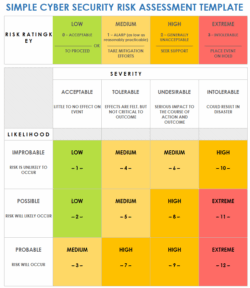
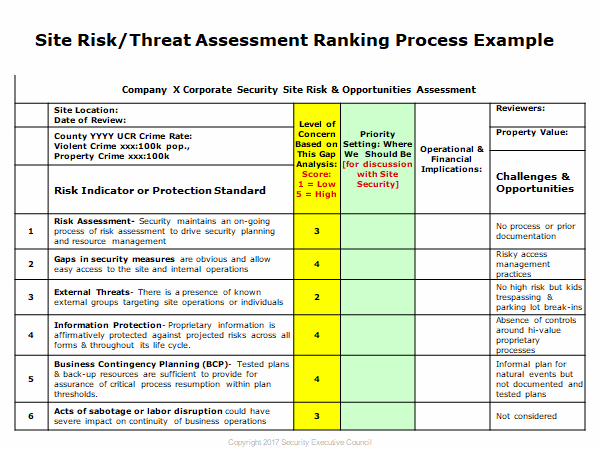
A robust threat and risk assessment template should act as your central repository for all critical information related to your security posture. It should include areas for detailing the specific assets being assessed, a catalog of potential threats, identified vulnerabilities linked to those threats, and a matrix for evaluating the likelihood of an incident occurring versus its potential impact. Furthermore, sections for documenting existing security controls, proposing new or enhanced controls, and assigning a residual risk score are essential. This comprehensive document becomes a living record, constantly updated as your organization evolves and new threats emerge.
To get the most out of your template, begin by clearly defining the scope of your assessment. Are you evaluating an entire organization, a specific department, or a single critical system? Gather all relevant information from various sources, including IT, operations, HR, and compliance. Systematically work through each section of the template, carefully documenting findings and evaluations. Once the assessment is complete, the real work of developing and implementing action plans to address the identified risks begins. Remember, this isn’t a one-time exercise; regular updates and reviews are vital to keep your risk management strategy effective and aligned with your current operational landscape.
Taking the time to conduct thorough assessments allows organizations to move from a state of uncertainty to one of informed confidence. It empowers decision-makers to allocate resources strategically, bolstering defenses where they are most needed and ensuring business continuity. This ongoing commitment to understanding and managing potential threats builds a resilient foundation, enabling organizations to withstand challenges and thrive in an increasingly complex world.