Organizing a sports league, a gaming tournament, or even a friendly competition can seem like a daunting task, especially when you want everything to run smoothly. The good news is that for smaller setups, like a four-team league, creating a fair and efficient schedule is much simpler than you might think. With just a little planning, you can ensure every team gets their chance to play, making the experience enjoyable for everyone involved.

Whether you are managing a local soccer league for kids, a casual basketball tournament with friends, or a competitive video game series, a well-structured schedule is the backbone of a successful event. It helps avoid confusion, ensures fair play, and keeps all participants informed and excited. Let’s dive into how to construct a perfect schedule for your four-team setup, making sure your league runs without a hitch from start to finish.
Crafting the Perfect Format for Your 4 Team League Schedule
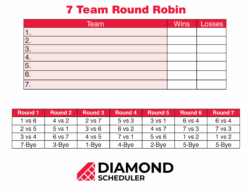
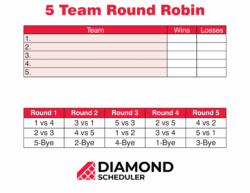
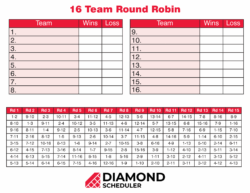
When you’re setting up a league with just four teams, the round-robin format is almost always the best way to go. This means that every team plays every other team at least once. It’s a simple, fair, and widely understood method that ensures no team is left out and all participants get a similar number of games. The beauty of this approach lies in its simplicity and the balanced competition it provides. You can choose between a single round-robin, where teams play each other once, or a double round-robin, where they play each other twice, once at home and once away if applicable.
Deciding between single and double round-robin largely depends on the total number of games you want to play and the duration of your league. A single round-robin is quick and ideal for shorter tournaments or events with limited time, while a double round-robin offers a more comprehensive test of skill and is great for a longer league season. Both provide a clear path to determining the standings and often lead into a playoff round for the top finishers.
Single Round-Robin Structure
In a single round-robin format, each team plays every other team exactly one time. For four teams, let’s call them Team A, Team B, Team C, and Team D, this results in a total of six games. It’s a very compact schedule, perfect for a one-day event or a very short league over a couple of weeks.
Consider this basic breakdown for a single round-robin:
- Game 1: Team A vs Team B
- Game 2: Team C vs Team D
- Game 3: Team A vs Team C
- Game 4: Team B vs Team D
- Game 5: Team A vs Team D
- Game 6: Team B vs Team C
This structure ensures every team plays three games, and all matchups are covered. You can easily spread these games out over different days or play them consecutively, depending on your league’s needs.
Double Round-Robin Structure
If you’re looking for a more extensive league that tests consistency and offers more opportunities for competition, a double round-robin is your answer. In this setup, each team plays every other team twice. For our four teams, this means a total of 12 games. This format is excellent for building rivalries and allowing teams to adjust their strategies for rematches. It creates a longer season and often feels more satisfying for participants.
The schedule would essentially repeat the single round-robin matchups, just with reversed home/away designations or simply a second set of games:
- Game 1: Team A vs Team B
- Game 2: Team C vs Team D
- Game 3: Team A vs Team C
- Game 4: Team B vs Team D
- Game 5: Team A vs Team D
- Game 6: Team B vs Team C
- Game 7: Team B vs Team A (or simply second encounter)
- Game 8: Team D vs Team C
- Game 9: Team C vs Team A
- Game 10: Team D vs Team B
- Game 11: Team D vs Team A
- Game 12: Team C vs Team B
This comprehensive approach provides a robust league experience before moving into any potential playoff rounds to crown a champion. A solid 4 team league schedule template like this becomes the backbone of your event.
Key Considerations for Building Your Schedule
Beyond simply listing who plays whom, there are several practical elements to keep in mind when you are putting together your schedule. Thinking about these details upfront can save a lot of headaches later on and contribute significantly to a smooth operation. From venue availability to allowing for breaks, these finer points truly elevate a good schedule to a great one.
Firstly, consider the timing of the games. Are they all happening on one day, or spread out over weeks? If it’s a multi-day league, try to ensure teams have adequate rest between games, especially if they are playing more than once in a short period. For instance, avoiding back-to-back games for the same team if possible can prevent burnout and lead to better performance and enjoyment.
Secondly, don’t forget about venue availability and travel for teams. If teams have a "home" and "away" designation, try to balance the number of home games for each team. If all games are at a single location, ensure that the facility is booked for the necessary duration, including any setup and teardown time. Clear communication about game locations and times is paramount.
Finally, always build in a bit of flexibility. Life happens, and games might need to be rescheduled due to unforeseen circumstances like weather, player availability, or other conflicts. Having a designated point person for communication and a clear process for rescheduling can be incredibly helpful. A well-prepared schedule is adaptable, not rigid.
To ensure your schedule is comprehensive and user-friendly, consider these points:
- **Define game duration:** How long will each game last, including warm-up and cool-down periods?
- **Set specific dates and times:** Clearly state the date, time, and if applicable, the specific field or court for each match.
- **Assign venues:** Specify where each game will be played.
- **Consider bye weeks/breaks (if applicable):** Though less common in a four-team league, if you have extended periods, ensuring balanced breaks is important.
- **Communicate clearly:** Distribute the final schedule well in advance to all teams and participants, and have a system for updates.
Taking these factors into account will not only make your life easier as an organizer but also significantly improve the overall experience for every participant in your four-team league.
Setting up a league, no matter how small, is a fantastic way to foster competition, camaraderie, and community. With a clear, well-structured schedule, you eliminate much of the organizational stress and can focus on the fun part: the games themselves. Remember, the goal is to create an environment where everyone feels valued and knows exactly what to expect.
By following these guidelines and taking a thoughtful approach to planning, your four-team league is destined for success. Enjoy the action, the sportsmanship, and the memorable moments that will undoubtedly unfold on your field, court, or digital arena.