Are you in charge of organizing a local sports league, a friendly gaming tournament, or even just a fun fantasy football setup with a handful of friends? When you have a small group, like five teams, it can feel deceptively simple to plan, but without a clear structure, things can quickly become messy and unfair. You want everyone to play each other, ideally more than once, and ensure a smooth flow without constant last-minute changes.
That’s where a well-thought-out 5 team league schedule template comes into play. It takes the guesswork out of the equation, providing a clear roadmap for your entire season. Whether you’re dealing with soccer, basketball, board games, or any other competitive activity, having a ready-made framework will save you a ton of time and prevent headaches. Let’s dive into how you can create and utilize such a template to make your league a roaring success.
Understanding the Basics of a 5 Team League Schedule
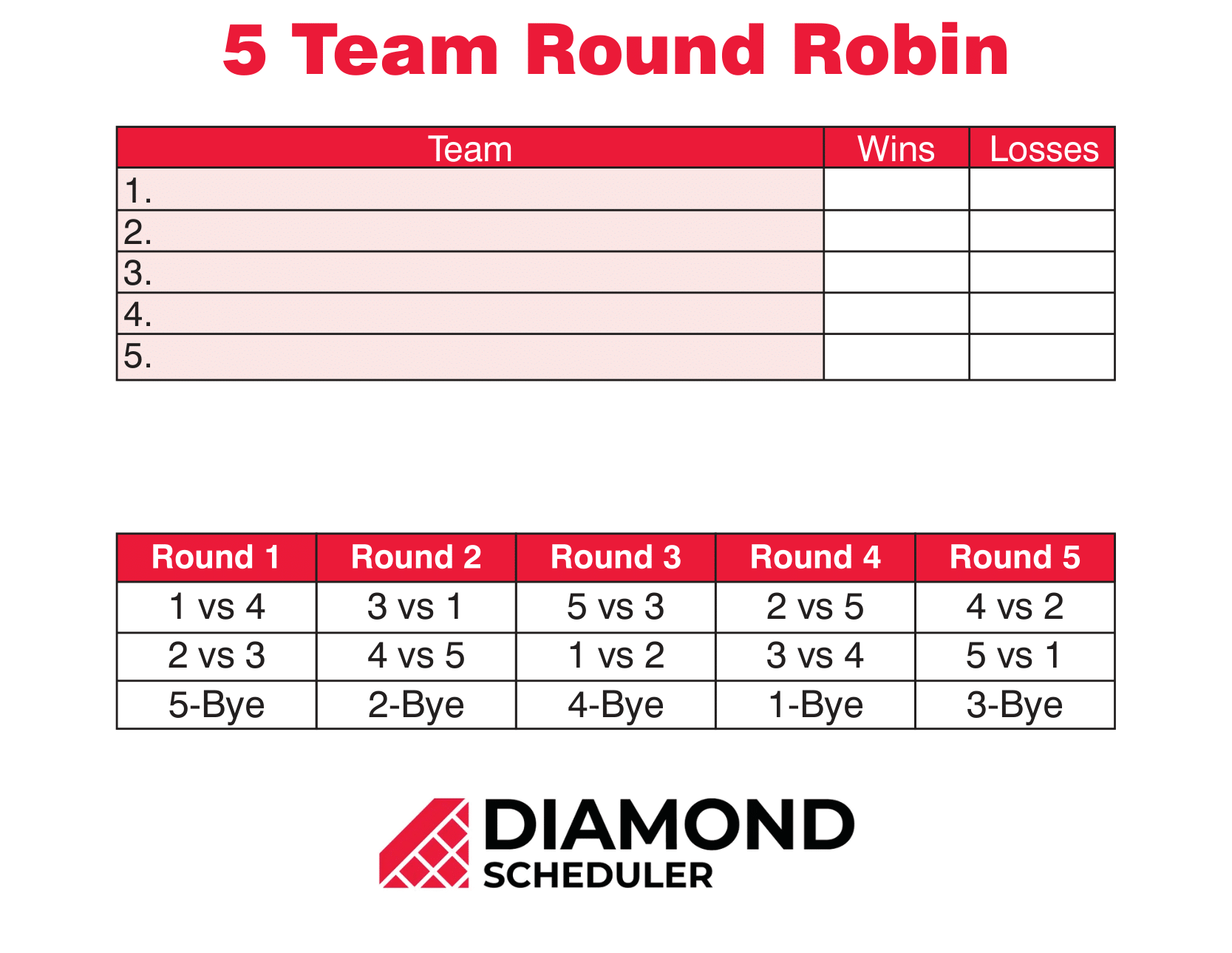
When you’re dealing with an odd number of teams, like five, the scheduling process introduces a unique challenge: bye weeks. Unlike an even-numbered league where every team can play another, in a 5-team setup, one team will always have to sit out each round. This isn’t a problem, just something that needs to be factored in consistently to ensure fairness and prevent any team from having too many consecutive breaks or playing too many games back-to-back. The most common and fair approach for small leagues is the round-robin format, where every team plays every other team at least once.
For a five-team league, a single round-robin will consist of five rounds, with each team playing four games and having one bye week. While this provides a basic structure, many organizers find that four games per team isn’t quite enough for a satisfying season. This often leads to implementing a double or even triple round-robin, meaning each team plays every other team two or three times over the course of the league. This significantly increases the total number of games and provides a more robust competitive experience, while still managing those necessary bye weeks.
Creating an effective 5 team league schedule template involves more than just pairing teams. You also need to consider game frequency, location, and potential time constraints. A good template will clearly lay out who plays whom, when, and where, for the entire duration of your league. This proactive planning prevents confusion and allows participants to know their commitments well in advance, leading to better attendance and engagement.
Key Considerations Before You Start
- Total number of games each team will play throughout the season.
- Balancing home and away games (if applicable for your sport).
- Strategically distributing bye weeks to ensure fairness and prevent multiple consecutive byes for any single team.
- Availability of venues or playing fields, if required.
- Specific game durations or time slots.
- Any playoff or championship structure you plan to implement after the regular season.
Thinking about these points upfront will help you build a much more robust and functional schedule template that truly meets the needs of your league.
Crafting Your Perfect 5 Team League Schedule Template
Let’s get practical about building your schedule. The simplest way to start is by mapping out a single round-robin. Imagine your teams are numbered 1 through 5. For a round-robin schedule, one common method is to “fix” one team (say, Team 1) and then rotate the others around it. This ensures that every team gets a chance to play each other, while also clearly defining who has the bye week in each round. Once you have this basic framework, you can easily extend it for more games.
For example, a basic single round-robin for your five teams might look something like this, keeping in mind that one team will have a bye in each week:
- Week 1: Team 1 vs Team 2, Team 3 vs Team 4, Team 5 (Bye)
- Week 2: Team 1 vs Team 3, Team 2 vs Team 5, Team 4 (Bye)
- Week 3: Team 1 vs Team 4, Team 3 vs Team 5, Team 2 (Bye)
- Week 4: Team 1 vs Team 5, Team 2 vs Team 4, Team 3 (Bye)
- Week 5: Team 2 vs Team 3, Team 4 vs Team 5, Team 1 (Bye)
This structure ensures every team plays each other once. To expand this into a double or triple round-robin, you simply repeat this entire sequence. For a double round-robin, you’d run this exact 5-week schedule twice, for a total of 10 weeks (excluding any playoff structure). When repeating, you might want to flip the “home” team for fairness, if that’s relevant to your league. Remember to keep track of bye weeks; if Team 5 had the bye in Week 1 of the first round-robin, ensure they don’t have it again in Week 1 of the second round-robin if you’re trying to balance rest periods.
Once the foundational pairings and bye weeks are in place, you can flesh out your 5 team league schedule template with specific dates, times, and locations. Consider using a spreadsheet program like Excel or Google Sheets. These tools allow you to easily organize the information, color-code, and make adjustments as needed. You can create columns for “Week,” “Date,” “Time,” “Team A,” “Team B,” “Location,” and “Bye Team,” ensuring all critical details are present and accessible. This not only makes your life easier as the organizer but also provides a professional and clear schedule for all participants.
Building out a comprehensive schedule like this removes a lot of the logistical burden, allowing everyone involved to focus on the competition and fun. It also provides a clear, official document that can be shared with all teams, setting expectations and minimizing confusion throughout your season.
Organizing a league with five teams doesn’t have to be a complicated chore. By understanding the basics of round-robin scheduling, planning for bye weeks, and considering practical details like venue availability and game times, you can easily construct a fair and exciting season. A robust schedule brings clarity and professionalism to your league, whether it’s for serious competition or just friendly bragging rights.
With a well-structured template in hand, you’ll be able to focus on the enjoyment of the games rather than the logistics. So go ahead, put these tips into practice, and get ready for a smoothly run and thoroughly engaging league season that everyone will appreciate!