Organizing a sports league, friendly competition, or even a casual gaming tournament can be a really rewarding experience, bringing people together for some fun and healthy rivalry. However, the one task that often feels like a giant puzzle piece is creating a fair and balanced schedule that works for everyone involved. You want to ensure every team gets their chance to shine, without too many back-to-back games or unfair advantages.
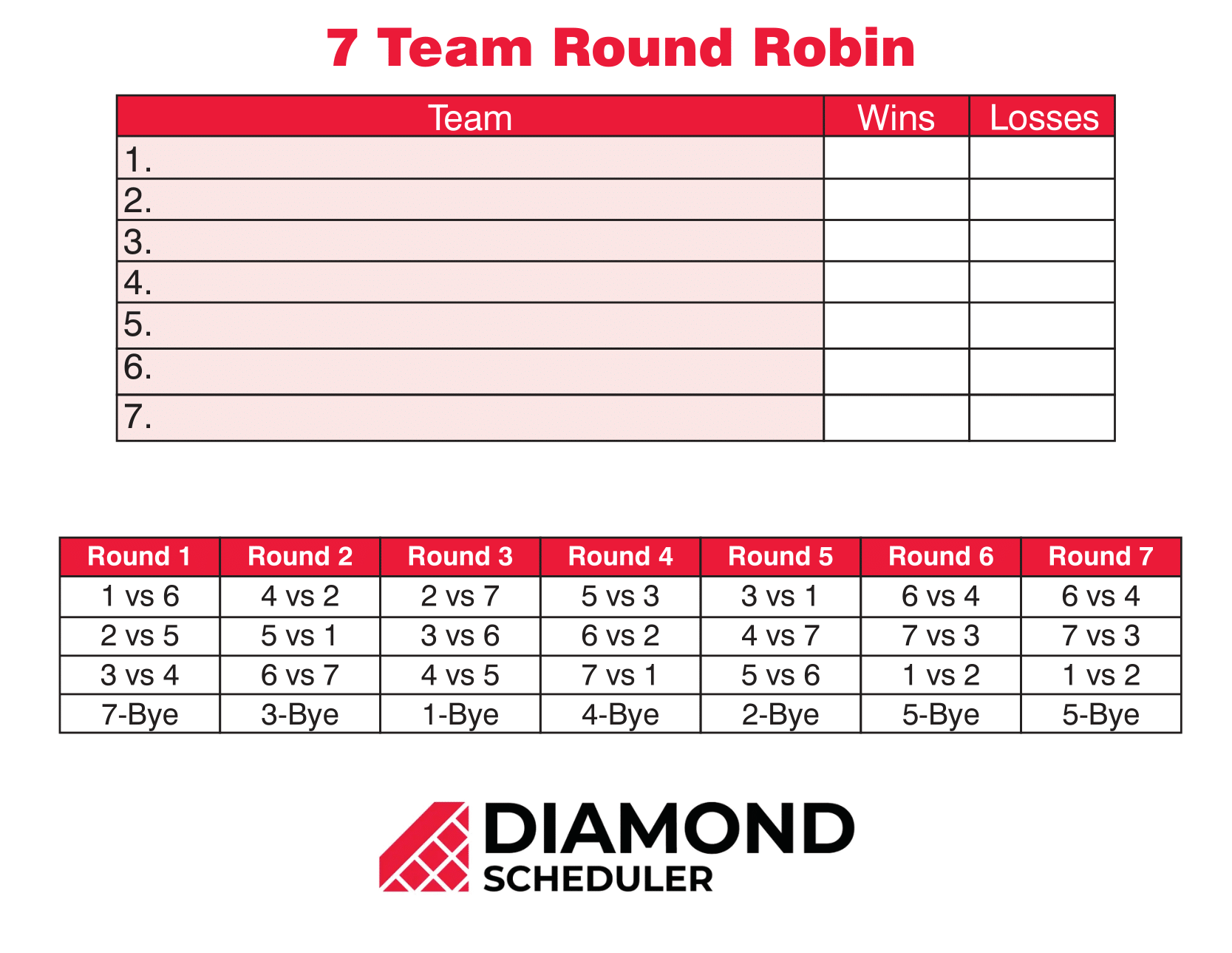
This is especially true when you’re dealing with an odd number of teams, like seven. It presents unique challenges compared to an even number, requiring a bit more thought to ensure smooth play and an equitable distribution of byes. That’s why having a solid 7 team league schedule template can be an absolute lifesaver, transforming a potentially confusing headache into a straightforward organizational task.
Crafting Your Perfect 7 Team League Schedule
When you’re dealing with seven teams, the primary goal is often to implement a round-robin format where every team plays every other team at least once. This ensures fairness and gives each participant an equal opportunity to compete against the entire league. The challenge with an odd number of teams, though, is handling the "bye" week. In a seven-team setup, each week one team will naturally sit out. A well-designed 7 team league schedule template will seamlessly integrate these bye weeks, making them a natural part of the flow rather than an afterthought.
The most common approach to scheduling seven teams involves what’s often called the "fixed and rotate" method. You simply fix one team, let’s say Team A, in a consistent position. Then, you rotate the other six teams around Team A each week. The team that doesn’t get a direct opponent for the week in this rotation is assigned the bye. This systematic rotation ensures that over the course of the league, every team will eventually play every other team and will also receive their fair share of bye weeks.
Understanding Different Schedule Formats
A single round-robin is a popular choice for many seven-team leagues. In this format, each team plays every other team exactly one time. For a seven-team league, this means each team will play a total of six games. With one bye week per team over the course of the schedule, a single round-robin for seven teams typically spans seven weeks of competition, assuming one game per team per week. It’s a great option for leagues looking for a concise season that still allows for full competition.
Here are some quick considerations for a single round-robin:
- Pacing: It offers a relatively fast-paced season, perfect if you have limited time or venue availability.
- Fairness: Every team plays every other team once, ensuring a level playing field for initial standings.
- Time commitment: Lower time commitment for players and organizers compared to extended formats.
Double Round Robin and Playoff Considerations
If you’re aiming for a more extensive season, a double round-robin format might be more suitable. Here, each team plays every other team twice – once at home and once away, or simply two times overall. For a seven-team league, this would mean each team plays a total of twelve games. This format naturally extends the season and provides more opportunities for teams to adjust strategies, seek revenge, or solidify their positions in the standings. It often leads to a more robust and competitive regular season.
Once the regular season, whether single or double round-robin, concludes, many leagues opt to introduce a playoff structure. This could involve the top four teams advancing to semi-finals and then a championship game, or even a wider bracket depending on your league’s size and goals. A good 7 team league schedule template should ideally allow for the flexibility to easily add a playoff round at the end, ensuring that the hard work of the regular season culminates in an exciting finale.
Tips for Customizing Your 7 Team League Schedule Template
While a basic 7 team league schedule template gives you a fantastic starting point, the real magic happens when you customize it to fit the unique needs and preferences of your specific league. No two leagues are exactly alike, and what works perfectly for one group of teams might be less ideal for another. Thinking beyond the simple game assignments can significantly improve the overall experience for all participants.
Consider practical elements like venue availability. Do you have access to your playing field or court on specific days or times? Are some teams geographically closer to one venue than another, potentially requiring them to play more "home" games there? Taking these logistics into account can prevent scheduling conflicts and reduce travel burdens for your teams, making the league much more enjoyable and sustainable.
Another crucial aspect of customization is balancing competitiveness with convenience. Some teams might prefer playing all their games on weekends, while others might have weekday evening availability. Are there specific holidays or long weekends when some players might be unavailable? Gathering this information upfront from your team captains can help you tweak the template to minimize forfeits and maximize participation, ensuring that everyone can consistently show up and play their best.
Here are some key factors to consider when customizing:
- Venue availability: Specific days, times, and locations where games can be played.
- Team travel distances: Minimize long-distance travel, especially for "away" games.
- Player availability: Preferences for weekdays, weekends, or specific time slots.
- Holiday considerations: Avoid scheduling games on major holidays or long weekends.
- Desired league duration: Adjust the schedule to fit your preferred number of weeks.
Finally, don’t be afraid to use technology to your advantage. Many online scheduling tools can take a basic 7 team league schedule template and allow you to drag and drop games, assign specific venues, and even input team availability. While the initial setup of your template is crucial, these tools can streamline the ongoing management and communication of your customized schedule, making your job as league organizer much smoother from start to finish.
Putting together a fantastic league experience starts with a well-organized plan, and at the heart of that plan is a solid schedule. By utilizing a clear template and taking the time to adapt it to your specific circumstances, you’re laying down the foundation for an exciting and fair competition that everyone can look forward to. The effort you put into scheduling upfront will undoubtedly pay dividends in the form of a smoothly run league and happy participants throughout the season.
So, whether you’re managing a small local competition or a more structured sports league, remember that a thoughtful schedule can make all the difference. Embrace the process, tailor your schedule to your teams, and get ready for a season filled with great games and memorable moments. Good luck with your league!