Organizing a sports league can be a thrilling endeavor, whether you are coordinating for friends, a local community group, or a more formal association. However, one of the biggest hurdles often lies in creating a fair, balanced, and easy-to-follow schedule. This task can feel especially daunting when you want to ensure every team gets an equal opportunity and nobody feels left out or unfairly treated.
You are likely looking for a straightforward and effective way to manage the logistics of your upcoming season, and that is exactly what we are here to help you with. A well-designed 6 team league schedule template can save you countless hours of planning, prevent disputes, and ultimately lead to a much more enjoyable experience for everyone involved. Let us dive into making your league a resounding success.
Crafting Your Perfect 6 Team League Schedule
When you are setting up a league with six teams, the most common and often fairest approach is to use a round-robin format. This ensures that every team plays against every other team at least once, promoting competitive balance and giving all participants a chance to test their skills across the board. For a single round-robin with 6 teams, you will have a total of 15 games (calculated as N * (N-1) / 2, where N is the number of teams). The challenge then becomes how to arrange these 15 games into a sensible series of match days or weeks.
One popular and relatively simple method for creating your schedule involves fixing one team and rotating the others. This ensures that you can systematically pair up teams without missing any combinations. It is a systematic way to lay out your matchups and makes sure your 6 team league schedule template covers all bases without requiring complex algorithms or specialized software.
A Simple Round-Robin Method for 6 Teams
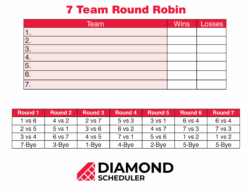
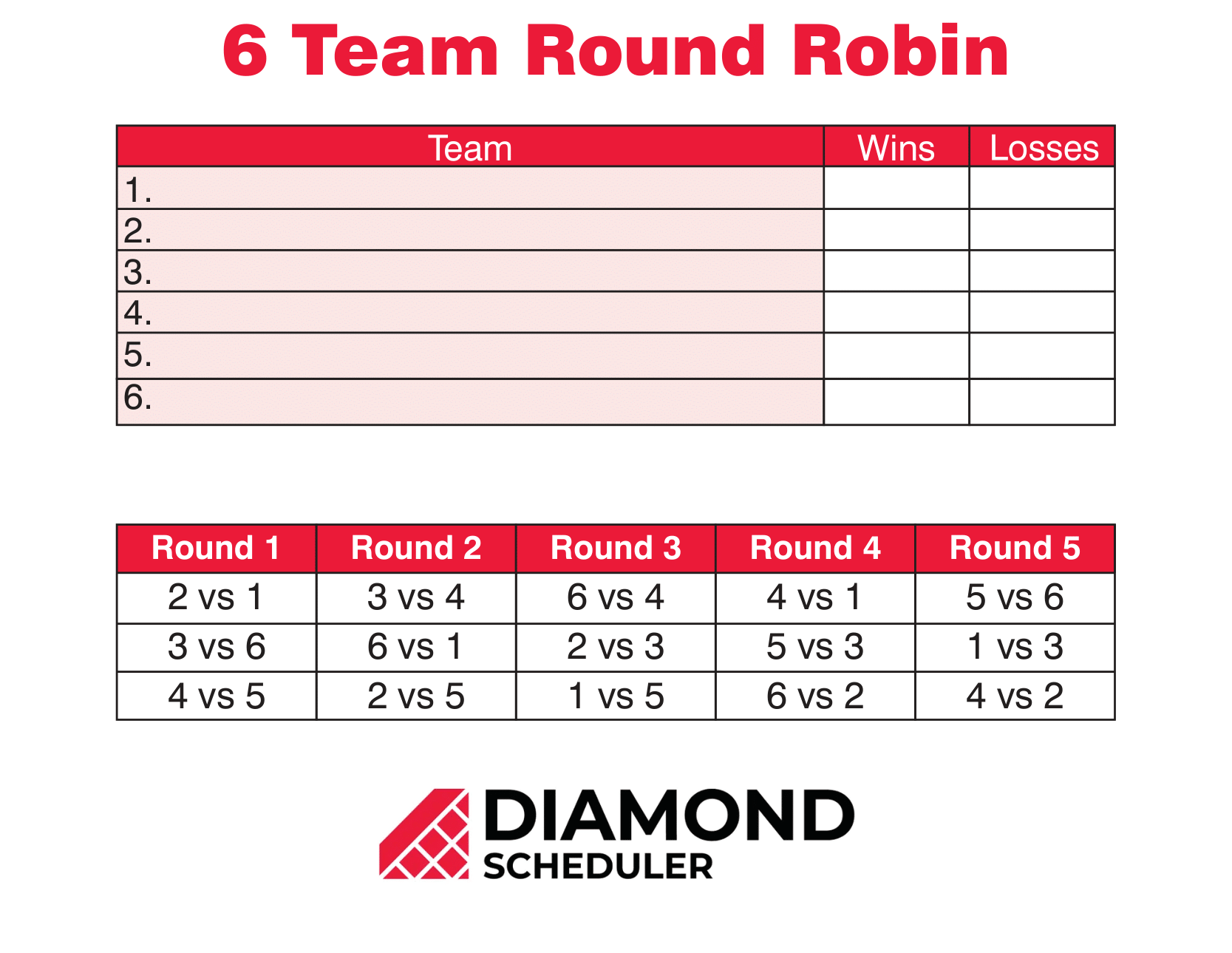
To illustrate how this works, imagine your teams are numbered 1 through 6. Here is a common way to structure five rounds of play to complete a single round-robin:
- Round 1: Team 1 plays Team 6, Team 2 plays Team 5, Team 3 plays Team 4
- Round 2: Team 1 plays Team 5, Team 6 plays Team 4, Team 2 plays Team 3
- Round 3: Team 1 plays Team 4, Team 5 plays Team 3, Team 6 plays Team 2
- Round 4: Team 1 plays Team 3, Team 4 plays Team 2, Team 5 plays Team 6
- Round 5: Team 1 plays Team 2, Team 3 plays Team 6, Team 4 plays Team 5
Notice how Team 1 remains stationary, while the other teams rotate around it, ensuring it faces a new opponent each week. The other teams then fill in the remaining slots. This method efficiently creates all 15 unique matchups across five distinct rounds.
Once you have these matchups defined, you will want to consider additional factors like ensuring a good balance of home and away games if that is applicable to your league, or scheduling breaks if needed. While a 6 team league typically avoids byes because it is an even number, you might want to consider specific days of the week or times that work best for your participants, or even double round-robin play if you want teams to play each other twice for a longer season.
Customizing and Managing Your 6 Team League Schedule
Beyond simply listing who plays whom, a truly effective 6 team league schedule template needs to incorporate practical details that make the league run smoothly. Think about the logistics that prevent last-minute scrambles and ensure everyone knows exactly where they need to be and when. This includes everything from specific dates to venue assignments and even who is responsible for what.
Consider adding columns or sections to your schedule for crucial information. This will transform a basic list of matchups into a comprehensive operational plan. Details like these can make all the difference in a well-organized league.
Some key elements to include in your detailed schedule are:
- Specific Dates and Times for each match
- Venue Assignments (if your league uses multiple locations)
- Designated Officials or Referees for each game
- Score Tracking and Reporting Mechanisms
- Policies for Rainouts, Cancellations, or Rescheduling
Including these details upfront will preempt many common questions and potential confusions that can arise during a season. It provides clarity and a central source of truth for all participants.
Furthermore, it is always a good idea to build a little flexibility into your plan. Unforeseen circumstances, such as player availability issues or weather changes, can often necessitate adjustments. Having a clear process for handling these situations and communicating changes effectively is just as important as the initial schedule creation. You might use a digital spreadsheet (like Google Sheets or Excel) that can be easily updated and shared, making it a living document for your league.
Ultimately, whether you opt for a single or double round-robin, the key is to have a clear and communicated plan. This robust foundation empowers everyone involved, from players to organizers, to focus on the game itself.
A well-constructed schedule removes much of the administrative burden, allowing everyone to focus on the competitive spirit and camaraderie that makes league play so enjoyable. It is about creating an environment where fair play and clear communication are paramount.
By leveraging a clear and comprehensive 6 team league schedule template, you are setting the stage for a memorable and successful season. It empowers everyone involved to enjoy the competition to the fullest, fostering a positive experience for all participants.