Navigating the complex landscape of organizational risks can often feel like a daunting task. Without a structured approach, identifying potential pitfalls, understanding their impact, and implementing effective controls can become a haphazard and inefficient exercise. Many businesses struggle to move beyond generic risk registers, missing the granular insights needed to truly safeguard their operations.

This is where a strategic shift towards understanding risks not just as isolated events, but as inherent parts of your operational flows, becomes incredibly powerful. By focusing on the individual steps and stages that make up your business activities, you gain a much clearer picture of where vulnerabilities lie. Embracing a process-based methodology provides the clarity and precision needed, and a well-designed process based risk assessment template is your indispensable tool for achieving this.
Understanding the Core of Process-Based Risk Assessment
At its heart, process-based risk assessment is about dissecting your organization’s functions into their constituent processes and then evaluating each step within those processes for potential risks. Instead of broad, high-level declarations, this approach encourages you to ask “What could go wrong at this specific point in this specific process?” This granular view allows for a much more accurate identification of hazards, clearer understanding of their potential impact, and more targeted development of mitigation strategies. It shifts the focus from a general overview to a detailed, actionable blueprint of your risk landscape.
Imagine a manufacturing plant. A general risk assessment might simply state “risk of equipment failure.” A process-based approach, however, would look at the “assembly line process,” then at “Step 3: Attaching Component X,” and ask, “What risks are associated with this specific action? Is it component defect, incorrect attachment, tool malfunction, or operator error?” This level of detail ensures that no stone is left unturned and that controls are designed for the exact point of vulnerability, rather than a generic solution that might not fit every scenario.
Key Stages in a Process-Based Approach
- Identify and Map Key Processes: Start by outlining all the critical operations your business performs.
- Deconstruct Processes into Individual Steps: Break down each process into its fundamental, sequential actions.
- Identify Risks at Each Step: For every single step, brainstorm what could go wrong, leading to negative outcomes.
- Analyze and Evaluate Risks: Determine the likelihood of each risk occurring and the potential impact if it does.
- Determine and Implement Controls: Design specific measures to prevent or mitigate the identified risks.
- Monitor and Review: Regularly check the effectiveness of controls and update the assessment as processes or risks change.
By systematically moving through these stages, organizations can build a comprehensive understanding of their risk exposure within each operational workflow. This structured method not only helps in identifying existing risks but also anticipates new ones as processes evolve. It provides a living document for risk management, ensuring that your safeguards remain relevant and robust in a dynamic business environment.
Building Your Own Effective Process Based Risk Assessment Template
Creating or utilizing a robust process based risk assessment template is crucial for standardizing this detailed approach across your organization. It ensures consistency in how risks are identified, analyzed, and managed, regardless of who is performing the assessment or which department is involved. A well-designed template acts as a guide, prompting users to consider all necessary aspects and ensuring that no critical information is overlooked during the assessment process. This standardization is key to building a cohesive and effective risk management framework.
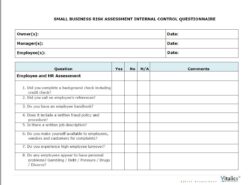
What should a truly effective template include? Beyond just spaces for ‘risk’ and ‘impact,’ a powerful template digs deeper. It should provide specific fields that guide the user through the process-based thinking. This ensures that the assessment captures the necessary granularity to be truly useful, moving beyond a simple checklist to a comprehensive analytical tool.
- Process/Sub-Process Name: Clearly identify the specific operation being assessed.
- Process Step Description: Detail the exact action or task being performed.
- Identified Hazard/Risk: Describe what could go wrong at this specific step.
- Existing Controls: List any measures already in place to reduce this risk.
- Likelihood Rating: Assess the probability of the risk occurring (e.g., Low, Medium, High).
- Impact Rating: Assess the severity of the consequence if the risk occurs (e.g., Minor, Moderate, Major).
- Risk Score/Level: A calculated value (Likelihood x Impact) or a qualitative determination of the overall risk.
- Recommended Mitigation/Action Plan: Outline specific steps to further reduce or eliminate the risk.
- Responsible Party: Assign ownership for implementing mitigation actions.
- Target Completion Date: Set a deadline for action implementation.
- Review Date: Schedule when the risk and controls for this step will be re-evaluated.
Implementing such a detailed template fosters a culture of proactive risk management. It empowers teams to take ownership of the risks within their own processes, leading to more informed decision-making and a greater sense of accountability. The structured nature of the template also facilitates easier communication of risk information to stakeholders, providing clear, quantifiable data rather than vague concerns.
Ultimately, this structured approach helps to embed risk management directly into your operational DNA. By consistently applying a process based risk assessment template, organizations can move from reactive problem-solving to proactive risk prevention, significantly enhancing resilience and ensuring smoother, more secure business operations day in and day out.
Embracing a process-based approach to risk management, supported by a meticulously designed template, isn’t just about ticking compliance boxes; it’s about building a more robust, efficient, and secure organization. It empowers your teams to identify vulnerabilities with precision, implement targeted controls, and continuously adapt to new challenges, ensuring your operations remain resilient.
By integrating this structured thinking into your daily operations, you equip your business with the foresight to navigate potential disruptions effectively. This proactive stance not only protects your assets and reputation but also fosters a culture of continuous improvement, paving the way for sustained growth and operational excellence in an ever-evolving market.