Bringing a new life into the world is an incredibly special journey, and for many, that journey continues while balancing professional responsibilities. Employers have a crucial role to play in ensuring the health, safety, and well-being of expectant mothers in the workplace. It is not just a matter of good practice, but a legal requirement to protect both the pregnant employee and her unborn child from potential hazards. Navigating these responsibilities might seem daunting, but with the right tools and understanding, it becomes a straightforward process.

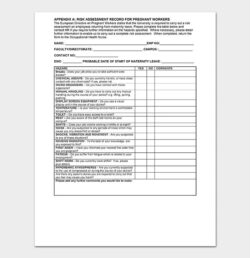
That’s where a comprehensive pregnancy at work risk assessment template comes in. This vital document isn’t just a checklist; it’s a structured approach to identifying and mitigating risks, ensuring a safe and supportive environment. It helps businesses understand their obligations, systematically evaluate potential dangers, and put appropriate control measures in place, fostering a culture of care and compliance. Let’s delve deeper into why this is so important and how you can effectively implement one in your organization.
Understanding the Importance of Workplace Risk Assessments for Pregnant Employees
When an employee informs you of her pregnancy, it triggers a specific set of duties under health and safety legislation in many countries. The core purpose of a risk assessment in this context is to identify any aspect of her job or working environment that could pose a risk to her or her unborn baby. This proactive approach helps prevent harm, demonstrates a commitment to employee welfare, and ensures legal compliance. Without a proper assessment, employers could unknowingly expose pregnant staff to hazards that might lead to stress, injury, or even more serious complications.
Beyond legal obligations, conducting a thorough risk assessment fosters a positive and inclusive workplace culture. It shows your employees that you value their health and safety, especially during such a significant life event. This can lead to increased morale, improved productivity, and better employee retention rates. When employees feel supported and secure, they are more likely to remain engaged and loyal to their organization. It’s about creating an environment where expectant mothers can continue to contribute their skills and expertise without compromising their health.
Think about the diverse range of jobs out there. A desk-bound role might have different considerations compared to someone working in a factory, a healthcare setting, or a retail environment. The assessment needs to be tailored to the individual’s specific role, working conditions, and any medical advice they may have received. This personalized approach is key to an effective assessment, as a generic checklist might miss specific nuances pertinent to a particular job or individual.
Key Areas to Consider During Your Assessment
When undertaking this assessment, it is important to think broadly about potential risks. These can often be categorized into several key areas:
- Physical Risks: This includes manual handling and lifting, prolonged standing or sitting, working at heights, vibration, excessive heat or cold, and even working with display screen equipment (DSE).
- Chemical Risks: Exposure to certain chemicals, solvents, cleaning agents, or laboratory substances can be harmful. It’s vital to check safety data sheets (SDS) and consider safer alternatives or increased protective measures.
- Biological Risks: Working in environments with potential exposure to infections, viruses, or bacteria (common in healthcare, childcare, or waste management) requires careful evaluation.
- Psychological Risks: Stress, long working hours, shift patterns, inadequate breaks, or heavy workload can impact a pregnant employee’s well-being.
- Other Risks: Night work, travel, aggressive animals, or even the layout of the workplace (e.g., trip hazards, accessibility) also need consideration.
Once potential risks are identified, the next step is to evaluate their severity and likelihood, and then implement appropriate control measures. This might involve adjusting duties, changing working hours, providing additional personal protective equipment (PPE), or even temporarily reassigning tasks.
Implementing and Utilizing a Pregnancy at Work Risk Assessment Template
Having a structured template for a pregnancy at work risk assessment simplifies the entire process. It provides a clear framework to follow, ensuring that no critical areas are overlooked. The first step, naturally, is for the employee to inform her employer of her pregnancy. This usually triggers the need for the risk assessment to be carried out promptly.
The assessment itself should be a collaborative process. While the employer is responsible for initiating and conducting it, the pregnant employee’s input is invaluable. She can provide unique insights into her daily tasks, any discomforts she might be experiencing, or specific medical advice she has received. Open communication ensures the assessment is thorough and truly addresses her individual needs and concerns. Remember, the goal is to make practical adjustments, not necessarily to remove her from her role entirely, unless absolutely necessary for safety.
Steps to Effective Template Utilization
When you are ready to complete your pregnancy at work risk assessment template, consider these practical steps:
- Identify Hazards: Go through the employee’s role and environment. Use the template to prompt thoughts on physical, chemical, biological, and psychological risks.
- Assess Risks: Evaluate who might be harmed and how. Consider the likelihood and severity of potential harm for the pregnant employee and her unborn child.
- Control Measures: Determine what actions need to be taken to eliminate or reduce the risks. This could include changes to duties, equipment, working hours, or environment.
- Record Findings: Document everything. This includes the identified risks, the proposed control measures, and the date of the assessment. This record is crucial for demonstrating compliance and for future reference.
- Review and Update: Pregnancy is a dynamic condition. The assessment isn’t a one-off event. It should be reviewed regularly, especially as the pregnancy progresses, or if the employee’s role changes, or if she experiences new symptoms or receives new medical advice.
It’s important to remember that flexibility is key. What works in the first trimester might not be suitable in the third. Regularly checking in with the employee and being prepared to adapt the control measures ensures ongoing safety and support.
Once the initial assessment is complete and control measures are in place, communicate these clearly to the pregnant employee. Ensure she understands what adjustments have been made and why. Provide her with a copy of the completed assessment and encourage her to raise any further concerns as her pregnancy progresses. This transparency builds trust and empowers her to advocate for her own well-being.
Implementing a robust system for managing pregnancy at work, centered around a well-executed risk assessment, is a hallmark of a responsible and caring employer. It protects your most valuable assets – your people – and secures your business from potential legal challenges, all while fostering a productive and empathetic workplace for everyone.
By proactively addressing potential hazards and providing tailored support, businesses can create an environment where expectant mothers feel safe, valued, and empowered to continue their professional journey alongside their personal one. This commitment not only meets legal requirements but also cultivates a workplace where every employee feels supported through all stages of their life.