Understanding and managing the risks associated with Legionella bacteria is a crucial responsibility for many property owners and businesses across the United Kingdom. Legionella can cause Legionnaires’ disease, a severe form of pneumonia, and its presence often stems from poorly managed water systems. The law, specifically the Health and Safety at Work etc Act 1974 and the Control of Substances Hazardous to Health Regulations 2002 (COSHH), requires a thorough assessment of the risks from Legionella. This isn’t just a recommendation; it’s a legal obligation to protect employees, residents, and the public.

Navigating these regulations can seem daunting, but a well-structured legionella risk assessment template UK can significantly simplify the process. It provides a systematic framework to identify potential hazards, evaluate existing control measures, and plan for any necessary improvements. Far from being just a tick-box exercise, a good template acts as a guide, ensuring that no critical area is overlooked and that your approach to managing Legionella risk is both comprehensive and compliant.
What to Look for in a Comprehensive Legionella Risk Assessment Template
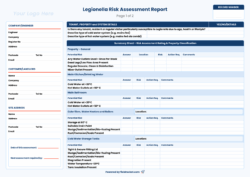
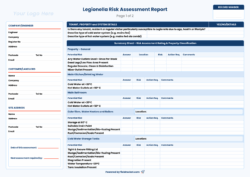
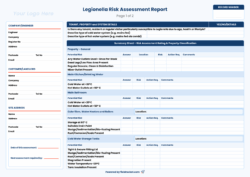
When you’re looking for a reliable legionella risk assessment template UK, it’s essential to understand that not all templates are created equal. A truly effective template goes beyond mere compliance; it becomes a practical tool for ongoing risk management. It should guide you through identifying all potential sources of Legionella exposure within your premises, from the obvious hot and cold water systems to less apparent features like cooling towers, spa pools, and even decorative water features. The template should prompt you to consider the entire water system, including storage tanks, pipework, calorifiers, and showerheads, ensuring a holistic review.
A high-quality template will break down the assessment into manageable sections, making it easier to systematically evaluate each part of your water system. It should include clear sections for recording crucial information such as water temperatures at various points, evidence of stagnation, the presence of scale or sludge, and any dead legs in the pipework where water might sit undisturbed. These details are vital for pinpointing areas where Legionella bacteria might multiply and spread. It’s also important that the template aligns with the guidance set out in the Health and Safety Executive’s Approved Code of Practice and guidance, Legionnaires’ disease: The control of Legionella bacteria in water systems (ACOP L8), which is the cornerstone of Legionella control in the UK.
Furthermore, a comprehensive template should not only identify risks but also document the control measures already in place and propose additional actions where necessary. This might include recommendations for improved cleaning regimes, maintenance of water temperatures, water treatment solutions, or even system modifications. Crucially, it needs to be a live document, adaptable to changes within your water system or premises. It should facilitate the recording of responsella, including who is responsible for carrying out tasks, when they were completed, and verification that the actions have been effective.
Key Sections Your Template Should Cover
- Property Details and Responsible Persons: Clear identification of the premises and individuals accountable for Legionella management.
- Water System Description: A detailed overview of all hot and cold water systems, cooling systems, and any other water-related features.
- Hazard Identification: Specific points for noting potential risks like low flow areas, excessive water temperatures (too low in hot, too high in cold), or the presence of biofilm.
- Existing Control Measures: Documentation of current strategies for risk reduction, such as thermostatic mixing valves, regular flushing, or water treatment.
- Monitoring and Inspection Schedules: A plan for routine checks, including temperature monitoring and visual inspections.
- Corrective Actions and Responsibilities: Space to record actions taken to mitigate identified risks, with assigned responsibilities and deadlines.
- Review Dates: A section to schedule periodic reviews of the assessment to ensure ongoing effectiveness and compliance.
How to Effectively Use Your Legionella Risk Assessment Template
Having a legionella risk assessment template in hand is just the first step; effectively using it is where true risk management begins. The process starts with a thorough understanding of your water systems. Before you even begin filling out the template, it’s advisable to create a schematic drawing or flow diagram of your entire water system. This visual aid will help you identify all supply lines, storage tanks, outlets, and any areas that might be prone to stagnation or temperature fluctuations. Knowing your system intimately is fundamental to a robust assessment.
Once you have a clear picture of your water layout, you can systematically work through the template. Begin by accurately recording the details of your premises and identifying the individuals responsible for Legionella control. Then, move methodically through each section, inspecting the relevant components of your water system. This means physically checking water temperatures at various outlets, looking for signs of corrosion or leakage, and noting any areas where water might not be circulating freely. Be honest and thorough; the goal is to identify all potential risks, not to gloss over them.
After identifying the risks and documenting your findings in the template, the next critical phase is to develop a comprehensive action plan. Your template should have dedicated sections for this. For each identified risk, you need to propose specific control measures or improvements, assign responsibility for carrying out these actions, and set realistic completion dates. This might involve anything from adjusting water heater settings to regularly flushing infrequently used outlets, or even undertaking more significant system upgrades. Ensure that all actions are measurable and verifiable.
Finally, the effective use of your template extends far beyond the initial assessment. It’s a dynamic document that requires regular review and updates. Your template should include a schedule for periodic reassessments, ideally at least every two years, or whenever there are significant changes to your water system or property. This could be due to refurbishment, changes in water usage, or new tenancy agreements. Continuous monitoring, diligent record-keeping of all actions taken, and regular reviews are essential to maintaining control over Legionella risks and demonstrating ongoing compliance.
Ensuring that you have a robust and up-to-date legionella risk assessment is more than just meeting a legal requirement; it’s about safeguarding health and maintaining peace of mind. By methodically working through a comprehensive template, you gain a clear understanding of your building’s water system vulnerabilities and establish a proactive plan to mitigate them. This systematic approach not only protects individuals from potential harm but also protects you from the serious consequences of non-compliance.
Taking the initiative to properly assess and manage your Legionella risks is a commitment to responsible property management. The right tools and a dedicated approach transform a complex legal obligation into a manageable and transparent process. By staying vigilant and regularly reviewing your controls, you ensure your water systems remain safe for everyone who uses them.