Navigating the end of an employment relationship can be a delicate process for both employers and employees. While some separations are contentious, many situations call for a more harmonious approach. This is where a mutual termination of employment letter template becomes an invaluable tool, facilitating a clear and amicable parting of ways.
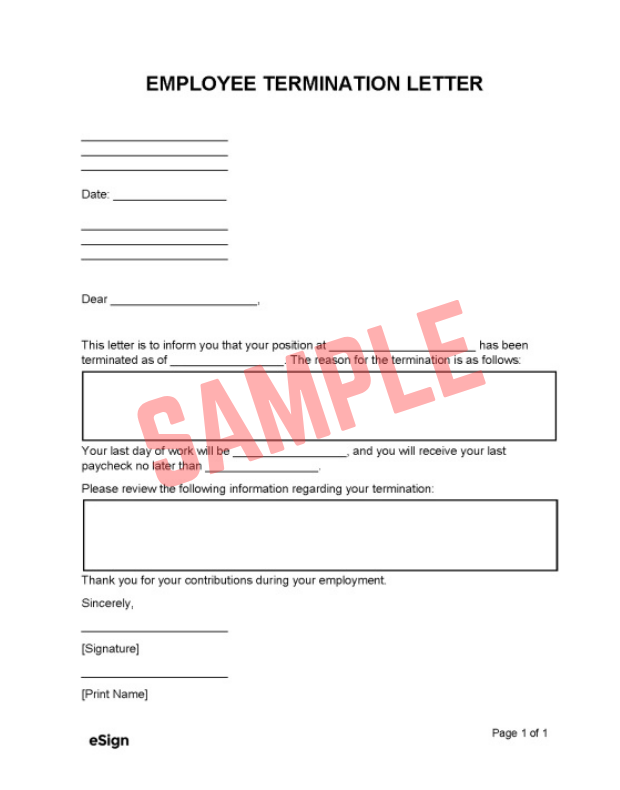
An agreement to mutually terminate employment offers a structured path to separation, benefiting both parties by providing clarity and reducing potential disputes. This comprehensive guide will explore the intricacies of such agreements, highlighting their benefits and the essential components required for a legally sound and respectful document. We’ll also provide a practical mutual termination of employment letter template to help you draft your own.
Understanding Mutual Termination Of Employment
Ending an employment relationship through mutual agreement represents a collaborative decision between an employer and an employee to part ways. This approach stands in contrast to unilateral decisions like resignation or firing, offering a smoother transition for all involved. It’s often preferred when circumstances change, or when both parties recognize that the employment is no longer a good fit.
What Is A Mutual Employment Termination Agreement?
A mutual employment termination agreement is a formal document outlining the terms and conditions under which an employer and employee agree to end their working relationship. It’s a legally binding contract that protects both parties, ensuring that the separation is voluntary and understood by all. This type of agreement aims to prevent future misunderstandings or legal challenges.
These agreements are commonly used in various scenarios. They might arise during organizational restructuring, when an employee seeks to pursue new opportunities, or when a position’s responsibilities evolve beyond an employee’s desired career path. Essentially, it provides a framework for a respectful and professional exit, maintaining positive relations.
Benefits Of An Amicable Separation Agreement
Opting for an amicable separation agreement carries significant advantages for both the employer and the employee. For the employer, it drastically reduces the risk of wrongful termination claims, which can be costly and damaging to reputation. It also helps maintain positive morale among remaining staff, who see a fair and transparent process.
Employees also benefit greatly from an amicable departure. They might secure a more favorable severance package, retain eligibility for unemployment benefits, or even receive a positive reference, which can be crucial for future job searches. This approach fosters a sense of dignity and respect, preventing the emotional turmoil often associated with involuntary terminations. Experts often note that companies using mutual agreements see a reduction in legal disputes by as much as 30%.
Legal Considerations For Joint Agreement To End Employment
When drafting a joint agreement to end employment, several legal considerations must be carefully addressed. The agreement must clearly state that the termination is mutual and voluntary, avoiding any language that suggests coercion or duress. Both parties should have sufficient time to review the document, and ideally, seek independent legal counsel before signing.
Key legal aspects include ensuring compliance with all relevant labor laws, such as those governing final paychecks, accrued vacation time, and health benefits like COBRA. The agreement should also detail any release of claims, where both parties waive their right to sue each other over issues related to the employment or termination. This ensures finality and peace of mind for everyone involved.
Key Elements Of An Effective Mutual Termination Letter
Crafting a comprehensive and legally sound mutual termination letter requires careful attention to detail. This document serves as the official record of the agreement, so its clarity and completeness are paramount. A well-written letter helps to prevent future disputes and ensures a smooth transition for both the departing employee and the organization.
Essential Components To Include
A robust **mutual termination of employment letter template** should contain several critical pieces of information. It must clearly state the effective date of termination, the names of both the employer and the employee, and explicitly confirm that the decision to terminate employment is mutual. This foundational statement sets the tone for the entire document.
Beyond the basics, the letter should detail any severance package, including the amount, payment schedule, and conditions for receipt. Provisions for the return of company property, such as laptops, keys, and access badges, are also essential. Confidentiality clauses, non-disparagement agreements, and a release of claims against each other are vital for protecting both parties’ interests post-separation.
Crafting A Clear And Professional Document
The language used in a mutual termination letter should be professional, neutral, and unambiguous. Avoid emotionally charged words or accusatory tones; the goal is to document an agreement, not to assign blame. Each clause should be precise, leaving no room for misinterpretation regarding responsibilities or entitlements.
Using clear headings and bullet points can significantly enhance the readability of the document. For instance, clearly outlining “Severance Terms” or “Return of Company Property” with sub-points makes the agreement easily digestible. Ultimately, a well-structured and thoughtfully worded letter fosters trust and concludes the employment relationship on a positive note. Studies suggest that clear documentation can reduce post-employment conflicts by up to 40%.
Sample Mutual Termination Of Employment Letter Template
Below is a comprehensive mutual termination of employment letter template that you can adapt for your specific situation. Remember, this is a sample and should be reviewed by legal counsel before formal use.
[Date]

[Employee Name]
[Employee Address]
[Employee City, State, Zip]

[Employer Name]
[Employer Address]
[Employer City, State, Zip]

Subject: Mutual Agreement to Terminate Employment

Dear [Employee Name] and [Employer Name],

This letter serves to confirm the mutual agreement between [Employee Name] (hereinafter "Employee") and [Company Name] (hereinafter "Company") to voluntarily terminate Employee's employment. Both parties acknowledge and agree that this termination is by mutual consent and not due to any fault, misconduct, or adverse action by either party.

The effective date of this mutual termination of employment shall be [Effective Date of Termination]. On this date, Employee's employment with Company will officially conclude, and Employee will no longer be considered an employee of Company.

Terms of Separation:

1.  **Final Compensation:** Employee will receive all unpaid wages, salaries, and commissions earned up to the Effective Date of Termination, payable on [Date of Final Paycheck], in accordance with applicable state and federal laws.
2.  **Accrued Vacation/PTO:** Employee will be paid for all unused accrued vacation or paid time off (PTO) as of the Effective Date of Termination, in the amount of [Number] hours, calculated at Employee's current hourly rate, and included with the final paycheck.
3.  **Severance Package:** In consideration for Employee's agreement to the terms herein, Company agrees to pay Employee a severance amount of [Amount, e.g., $X,XXX.XX], less applicable taxes and withholdings. This severance will be paid as [Lump Sum on Date / X installments over Y weeks/months]. This severance payment is contingent upon Employee's full compliance with the terms of this agreement.
4.  **Benefits Continuation:** Information regarding the continuation of health benefits under COBRA, if applicable, will be provided separately by [HR Department/Benefits Administrator]. Employee's eligibility for other benefits will cease on the Effective Date of Termination, in accordance with Company policies and plan documents.
5.  **Return of Company Property:** Employee agrees to return all Company property, including but not limited to, laptop, cell phone, keys, access cards, and any confidential documents, by [Date for Return of Property].
6.  **Confidentiality:** Employee reaffirms their commitment to the confidentiality provisions of any prior agreements with Company, including but not limited to, the Employee Handbook and any Non-Disclosure Agreements. Employee agrees not to disclose any confidential or proprietary information of Company.
7.  **Release of Claims:** Employee, on behalf of themselves, their heirs, executors, and assigns, hereby fully and forever releases and discharges Company, its officers, directors, employees, agents, and affiliates, from any and all claims, demands, and causes of action, known or unknown, which Employee has or may have arising out of or relating to Employee's employment with or separation from Company.
8.  **Non-Disparagement:** Both parties agree not to make any disparaging remarks or comments, orally or in writing, about the other party, their business, or their professional conduct.
9.  **Acknowledgement:** Employee acknowledges that they have been advised to consult with an attorney regarding this Agreement and have had the opportunity to do so. Employee further acknowledges that they have carefully read and understand the terms of this Agreement and are signing it voluntarily and without coercion.

Please sign and date below to confirm your mutual agreement to these terms.

Sincerely,

_________________________
[Employer Representative Name]
[Employer Representative Title]
[Company Name]

_________________________
[Employee Name]

Date: _______________
This template covers many common provisions. Remember to customize brackets [] with your specific details. Always verify that the included clauses comply with local labor laws and company policies.
Successfully navigating the end of an employment relationship requires foresight and clear communication. Utilizing a comprehensive mutual termination of employment letter template provides a structured and respectful pathway for both employers and employees to part ways amicably. This approach minimizes potential conflicts and ensures that the separation is handled professionally, preserving the dignity and future prospects of everyone involved.
By understanding the key components and legal considerations discussed, you can confidently draft an agreement that serves the best interests of both parties. While this guide offers a robust starting point, it is always prudent to consult with legal counsel to tailor the template to your unique circumstances and ensure full compliance with all applicable laws. This final step guarantees a smooth and legally sound transition for both the departing employee and the company.