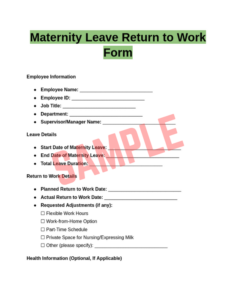
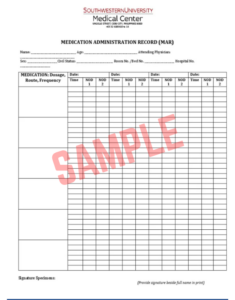
Returning to work after an illness or injury can be a complex process, often requiring careful coordination between an employee, their healthcare provider, and their employer. A clear and comprehensive medical return to work letter template is an essential tool to ensure a smooth transition, providing necessary medical clearance and outlining any required accommodations. This document serves as a vital bridge, communicating crucial information about an employee’s fitness for duty and helping to prevent misunderstandings that could delay their return or jeopardize their health.  Understanding the components and purpose of a doctor’s note for returning to work is beneficial for everyone involved. In this article, we will explore why such a standardized template is crucial, delve into its key elements, and provide a practical sample that can be adapted for various situations. You’ll learn how to effectively use this medical clearance form to facilitate a safe and timely return to the workplace.
Key Components Of An Effective Return To Work Doctor’s Note
A well-structured medical return to work letter template ensures that all critical information is conveyed clearly and concisely. This helps employers understand an employee’s capacity to perform their job duties while respecting privacy. It also provides a legal record of medical clearance and any recommended adjustments.
Employers rely on these notes to ensure compliance with regulations such as the Family and Medical Leave Act (FMLA) or the Americans with Disabilities Act (ADA). The note should confirm the employee’s readiness to resume work and specify any limitations. Without this detailed documentation, an employee’s return might be delayed or mismanaged, leading to potential issues for both parties.
Here are the essential elements typically included in a comprehensive medical return to work letter:
- Patient Information: Full name, date of birth, and possibly employee ID number.
- Healthcare Provider Details: Doctor’s full name, medical specialty, contact information, and office address.
- Date of Examination: The date the physician assessed the employee’s fitness for work.
- Return to Work Date: The specific date the employee is cleared to resume their job duties.
- Fitness for Duty Status: A clear statement confirming the employee is fit for full duty, or specifying any temporary or permanent restrictions.
- Work Restrictions/Accommodations: Detailed description of any limitations, such as lifting restrictions, reduced hours, modified tasks, ergonomic needs, or frequency of breaks.
- Duration of Restrictions: The expected timeframe for any temporary restrictions, or an indication if they are permanent.
- Reason for Absence (Optional): A general reason can be included if the employee consents, but specific diagnosis details are typically not required due to privacy.
- Doctor’s Signature and Stamp: The physician’s official signature, along with their professional stamp or seal.
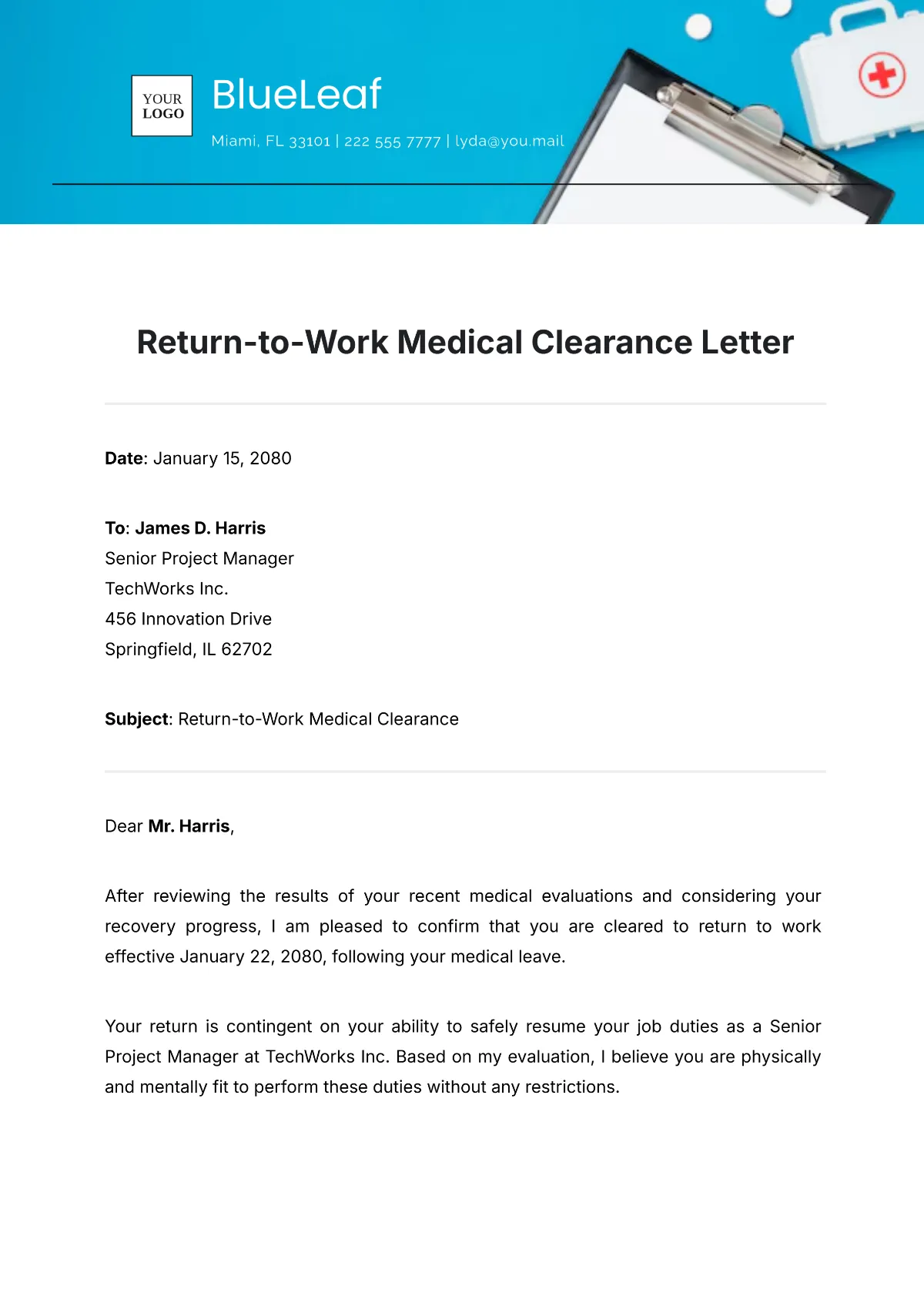
Sample Medical Return To Work Letter Template
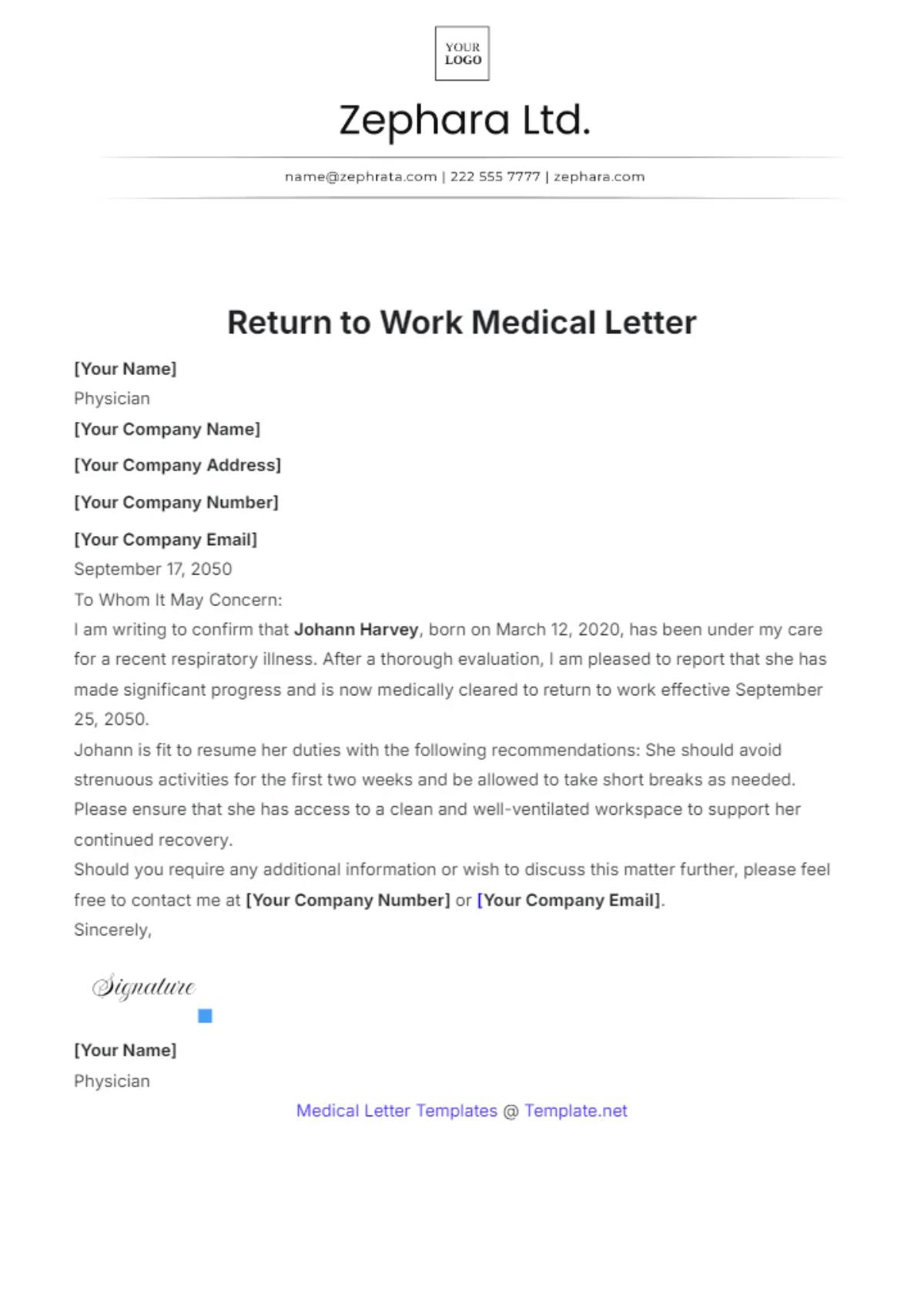
Using a standardized medical return to work letter template streamlines the process for everyone involved. This sample provides a framework that can be adapted by healthcare providers to furnish employers with necessary information. It balances clarity with patient confidentiality, focusing on work capabilities rather than detailed medical conditions.
[Healthcare Provider Letterhead]

[Date]

[Employer Name]
[Employer Address]
[City, State, Zip Code]

Subject: Medical Clearance for Return to Work - [Employee Full Name]

Dear [Employer Name] or To Whom It May Concern,

This letter serves to confirm that [Employee Full Name], Date of Birth: [Employee DOB], who has been under my medical care, is medically cleared to return to work.

[Choose ONE of the following options and delete the other]

Option 1: Full Duty Clearance
Mr./Ms./Mx. [Employee Last Name] is cleared to return to work for full duty without any restrictions as of [Date of Return].

Option 2: Restricted/Modified Duty Clearance
Mr./Ms./Mx. [Employee Last Name] is cleared to return to work as of [Date of Return] with the following temporary restrictions/accommodations:
- [Specify Restriction 1, e.g., No lifting over 10 pounds]
- [Specify Restriction 2, e.g., Seated work only for 4 hours per day]
- [Specify Restriction 3, e.g., Requires 15-minute break every 2 hours]
- [Add any other relevant restrictions or accommodations]

These restrictions are anticipated to be in place until [Date or "until further notice/re-evaluation"]. A follow-up appointment is scheduled for [Date of Follow-up].

Please contact me if you require further clarification regarding these restrictions or the employee's ability to perform their job duties within these parameters.

Sincerely,

[Doctor's Full Name]
[Doctor's Medical Specialty]
[Clinic/Hospital Name]
[Phone Number]
[Email Address]
[Doctor's Signature]
[Official Clinic/Hospital Stamp]
Why Employers And Employees Need A Standardized Return To Work Form
A standardized return to work form, like a robust medical return to work letter template, offers significant advantages for both employers and employees. For employees, it provides a clear pathway back to their job, ensuring that their health is protected with appropriate accommodations. It eliminates ambiguity about their fitness for duty and allows them to transition back with confidence.
Employers benefit from clear documentation that helps them manage their workforce effectively and comply with various legal obligations. A consistent form ensures all necessary information is collected, reducing the risk of errors or omissions. This clarity supports a smooth operational flow and minimizes the potential for disputes regarding an employee’s work capacity.
Furthermore, having a uniform template can expedite the return-to-work process. It guides healthcare providers on what information is essential, making it easier for them to complete the required documentation efficiently. This efficiency ultimately benefits the employee by reducing delays in their re-entry into the workplace and helps the employer by quickly bringing back valuable team members.
Customizing Your Return To Work Letter Template For Specific Situations
While a general medical return to work letter template provides a solid foundation, specific situations often require customization. For instance, an employee returning from a long-term disability or surgery might need more extensive restrictions than someone recovering from a minor illness. The template should be flexible enough to accommodate detailed instructions regarding light duty, reduced hours, or specific ergonomic requirements.
Mental health-related absences also warrant careful consideration, where the “restrictions” might involve modified workloads, flexible scheduling, or access to support resources, rather than physical limitations. Open communication between the employee, their doctor, and the employer’s HR department is crucial in these cases to ensure all needs are met. This collaborative approach ensures the template serves as a dynamic tool, adapting to the unique circumstances of each individual’s return.
The proper use of a comprehensive medical return to work letter is invaluable for fostering a supportive and productive work environment. It ensures that employees can safely and effectively reintegrate into their roles following a health-related absence. By providing clear medical guidance and outlining necessary accommodations, this document minimizes risks for both the individual and the organization.
Utilizing a well-designed template helps to streamline administrative processes and maintain compliance with employment laws. Always encourage employees to work closely with their healthcare providers to complete these forms accurately. Employers, in turn, should consult with HR and legal professionals to ensure their return-to-work policies align with current regulations and best practices.