Navigating the intricate world of aviation maintenance means staying on top of countless regulations and requirements. Among the most critical are Airworthiness Directives (ADs), mandatory instructions for correcting unsafe conditions in aircraft, engines, propellers, or appliances. Keeping meticulous records of compliance is not just good practice; it is a fundamental aspect of aviation safety and regulatory adherence. That is precisely why having a robust airworthiness directive compliance record template is so incredibly valuable for operators, maintenance organizations, and individual aircraft owners alike.
These directives are issued by regulatory bodies, such as the FAA in the United States or EASA in Europe, and they outline specific actions that must be taken to ensure the continued airworthiness of affected components. From inspections to part replacements, each AD comes with its own set of instructions and compliance deadlines. Missing one or incorrectly recording its completion can have serious repercussions, ranging from grounded aircraft to significant safety incidents.
Imagine the headache of an audit without a clear, organized system for tracking these vital compliance actions. It is a scenario no one wants to face. A well-designed template streamlines this entire process, transforming a potentially overwhelming task into a manageable and transparent workflow. It serves as your central repository for all AD-related information, providing a clear, chronological, and verifiable history of every action taken.
Why a Dedicated Template is Indispensable for AD Management
Having a dedicated template for airworthiness directive compliance is far more than just a bureaucratic checkbox; it is a critical tool for maintaining operational integrity and ensuring safety. Think of it as your aircraft’s health report card, specifically tailored to show that all mandatory medical procedures have been performed on time and correctly. Without such a structured approach, the risk of oversight dramatically increases, potentially compromising safety and leading to non-compliance penalties.
One of the primary benefits is the sheer efficiency it brings to record keeping. Instead of scrambling through various logbooks or loose papers during an inspection or audit, you have a standardized document ready to present. This not only saves valuable time but also projects an image of professionalism and meticulous attention to detail, which is highly regarded by regulators. It ensures that every piece of information required for AD compliance is captured consistently, regardless of who performed the maintenance or when it was completed.
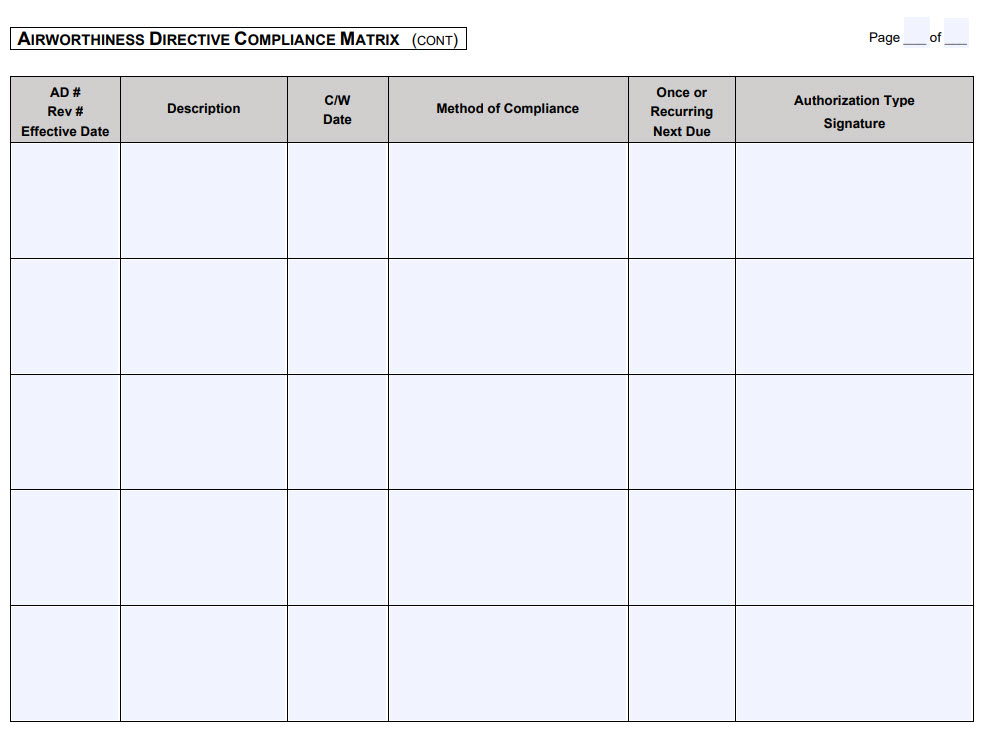
Furthermore, a template acts as a powerful memory aid and a tool for preventing human error. ADs can be complex, sometimes involving multiple steps, various methods of compliance, or recurring inspections. A well-structured template prompts you to record every necessary detail: the AD number, its revision, the date of compliance, the method used, the component affected, and, crucially, who performed and inspected the work. This systematic capture of data minimizes the chances of forgetting a critical step or misinterpreting a previous compliance action.
Enhancing Audit Readiness and Risk Mitigation
For any aircraft owner or maintenance organization, audit readiness is a constant state of being. Regulators periodically conduct reviews to ensure that aircraft are being maintained according to current standards. When it comes to ADs, auditors will want to see clear, unambiguous proof of compliance. A comprehensive template provides exactly that, allowing you to quickly demonstrate that all mandatory directives have been addressed. This transparency can significantly shorten audit times and reduce stress.
Beyond audits, a robust AD compliance record mitigates operational risks. By providing a clear history of AD implementation, it helps in identifying potential areas of concern, tracking recurring ADs, and planning future maintenance more effectively. It ensures that everyone involved in the maintenance chain, from mechanics to quality assurance personnel, understands the status of AD compliance for any given aircraft or component. This continuous understanding contributes to a safer operating environment for pilots, crew, and passengers.
Finally, consider the long-term value. Aircraft are often bought and sold, and a complete, well-organized set of maintenance records, including AD compliance, significantly adds to an aircraft’s market value and makes transactions smoother. Prospective buyers or their technical advisors will want to see indisputable evidence that the aircraft has been properly maintained and all ADs have been correctly addressed throughout its operational life.
Developing and Implementing Your AD Compliance Template
Crafting an effective airworthiness directive compliance record template involves thoughtful design and consistent application. It is not about simply jotting down notes; it is about creating a living document that accurately reflects the aircraft’s AD status at any given moment. Start by identifying all the key data points that absolutely must be recorded for each AD. This ensures you capture all regulatory requirements and practical information needed for future reference.
Once you have established the template’s structure, the next step is its consistent implementation. Everyone involved in maintenance must understand how to use the template, where to access it, and the importance of accurately completing every field. Training personnel on the template’s usage is crucial to ensure uniformity and prevent omissions. Whether you opt for a digital solution within a maintenance tracking software or a physical binder system, consistency is paramount.
Consider the following essential elements to include in your template for each Airworthiness Directive:
* Aircraft Tail Number and Type
* Airworthiness Directive Number and Revision Level
* AD Issue Date and Effective Date
* Applicability (e.g., specific serial numbers, components)
* Compliance Method (e.g., inspection, repair, replacement)
* Date of Compliance
* Total Time Since New (TTSN) or Time Since Overhaul (TSO) at Compliance
* Cycles Since New (CSN) or Cycles Since Overhaul (CSO) at Compliance
* Reference to Supporting Documentation (e.g., work order, logbook entry)
* Name and Signature of Person Performing the Work
* Name and Signature of Inspector/Quality Assurance
* Date of Next Recurring Compliance (if applicable)
Implementing such a template not only serves immediate compliance needs but also contributes to a culture of safety and precision within your aviation operations. It transforms a complex regulatory requirement into a structured, manageable task, providing clarity and accountability every step of the way.
Ultimately, a diligently maintained record of airworthiness directive compliance is a testament to an operator’s commitment to safety and regulatory excellence. It provides an unbroken chain of evidence that all necessary actions have been taken to keep an aircraft in an airworthy condition, protecting both the asset and those who fly in it. This level of detail and organization not only eases the burden of regulatory oversight but also provides invaluable historical data for future maintenance planning and operational decisions.