Ever found yourself scratching your head, trying to recall why a particular architectural choice was made months or even years ago? Or perhaps a new team member is bewildered by a legacy system’s design, with no clear documentation explaining the ‘why’? This common challenge is precisely where an effective architecture decision record template comes into its own. It’s not just about documenting what was built, but critically, why it was built that way.
Without a systematic way to capture these crucial decisions, teams risk losing vital context. Key design choices can become shrouded in mystery, leading to repetitive discussions, inconsistent patterns, and even costly rework. New engineers spend valuable time deciphering implicit assumptions, while senior architects might struggle to defend past decisions to new stakeholders.
That’s why many high-performing engineering teams are embracing Architecture Decision Records, or ADRs. They serve as a historical log of significant architectural decisions, their context, and their consequences. And to make this process smooth, consistent, and truly beneficial, having a well-structured template is absolutely invaluable. It provides a clear framework, ensuring all essential information is captured every single time.
Why a Solid Architecture Decision Record Template is Your Team’s Best Friend
Implementing an architecture decision record template isn’t just about ticking a box; it’s about fostering clarity, accountability, and long-term system health. Think of it as leaving a breadcrumb trail for every significant fork in the road of your project’s development. This trail isn’t just for your future self or new team members; it also encourages more deliberate and well-reasoned decisions in the present.
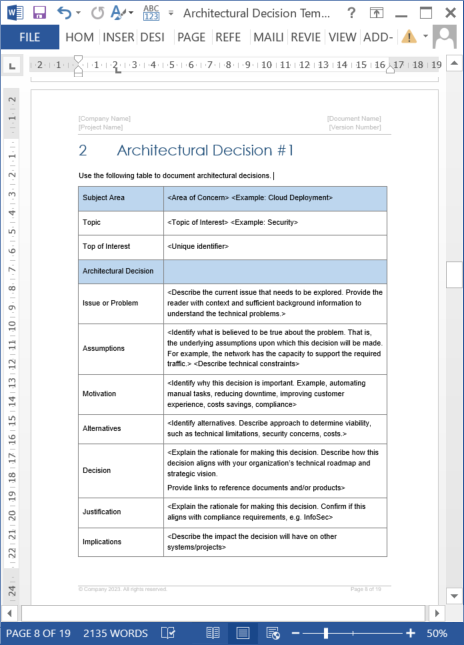
At its core, an ADR captures the “what,” “why,” and “what if” of an architectural choice. It typically includes sections like “Context,” which outlines the problem or challenge being addressed; “Decision,” describing the chosen solution and alternatives considered; and “Consequences,” detailing the positive and negative impacts of the decision. These sections are crucial for providing a comprehensive understanding of the decision-making process.
Understanding the Key Elements of an Effective ADR
The “Context” section is paramount. This is where you lay out the background information, the forces at play, the current state of the system, and the specific problem or requirement that necessitates an architectural decision. Without a clear understanding of the context, the decision itself might seem arbitrary or even misguided when reviewed later. It helps future readers grasp the circumstances that led to the discussion.
Next comes the “Decision” itself. This should be a clear, concise statement of the chosen solution. It’s often beneficial to list alternative solutions that were considered and explain why they were rejected. This demonstrates due diligence and helps prevent revisiting options that have already been evaluated and deemed unsuitable. Transparency in this section builds confidence in the final choice.
The “Consequences” section is equally vital. Every architectural decision has ripple effects, both good and bad. This is where you document the immediate and potential long-term impacts on the system, its users, and the development team. This might include impacts on performance, security, maintainability, cost, and even future development efforts. Being explicit about consequences helps manage expectations and highlights potential areas for future mitigation.
Beyond these core sections, a robust template often includes metadata such as the date of the decision, its status (e.g., proposed, accepted, superseded), and the names of the architects or team members involved in making it. Some templates also incorporate a “changelog” for any updates or revisions to the decision, ensuring that the record remains current and accurate over time. This holistic approach ensures that the ADR serves as a living document, evolving with the project.
Building Your Own: Practical Tips for Customizing Your Template
While a general architecture decision record template provides an excellent starting point, the real power comes from adapting it to your team’s specific culture, workflow, and project needs. No two teams are exactly alike, so don’t be afraid to tweak the sections, add new ones, or even simplify existing ones to make it truly effective for your context. The goal is to create a template that encourages adoption, not one that feels like burdensome overhead.
Start small, perhaps by introducing a basic template for a few key decisions and gathering feedback from your team. What works well? What feels redundant? Are there crucial pieces of information that are consistently missed? Iteratively refine your template based on this real-world usage. Consider where these ADRs will live—a version control system alongside your code, a dedicated knowledge base, or an internal wiki? Accessibility is key for future reference.
When thinking about customization, here are some points to consider:
- Team Culture and Size: A smaller team might prefer a more lightweight template, while a larger enterprise might require more formal sections for compliance or extensive stakeholder reviews.
- Project Type: Different types of projects (e.g., greenfield development, maintaining a legacy system, microservices vs. monolith) might benefit from specific sections tailored to their unique challenges.
- Tooling and Integration: Can your ADRs link directly to related issues in your project management tool, or to specific code repositories? Integrating them into existing workflows can significantly boost adoption.
Ultimately, a well-implemented architecture decision record template transforms how your team approaches system design. It moves conversations from ephemeral chats and meeting notes into a durable, accessible, and searchable format. This commitment to transparent documentation fosters a culture of informed decision-making and shared understanding, preventing architectural drift and reducing technical debt in the long run.
By investing time in creating and maintaining these records, your team gains a powerful tool for clarity, consistency, and efficient onboarding. It ensures that every significant architectural choice is not only made thoughtfully but also remembered, understood, and leveraged for the continued success of your projects. This proactive approach to documentation is a cornerstone of robust software development practices.