Navigating employee performance issues can be one of the more challenging aspects of management. When a minor infraction occurs or a performance standard is slightly missed, an immediate, informal conversation is often the most effective first step. This initial discussion aims to correct behavior early before it escalates into a more significant problem.
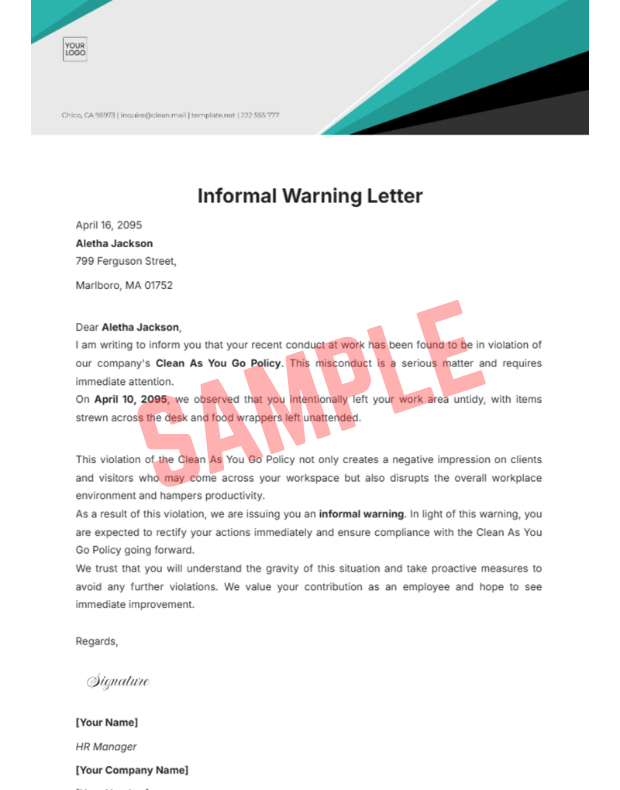
While these conversations are verbal, documenting them offers crucial benefits for both the employee and the organization. It provides a clear record of the discussion, outlining expectations and potential next steps. This is where an informal verbal warning letter template becomes an invaluable tool for managers and HR professionals alike.
This comprehensive guide will explore the importance of informal verbal warnings, detail when and how to issue them, and provide a practical informal verbal warning letter template you can adapt for your workplace. By understanding and utilizing this resource, you can foster a more productive and accountable work environment.
Understanding the Purpose of an Informal Verbal Warning
An informal verbal warning serves as an initial, gentle nudge to an employee whose performance or conduct has strayed slightly from expectations. It’s a proactive measure, designed to address minor issues swiftly and prevent them from becoming more serious or habitual. Think of it as an early intervention strategy in employee development.
When to Issue a Verbal Warning
Verbal warnings are best suited for minor infractions or first-time offenses that do not warrant formal disciplinary action. These might include occasional tardiness, minor policy violations, a temporary dip in productivity, or a single instance of unprofessional behavior. The key is that the issue is typically easily correctable with direct feedback.
It’s crucial to address these issues promptly, ideally shortly after the incident occurs. Delaying feedback can send the wrong message, implying that the behavior is acceptable or not a priority. Swift intervention demonstrates that standards are taken seriously and provides the employee with immediate an opportunity to improve.
Benefits of Documenting Verbal Warnings
Even though the warning itself is verbal, documenting the conversation is a critical step that many managers overlook. A written record of the discussion serves multiple purposes. It creates a clear paper trail, confirming that the employee was made aware of the issue and the expectations for improvement.
Documentation protects both the employer and the employee. For the employer, it provides evidence of fair and consistent application of company policies, which can be vital if further disciplinary actions become necessary. For the employee, it clarifies the conversation and provides a reference point for their improvement efforts. Studies suggest that clear and consistent feedback can significantly improve employee engagement and performance, with some data indicating a correlation between timely feedback and a 10-15% increase in productivity.
Key Elements of an Effective Verbal Warning
For a verbal warning to be effective, it must be clear, concise, and constructive. The discussion should focus on specific behaviors or incidents, rather than making generalizations about the employee’s character. Managers should explain why the behavior is a concern and outline the expected standards or actions moving forward.
During the conversation, it’s also important to establish clear expectations for improvement and discuss potential consequences if the behavior does not change. Offering support or resources, such as additional training or clarification of procedures, can also be beneficial. This approach helps the employee understand the gravity of the situation while feeling supported in their efforts to correct it.
Crafting Your Informal Verbal Warning Letter Template
Developing a consistent approach to informal verbal warnings helps ensure fairness and clarity across your organization. A standardized template streamlines the process for managers and guarantees that all necessary information is captured. This consistency is vital for maintaining a professional and equitable workplace environment.
Essential Components of the Template
An effective informal verbal warning letter template should include several key pieces of information to ensure clarity and completeness. It begins with the employee’s name and the date of the warning, along with the manager’s name. The core of the template will detail the specific incident or behavior that prompted the warning.
Beyond describing the issue, the template should clearly state the company’s expectation for future conduct or performance. It’s also wise to include a brief statement about potential next steps if the issue persists. This ensures the employee understands the seriousness of the situation and the potential for formal action.
Tips for Delivering the Warning Effectively
Delivering an informal verbal warning requires tact and professionalism. Always conduct the conversation in a private setting to respect the employee’s privacy and encourage open dialogue. Maintain a calm, objective tone, focusing on the facts of the situation rather than emotional reactions.
It’s important to allow the employee to respond and ask questions, fostering a two-way conversation. Managers should actively listen to the employee’s perspective and address any misunderstandings. Conclude the discussion by reiterating the expectations and offering support, ensuring the employee leaves with a clear understanding of the situation and a path forward.
Sample Informal Verbal Warning Letter Template
Using a consistent format for documenting informal verbal warnings is crucial for HR best practices. This informal verbal warning letter template provides a structured way to record important details, ensuring that all relevant information is captured for future reference. It promotes fairness and transparency in performance management.
Here is a sample informal verbal warning letter template you can adapt:
[Your Company Letterhead]
Date: [Date of Letter]
To: [Employee’s Full Name] Job Title: [Employee’s Job Title] Department: [Employee’s Department]
From: [Manager’s Full Name] Job Title: [Manager’s Job Title]
Subject: Informal Verbal Warning regarding [Specific Issue, e.g., Tardiness/Productivity/Conduct]
Dear [Employee’s Name],
This letter serves to document our conversation on [Date of Verbal Discussion] regarding [briefly state the issue, e.g., your recent instances of tardiness / your output falling below expected levels / your professional conduct on X date].
During our discussion, we reviewed the specific incident(s) that occurred on [Date(s) of Incident(s) and time if relevant]. We discussed how this behavior [explain the impact, e.g., affects team productivity, violates company policy, creates a negative impression]. Specifically, we talked about [provide specific details of the incident or behavior, e.g., your arrival at 9:15 AM on three separate occasions last week, rather than the 9:00 AM start time].
It is expected that all employees [state the expected behavior or standard, e.g., adhere to their scheduled working hours / meet established productivity benchmarks / maintain a professional demeanor at all times]. Your commitment to these standards is essential for [explain why it’s important, e.g., maintaining team efficiency / ensuring client satisfaction / fostering a positive work environment].
We discussed a plan for improvement, which includes [mention any agreed-upon actions, e.g., ensuring you arrive on time, utilizing time management tools, reviewing relevant company policies]. I am confident that with your dedication, you can meet these expectations. Please know that I am available to support you in achieving these improvements.
Please understand that while this is an informal verbal warning, continued instances of [specific issue] may lead to further formal disciplinary action, up to and including termination of employment. My goal is to work with you to ensure your success.
Sincerely,
[Manager’s Signature]
[Manager’s Typed Name] [Manager’s Job Title]
This template provides a clear structure, ensuring all critical aspects of the verbal warning are recorded. It helps both management and employees understand the issue, the expectations, and the path forward. Consistent application of such a document supports a fair and transparent approach to employee performance management.
Effectively managing employee performance is a continuous process that requires clear communication and consistent documentation. Utilizing an informal verbal warning letter template empowers managers to address minor issues proactively, fostering a culture of accountability and respect. This early intervention can prevent small problems from becoming larger, more entrenched performance challenges.
By maintaining a record of these crucial conversations, you not only support individual employee growth but also build a robust framework for consistent HR practices. This structured approach contributes significantly to a more productive, positive, and legally sound workplace environment. Embrace these tools to create a stronger, more engaged team.