Managing a company’s assets can feel like a complex puzzle, especially when you need to keep track of their value over time for financial reporting and tax purposes. From the moment an asset is acquired to its eventual disposal, there’s a continuous need to monitor its book value, depreciation, and overall contribution to the business. This ongoing tracking is essential for maintaining accurate financial statements and providing a clear picture of your company’s financial health.

This is where a robust system for asset management comes into play, and a fixed asset roll forward schedule template becomes an invaluable tool. It acts as a bridge between your balance sheet’s beginning and ending fixed asset balances, reconciling all movements and changes that occur within a specific period. Think of it as a detailed story of your assets’ journey, ensuring every number aligns perfectly and offering transparency for auditors and stakeholders alike.
Understanding the Core Components of a Fixed Asset Roll Forward
At its heart, a fixed asset roll forward schedule is a reconciliation statement that outlines the changes in your company’s fixed assets from the start of an accounting period to its end. It’s more than just a list of assets; it’s a dynamic summary that brings together acquisition costs, accumulated depreciation, additions, and disposals, providing a comprehensive view of your asset base. This detailed perspective is critical not only for internal financial management but also for external reporting and compliance.
Imagine you begin the year with a certain amount of machinery. Throughout the year, you might purchase new equipment, sell some older assets, and of course, those assets are continually depreciating. The roll forward schedule captures all these movements meticulously. It typically starts with the net book value of assets at the beginning of the period, adds any new assets acquired, subtracts assets that have been sold or retired, and then factors in the depreciation expense for the current period to arrive at the ending net book value.
Each component of the roll forward schedule plays a vital role. The beginning balance establishes the baseline, while additions signify growth and investment in the company’s operational capacity. Disposals, on the other hand, indicate the removal of assets from service, often due to obsolescence or replacement. Crucially, the current period’s depreciation reflects the expensing of asset costs over their useful lives, aligning with the matching principle in accounting. Without a clear understanding and precise tracking of each of these elements, your financial picture would be incomplete and potentially misleading.
This comprehensive overview ensures that every single change to your fixed assets is accounted for, leaving no room for discrepancies. For businesses aiming for accuracy and audit readiness, employing a structured approach is not just a best practice; it is a necessity. This is precisely why a well-designed fixed asset roll forward schedule template can revolutionize how you manage your tangible assets.
Why a Dedicated Template is a Game-Changer
Utilizing a specialized template for your fixed asset roll forward schedule can dramatically simplify a process that often feels overwhelming. It provides a consistent framework, guiding you through each required entry and calculation, ensuring that nothing is overlooked. Instead of starting from scratch or piecing together information from various sources, a template gives you a solid foundation.
* Streamlined Data Entry: Templates offer pre-formatted fields, making it easier to input data accurately and consistently.
* Enhanced Accuracy: With built-in formulas, a good template minimizes manual calculation errors, improving the reliability of your financial data.
* Improved Audit Readiness: A consistent and well-documented schedule makes the auditing process smoother and faster, as all necessary information is organized and easily accessible.
* Clear Financial Reporting: By standardizing the presentation of asset movements, templates contribute to clearer and more transparent financial statements, benefiting internal decision-makers and external stakeholders alike.
Building Your Own Fixed Asset Roll Forward Schedule Template
When you’re ready to construct or customize your own fixed asset roll forward schedule template, think about the level of detail your business requires. A good template should be robust enough to handle all your assets while remaining intuitive to use. Start by categorizing your assets logically. This could be by asset class, department, or even by specific projects. Clear categorization will make the entire process more manageable and allow for more insightful analysis later on.
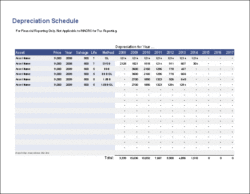
The structure of your template should reflect the core movements of fixed assets. You’ll need columns for the beginning balance, which represents the net book value of your assets at the start of your reporting period. Following this, dedicate sections for any assets acquired during the period (additions) and any assets that were sold, scrapped, or otherwise removed (disposals). Naturally, a crucial part of any fixed asset management is accounting for depreciation. Therefore, you’ll need a column for the current period’s depreciation expense.
To truly make your template effective, consider including the following detailed fields for each asset or asset category:
* Asset Description and ID: Unique identifiers to track each item.
* Original Cost/Beginning Balance: The historical cost or net book value at the start of the period.
* Additions (New Purchases): Any new assets acquired, showing their acquisition cost.
* Disposals (Sales or Scraps): Details of assets removed, including their original cost and accumulated depreciation at disposal.
* Current Period Depreciation: The depreciation expense calculated for the reporting period.
* Accumulated Depreciation (Beginning and Ending): The total depreciation expensed against the asset up to the beginning and ending of the period.
* Net Book Value (Beginning and Ending): The asset’s original cost less accumulated depreciation at the start and end of the period.
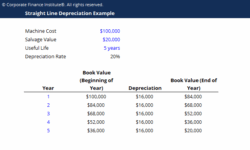
The calculations within your template are key to its functionality. The ending net book value is ultimately derived by taking the beginning net book value, adding the cost of new additions, subtracting the net book value of disposals, and finally, deducting the current period’s depreciation. This flow ensures a coherent and traceable path from one period’s asset balance to the next. Regularly updating this schedule is not just good practice; it’s essential for maintaining accurate financial records, complying with accounting standards, and preparing for tax filings. A well-maintained template empowers you with real-time insights into your asset base, supporting better strategic planning and resource allocation.
Understanding and effectively utilizing a fixed asset roll forward schedule is an indispensable part of sound financial management. It provides a clear, concise, and verifiable record of all movements and value changes within your company’s fixed asset base. This level of detail is critical for accurate financial reporting, robust internal controls, and meeting the rigorous demands of external auditors.
By embracing the power of a comprehensive fixed asset roll forward schedule template, businesses can transform a potentially complex and error-prone task into a streamlined, efficient process. This ultimately leads to enhanced financial transparency, more reliable data for decision-making, and the confidence that your asset management practices are not just compliant, but truly best-in-class.