Ensuring a safe working environment for everyone involved with machinery is not just a regulatory requirement; it’s a fundamental commitment to well-being. Accidents can have devastating consequences, both for individuals and for an organization’s productivity and reputation. That’s why a proactive approach to identifying and mitigating potential dangers is absolutely crucial in any industrial or manufacturing setting where machines are in operation.

One of the most effective tools for systematically evaluating and controlling risks associated with machinery is a well-structured machine safety risk assessment template. This isn’t just a checklist; it’s a comprehensive framework that guides you through the process of understanding hazards, estimating their potential impact, and implementing robust control measures to safeguard your team and your operations. Let’s dive into how such a template can empower your safety efforts.
What Goes Into a Robust Machine Safety Risk Assessment Template
A truly effective machine safety risk assessment template acts as your roadmap, guiding you step-by-step through the intricate process of identifying potential dangers and devising solutions. It helps ensure that no stone is left unturned when it comes to worker safety around complex machinery. The core idea is to move beyond simply reacting to incidents and instead, proactively prevent them by understanding the “what ifs” before they become reality.
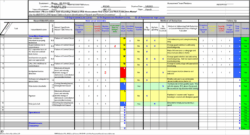
At its heart, the process starts with a clear identification of all potential hazards associated with a particular machine or process. This involves looking at mechanical movements, electrical components, hydraulic or pneumatic systems, thermal risks, noise, vibration, and even ergonomic considerations. Once these hazards are cataloged, the next phase is to estimate the risk, which typically involves assessing both the likelihood of an event occurring and the severity of the potential harm if it does.
Following the estimation, you evaluate the risk, comparing it against acceptable safety criteria to determine if further action is needed. This critical evaluation phase helps prioritize which risks need immediate attention and which can be managed with existing controls. It’s about making informed decisions based on a structured analysis rather than guesswork. The template provides the framework to document these findings clearly and consistently.
Ultimately, the goal is risk reduction. A good template will prompt you to consider the hierarchy of controls, moving from elimination of the hazard entirely, to substitution, engineering controls, administrative controls, and finally, personal protective equipment (PPE). Documenting these control measures, along with assigned responsibilities and completion dates, turns the assessment into an actionable safety plan.
Key Phases of a Machine Safety Risk Assessment
- Hazard Identification: Systematically pinpointing all potential sources of harm.
- Risk Estimation: Determining the probability of an incident and its potential severity.
- Risk Evaluation: Deciding if the risk is acceptable or if further action is required.
- Risk Reduction: Implementing control measures following the hierarchy of controls.
- Documentation and Review: Recording findings and regularly updating the assessment.
Practical Steps for Implementing Your Machine Safety Risk Assessment Template
Having a sophisticated machine safety risk assessment template is just the first step; bringing it to life in your actual workplace requires a thoughtful and collaborative approach. It’s not a task for a single individual but rather a team effort, drawing on the diverse knowledge and experiences of operators, maintenance staff, engineers, and safety professionals. Their combined insights will ensure a comprehensive and realistic assessment.
Start by clearly defining the scope of each assessment. Are you evaluating a single machine, a production line, or an entire work cell? Understanding the boundaries helps keep the focus sharp and ensures all relevant aspects are covered. Gather all available information, including manufacturer manuals, safety data sheets, incident reports, and any previous assessments. This background data provides valuable context and can highlight areas of concern before you even begin the on-site inspection.
When you move to implementing the risk reduction strategies identified in your template, remember the hierarchy of controls. Always strive to eliminate the hazard if possible, or substitute it with a safer alternative. If these aren’t feasible, engineering controls, such as machine guarding, interlocks, or safety circuits, should be your next priority. Only when these higher-level controls are insufficient should you rely on administrative controls like safe work procedures or personal protective equipment.
Documentation is absolutely vital throughout this entire process. A well-filled-out machine safety risk assessment template serves as a legal record, a training resource, and a foundation for continuous improvement. It should clearly outline the hazards, the assessed risks, the implemented controls, and who is responsible for maintaining those controls. Regular reviews, especially after any modifications to machinery or processes, are essential to ensure the assessment remains current and effective.
Adopting a structured machine safety risk assessment template significantly enhances your ability to identify, evaluate, and control potential dangers in your operational environment. It transforms safety from a reactive measure into a proactive, integral part of your daily operations, fostering a culture where safety is everyone’s priority. This systematic approach not only protects your most valuable asset, your people, but also contributes to greater efficiency and fewer costly disruptions.
By consistently applying the principles outlined in a comprehensive template and committing to ongoing vigilance, you create a workplace where risks are understood, managed, and continually minimized. This dedication to safety builds trust, boosts morale, and ultimately leads to a more productive and secure future for your entire organization.