Have you ever found yourself caught in a spiral of negative thoughts, feeling your mood plummet with each passing idea? It’s a common human experience, where our internal monologue dictates our emotional landscape. Often, these thought patterns can feel automatic, overwhelming, and impossible to break free from. But what if there was a simple, yet powerful tool to help you regain control and steer your mind towards a more positive state? This is where the concept of “mind over mood” comes into play, offering practical strategies to manage our emotional responses by first understanding our thoughts. A key component of this approach is the mind over mood thought record template.
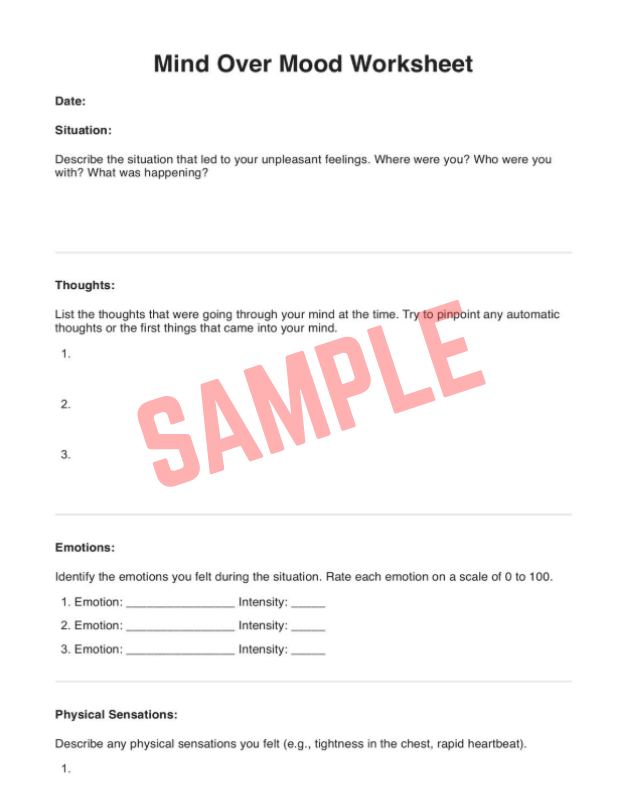
This template serves as a structured method to identify, challenge, and ultimately reframe unhelpful thought patterns. It’s rooted in the principles of Cognitive Behavioral Therapy (CBT), a highly effective form of psychotherapy that helps people develop coping skills for dealing with various psychological issues. By systematically recording your thoughts and feelings, you gain valuable insight into how they are interconnected, empowering you to make conscious choices about your emotional reactions rather than being swept away by them.
In this comprehensive guide, we’ll delve into the core principles behind the thought record, explain its various components, and provide you with a detailed sample. You’ll learn how to effectively utilize a mind over mood thought record template to challenge negative thinking, fostering a greater sense of emotional resilience and well-being.
Understanding the Power of Cognitive Behavioral Therapy Tools
Our thoughts, feelings, and behaviors are intricately linked, forming a powerful triad that shapes our daily experience. Often, we react to situations based on automatic thoughts, which can sometimes be distorted or unhelpful. Cognitive Behavioral Therapy (CBT) provides a framework for understanding this connection and developing strategies to intervene positively.
The Connection Between Thoughts, Feelings, and Behaviors
Imagine a scenario where you receive a critical email at work. An automatic thought might be, “I’m terrible at my job.” This thought can quickly trigger feelings of sadness or anxiety, which in turn might lead to behaviors like procrastination or withdrawal. CBT teaches us that by changing our initial thought, we can profoundly alter our subsequent feelings and actions. It’s about breaking this cycle and introducing more balanced perspectives.
Why a Structured Approach Matters
Managing complex emotions and deeply ingrained thought patterns can be challenging without a clear system. A structured approach, like using a mind over mood thought record template, provides the necessary framework for consistent self-reflection and cognitive restructuring. It helps to externalize your internal experiences, making them easier to examine objectively. This systematic process promotes clarity and allows you to track your progress over time, seeing how your efforts lead to positive change.
Common Pitfalls in Managing Emotions
Many people struggle with “automatic negative thoughts” (ANTs), which are often rapid, unquestioned interpretations of events. These ANTs frequently contain “cognitive distortions,” such as catastrophizing, all-or-nothing thinking, or jumping to conclusions. Without awareness, these distortions can lead to chronic anxiety, low mood, and self-defeating behaviors. Recognizing and challenging these mental shortcuts is the first step towards emotional freedom.
A Comprehensive Mind Over Mood Thought Record Template Explained
The true power of the “Mind Over Mood” approach lies in its practicality, especially through tools like the thought record. This template breaks down the process of cognitive restructuring into manageable steps, making it accessible for anyone to use. By consistently engaging with this template, you can significantly improve your emotional regulation skills.
Components of an Effective Thought Record
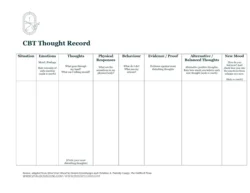
A standard thought record includes several key sections designed to guide you through a complete thought-challenging process. Each part plays a crucial role in dissecting your experience and building a more balanced perspective. Understanding these components is essential for effective use.
Here are the typical elements you’ll find:
- Date & Time: When the situation occurred or the thought arose.
- Situation: A brief, objective description of the event that triggered your mood or thought. What happened? Who was involved? Where were you?
- Moods (and Intensity %): List the emotions you felt and rate their intensity (e.g., Sadness 80%, Anxiety 60%).
- Automatic Thoughts (and Intensity of Belief %): Write down the exact thoughts that went through your mind. These are often brief and automatic. Rate how strongly you believed each thought.
- Evidence For Automatic Thoughts: List facts or observations that support your automatic thoughts. Be honest, but objective.
- Evidence Against Automatic Thoughts: List facts or observations that contradict your automatic thoughts. Consider alternative explanations.
- Alternative/Balanced Thoughts (and Intensity of Belief %): Based on the evidence, formulate more realistic, balanced, and helpful thoughts. Rate how strongly you now believe these new thoughts.
- Outcome Moods (and Intensity %): Re-rate your initial moods after considering the alternative thoughts. Notice any reduction in intensity.
Step-by-Step Guide to Using the Template
Using a thought record might seem daunting at first, but following a structured approach makes it straightforward. Consistency is key, so try to fill one out whenever you notice a significant shift in your mood.
- Identify the Situation: Pinpoint the specific event or trigger.
- Note Your Moods: Write down all the emotions you felt and their intensity.
- Capture Automatic Thoughts: Record the exact thoughts that immediately popped into your head. Don’t censor yourself.
- Gather Evidence For: Brainstorm factual information that supports your initial negative thoughts.
- Gather Evidence Against: Actively look for information that challenges or contradicts those negative thoughts.
- Formulate Alternative Thoughts: Based on all the evidence, create a more balanced and realistic thought.
- Re-evaluate Moods: Check how your moods have shifted after engaging in this process.
Sample Mind Over Mood Thought Record Template
Here is an example of how a mind over mood thought record template might look when filled out, illustrating the process of challenging negative thoughts.
| Category | Example Entry |
|---|---|
| Date & Time | October 26, 2023, 3:00 PM |
| Situation | My boss sent an email asking to “discuss my recent project.” |
| Moods (Intensity %) | Anxiety 85%, Fear 70%, Self-Doubt 60% |
| Automatic Thoughts (Intensity of Belief %) | “I’ve messed up the project, I’m going to get fired.” (90%) “My boss thinks I’m incompetent.” (85%) |
| Evidence For Automatic Thoughts | I did have a small issue with one calculation last week. My boss sometimes calls meetings for negative feedback. |
| Evidence Against Automatic Thoughts | The calculation issue was minor and quickly corrected. My boss also calls meetings for project updates and praise. I received positive feedback on my last two projects. There’s no specific mention of a problem in the email. No one else on the team has been fired for a minor error. |
| Alternative/Balanced Thoughts (Intensity of Belief %) | “My boss likely wants an update, or perhaps has constructive feedback. It’s an opportunity to learn and improve.” (80%) “Even if there’s a problem, I can address it professionally and learn from it. My overall performance is good.” (75%) |
| Outcome Moods (Intensity %) | Anxiety 30%, Fear 15%, Self-Doubt 20% |
Practical Strategies for Challenging Negative Thoughts
Beyond simply filling out the template, actively challenging your thoughts requires specific techniques and a shift in perspective. The goal isn’t to replace negative thoughts with unrealistic positive ones, but rather to cultivate balanced, evidence-based thinking. This process is often called cognitive restructuring.
Identifying Cognitive Distortions
Recognizing common cognitive distortions is a crucial step in challenging negative thoughts. These are patterns of thinking that lead us to view reality inaccurately. For example, “catastrophizing” is when we assume the worst possible outcome, while “all-or-nothing thinking” sees things in absolute terms, with no middle ground. Other distortions include “mind-reading,” “personalization,” and “emotional reasoning.” Learning to spot these patterns in your thought record entries empowers you to question their validity.
Gathering Evidence and Perspective
Once you’ve identified an automatic negative thought and any underlying distortions, the next step is to act like a detective. Systematically look for factual evidence that supports your thought, but more importantly, actively seek evidence that contradicts it. Consider alternative explanations for situations. Ask yourself: “What would a neutral observer say about this situation?” or “Is there another way to interpret this?” This objective questioning helps to dismantle the power of irrational beliefs.
Cultivating Balanced Thinking
The final stage is to formulate alternative thoughts that are more realistic, flexible, and helpful. These balanced thoughts aren’t about denying reality or forcing positivity, but rather about creating a more accurate and constructive internal dialogue. This process can reduce emotional distress and foster resilience. Remember to approach yourself with self-compassion during this process; challenging deeply ingrained thought patterns takes time and practice.
Embracing the mind over mood thought record template can be a transformative step towards greater emotional well-being. It provides a structured, accessible way to understand and actively shape your internal experience, rather than being a passive recipient of your emotions. Consistent practice with this tool builds mental muscle, making you more adept at identifying and challenging unhelpful thought patterns in real-time.
By regularly engaging with a thought record, you develop a powerful skill set for managing your moods and fostering a more balanced perspective on life’s challenges. Don’t wait for your thoughts to control you; take charge of your mind today by integrating this invaluable tool into your self-care routine.