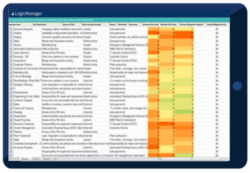
Navigating the complexities of modern business means constantly facing potential pitfalls and uncertainties. Every decision, every process, and every project carries an inherent level of risk that, if left unaddressed, can derail progress, erode profits, or even damage reputation. That’s why having a robust method for identifying, evaluating, and mitigating these risks isn’t just a good idea; it’s absolutely essential for sustainable success.
While many organizations undertake some form of risk assessment, the effectiveness often varies widely. This is where a structured, data-driven approach, like Six Sigma, truly shines. By integrating Six Sigma principles into your risk management strategy, you gain a powerful framework to not only pinpoint risks but also to understand their root causes and implement lasting solutions. It transforms a reactive firefighting exercise into a proactive strategy for operational excellence, making a dedicated Six Sigma risk assessment template an invaluable asset.
Understanding Risk Assessment Through a Six Sigma Lens
Traditional risk assessment often relies heavily on qualitative judgments, sometimes leading to inconsistent results or overlooking subtle but significant threats. Six Sigma, with its core focus on reducing variation and defects through data and process improvement, provides a far more systematic and rigorous lens through which to view potential risks. It moves beyond just identifying "what could go wrong" to asking "why it could go wrong" and "how likely and impactful it truly is," then "what specific actions we can take to prevent or minimize it."
This structured thinking aligns perfectly with the DMAIC (Define, Measure, Analyze, Improve, Control) methodology, which underpins much of Six Sigma. In the Define phase, we clearly articulate the project or process and its boundaries, which naturally helps scope the risk assessment. During the Measure phase, we collect data on current process performance and potential failure points. The Analyze phase is crucial for identifying the root causes of risks, often employing tools like Failure Mode and Effects Analysis (FMEA) to systematically rank potential failures by their severity, occurrence, and detection.
The Improve phase is where mitigation strategies are developed and implemented, focusing on eliminating or reducing the identified risks. Finally, the Control phase ensures that these improvements are sustained over time, with mechanisms put in place to monitor the effectiveness of risk controls and prevent recurrence. This holistic approach ensures that risk management isn’t a one-off event but an ongoing, integrated part of your operational framework.
A well-designed Six Sigma risk assessment template acts as a central repository and guide throughout these phases, ensuring consistency, clarity, and accountability. It standardizes how risks are identified, scored, and managed across different projects or departments, fostering a common language and approach to risk management within the organization.
Key Components of an Effective Six Sigma Risk Assessment Template
An ideal template should guide users through a comprehensive evaluation process. Here are some essential elements to consider including:
- Risk Identification Number and Description: A unique identifier and clear, concise explanation of the potential risk.
- Process/Area Affected: Specifies where the risk might occur.
- Likelihood/Probability Score: A numerical or qualitative rating of how likely the risk is to occur (e.g., 1-5, Low-High).
- Impact/Severity Score: A rating of the potential consequence if the risk does occur (e.g., 1-5, Minor-Catastrophic).
- Risk Priority Number (RPN) or Severity Score: Often calculated as Likelihood x Impact, providing a single score to prioritize risks.
- Current Controls in Place: Existing measures to prevent or detect the risk.
- Recommended Mitigation Strategies: Specific actions to reduce the likelihood or impact of the risk.
- Owner/Responsible Party: The individual or team accountable for implementing the mitigation.
- Target Completion Date: A deadline for implementing the mitigation strategy.
- Status: Tracks whether the mitigation is Open, In Progress, or Closed.
- Residual Risk Score: The risk level after mitigation efforts are implemented.
Building Your Own Six Sigma Risk Assessment Template
Creating an effective Six Sigma risk assessment template is about more than just listing potential problems; it’s about building a dynamic tool that empowers your team to proactively manage uncertainty. When you embark on creating or customizing such a template, start by defining the scope. What processes, projects, or areas will this template cover? The clarity here will dictate the level of detail and specific fields you’ll need. Think about your organization’s specific industry, regulatory requirements, and common types of risks faced.
Next, consider how you will consistently identify and articulate risks. The template should prompt users to describe risks in a way that is clear, actionable, and free from ambiguity. This often involves guiding questions or specific categories for different types of risks, such as operational, financial, strategic, or compliance-related. The goal is to ensure that everyone using the template speaks the same language when it comes to risk definition.
A critical aspect of any Six Sigma risk assessment template is the method for scoring likelihood and impact. To ensure objectivity, establish clear, predefined scales for these metrics. For instance, a "likelihood" score of 4 might correspond to "likely to occur at least once a quarter," while an "impact" score of 5 might mean "catastrophic financial loss or severe reputational damage." Documenting these scales within the template or as an accompanying guide is vital for consistent application.
Finally, the template needs to be action-oriented. It shouldn’t just be a list of problems but a roadmap for solutions. Dedicate significant sections to mitigation strategies, including clear responsibilities and deadlines. The continuous improvement aspect of Six Sigma means that once a risk is mitigated, its effectiveness should be monitored, and the template should allow for tracking the residual risk. This iterative process ensures that your risk management is not a one-time exercise but an ongoing commitment to operational resilience.
Leveraging a robust Six Sigma risk assessment template isn’t just about ticking a box for compliance; it’s about embedding a culture of proactive problem-solving and continuous improvement throughout your organization. It provides the clarity and structure needed to move beyond reactive crisis management, enabling teams to anticipate challenges, allocate resources wisely, and make more informed decisions.
By systematically identifying, quantifying, and mitigating potential issues, businesses can significantly reduce waste, improve process efficiency, and protect their bottom line. Embracing a data-driven approach to risk, championed by Six Sigma principles, empowers organizations to build greater resilience and navigate an ever-changing landscape with confidence, ultimately fostering an environment where consistent excellence is the norm, not the exception.