Unexpected events can disrupt even the most meticulously planned trips, turning dream vacations into stressful situations. Whether it’s a lost bag, a flight cancellation, or an unforeseen medical emergency abroad, travel insurance offers a vital safety net. However, securing the reimbursement you’re entitled to often hinges on submitting a clear, comprehensive claim, and a well-structured travel insurance claim letter template can be your most powerful tool. This guide will walk you through the essential steps to craft an effective letter that maximizes your chances of a successful payout.
Understanding how to articulate your situation and present your evidence is crucial for a smooth claim process. A carefully composed letter ensures your insurer receives all necessary information upfront, minimizing delays and back-and-forth communication. We’ll explore the critical components of a successful claim letter, guide you through its structure, and highlight common pitfalls to avoid, ultimately empowering you to confidently navigate the complexities of an insurance claim.
Crafting Your Effective Travel Insurance Claim Letter
Submitting a claim can feel daunting, but with a clear plan and a solid travel insurance claim letter template, you can present your case effectively. The goal is to provide your insurer with all the details they need in an organized and concise manner. A well-written letter acts as a professional summary of your situation, guiding the claims adjuster through your experience and supporting documentation.
Essential Components of a Strong Claim Letter
Every robust claim letter must contain specific pieces of information to be considered complete and actionable. Missing even one key detail can delay the assessment of your claim significantly. Starting with accurate personal and policy details is fundamental to ensuring your letter reaches the right department and can be cross-referenced quickly.
- Your Full Name and Contact Information: Include your address, phone number, and email.
- Travel Insurance Policy Number: This is perhaps the most critical identifier for your claim.
- Dates of Travel: Specify both your departure and return dates as per your policy.
- Incident Date and Time: Pinpoint exactly when the event occurred.
- Location of Incident: Provide the city, country, and specific address if applicable.
- Clear Description of the Incident: Explain exactly what happened in chronological order, sticking to facts.
- Specific Claim Amount: State the total amount you are claiming, itemized if possible.
- List of Enclosed Documents: Refer to all supporting evidence you are attaching.
Structuring Your Letter for Clarity and Impact
A logical flow within your claim letter makes it easy for the claims handler to understand your situation and process your request. Think of it as telling a story, but one focused purely on factual information relevant to your policy. Begin with the most important information and then elaborate with specific details.
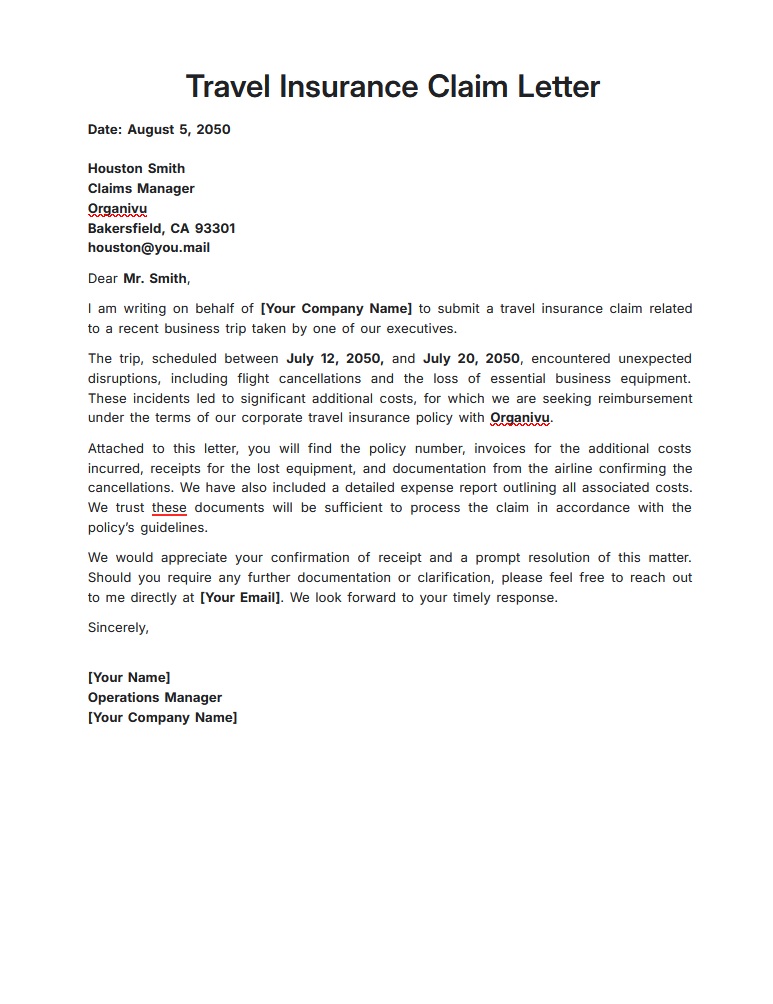
Start your letter with your contact details, followed by the insurer’s contact details, and the date. Below this, include a clear subject line that states “Travel Insurance Claim – Policy Number [Your Policy Number]” for immediate identification. The opening paragraph should state the purpose of the letter: you are filing a claim under your policy and briefly mention the nature of the incident.
The body paragraphs should then elaborate on the incident itself, providing a detailed, factual account without emotional language. Explain the sequence of events, how it affected your trip, and what steps you took at the time (e.g., filing a police report, seeing a doctor). Conclude by reiterating the specific amount claimed and listing all attached supporting documents, making it easy for the insurer to verify your claim. A professional closing, such as “Sincerely,” followed by your typed name and signature, completes the letter.
Common Mistakes to Avoid When Writing Your Claim
Even with a comprehensive travel insurance claim letter template, certain errors can hinder the success of your submission. Being aware of these pitfalls can help you prepare a stronger, more effective claim. Studies show that incomplete information is a leading cause of claim denials or delays, affecting up to 30% of initial submissions.
- Vague or Incomplete Incident Description: Avoid generalizations. Provide specific dates, times, and locations, along with a detailed account of what transpired.
- Exaggerating or Omitting Facts: Honesty is paramount. Any discrepancies found by the insurer can lead to your claim being rejected. Stick strictly to verifiable facts.
- Forgetting to Include Your Policy Number: Without this, your claim cannot be easily matched to your coverage.
- Not Attaching Supporting Documentation: Your letter explains your case, but the documents prove it. Always include all relevant evidence.
- Using Emotional or Aggressive Language: Maintain a professional and polite tone. Insurance adjusters respond better to factual, clear communication rather than emotional appeals.
- Delaying Submission: Many policies have strict deadlines for filing claims. Check your policy and submit your letter and documents as soon as reasonably possible.
Supporting Your Travel Insurance Claim with Documentation
While a well-written letter is essential, it’s the supporting documentation that truly validates your travel insurance claim. These documents provide the objective proof required by your insurer to assess and approve your request for reimbursement. Without adequate evidence, even the most compelling narrative may not lead to a successful payout.
Gathering Necessary Evidence for Your Claim
The type of evidence you need will vary depending on the nature of your claim, but the principle remains the same: collect anything that proves the incident occurred and verifies your losses. This might include official reports, medical records, or financial statements. Proactive collection of these documents while traveling, or immediately upon return, significantly streamlines the claim process.
For instance, if your luggage was lost, you would need baggage claim tags and a property irregularity report from the airline. For medical emergencies, detailed medical reports and receipts are vital. Always think about what proof an objective third party would need to believe your account and confirm your expenses.
| Claim Type | Required Documents (Examples) |
|---|---|
| Medical Emergency | Medical reports, doctor’s notes, hospital bills, pharmacy receipts |
| Trip Cancellation/Interruption | Booking confirmations, cancellation notices, refund statements, doctor’s note (if health-related) |
| Lost/Stolen Baggage | Baggage tags, police report (if stolen), Property Irregularity Report (from airline), purchase receipts for lost items |
| Flight Delay/Cancellation | Flight booking confirmation, airline delay/cancellation notification, receipts for unexpected expenses (accommodation, food) |
| Rental Car Damage | Rental agreement, police report (if accident), repair estimates, photos of damage |
Organizing and Submitting Your Documentation
Once you’ve gathered all the necessary evidence, the next step is to organize it logically for your insurer. A well-organized submission makes the adjuster’s job easier, which can lead to a quicker resolution of your claim. It is highly recommended to make digital copies of everything before sending.
Arrange your documents in a clear, sensible order, perhaps matching the order in which you refer to them in your travel insurance claim letter template. Many people prefer to create a chronological sequence or categorize by type (e.g., all medical bills together, all travel receipts together). When submitting, follow your insurer’s preferred method, whether it’s an online portal, email, or postal mail. Always retain original documents and send copies.
Following Up On Your Travel Insurance Claim
After submitting your claim letter and supporting documents, patience is key, but so is diligent follow-up. Keep a meticulous record of every communication you have with your insurance provider, including dates, names of representatives, and summaries of discussions. This practice is vital for maintaining an accurate timeline of your claim’s progression.
If you haven’t heard back within the timeframe specified by your insurer (often 10-15 business days for initial acknowledgement), don’t hesitate to follow up. A polite email or phone call inquiring about the status of your claim is perfectly acceptable. Refer to your policy number and the date of your submission to help the representative quickly locate your file. If there are delays, ask for the reason and what further steps, if any, are required from your end.
Navigating a travel insurance claim doesn’t have to be an overwhelming ordeal. By utilizing a well-crafted travel insurance claim letter template and diligently gathering your supporting documentation, you significantly enhance your chances of a smooth and successful resolution. Remember, clear communication and thorough preparation are your best allies in ensuring you receive the compensation you deserve for your unexpected travel mishaps.
Take the time to review your policy details carefully, understand what’s covered, and what documentation is required before you even begin to draft your claim. This proactive approach not only streamlines the process but also empowers you with the knowledge to advocate effectively for your claim. You’ve invested in travel insurance for peace of mind; now, empower yourself to make that investment count when it truly matters.