Organizing a sports league or any competitive event can feel like a daunting task, even when you only have a handful of participants. While the logistics for a large multi-team competition are certainly complex, managing just three teams also requires a fair and clear structure to ensure everyone gets a balanced opportunity to compete. You want every team to play each other equally, avoiding any perception of favoritism or uneven matchups.
That is where a well-designed 3 team league schedule template becomes incredibly valuable. It strips away the guesswork and provides a clear roadmap for your competition, whether it’s for a friendly backyard tournament, a small local club, or a casual company challenge. Having a pre-planned schedule not only saves you time but also brings a sense of professionalism and organization to your event, allowing everyone to focus on the fun and the competition itself.
Crafting Your Perfect 3 Team League Schedule
When you only have three teams, the most equitable way to structure your competition is through a round-robin format. This ensures that each team plays against every other team at least once. The beauty of a round robin for such a small group is its inherent simplicity and fairness. There is no need for complex seeding or elimination brackets, at least not until you reach the final standings.
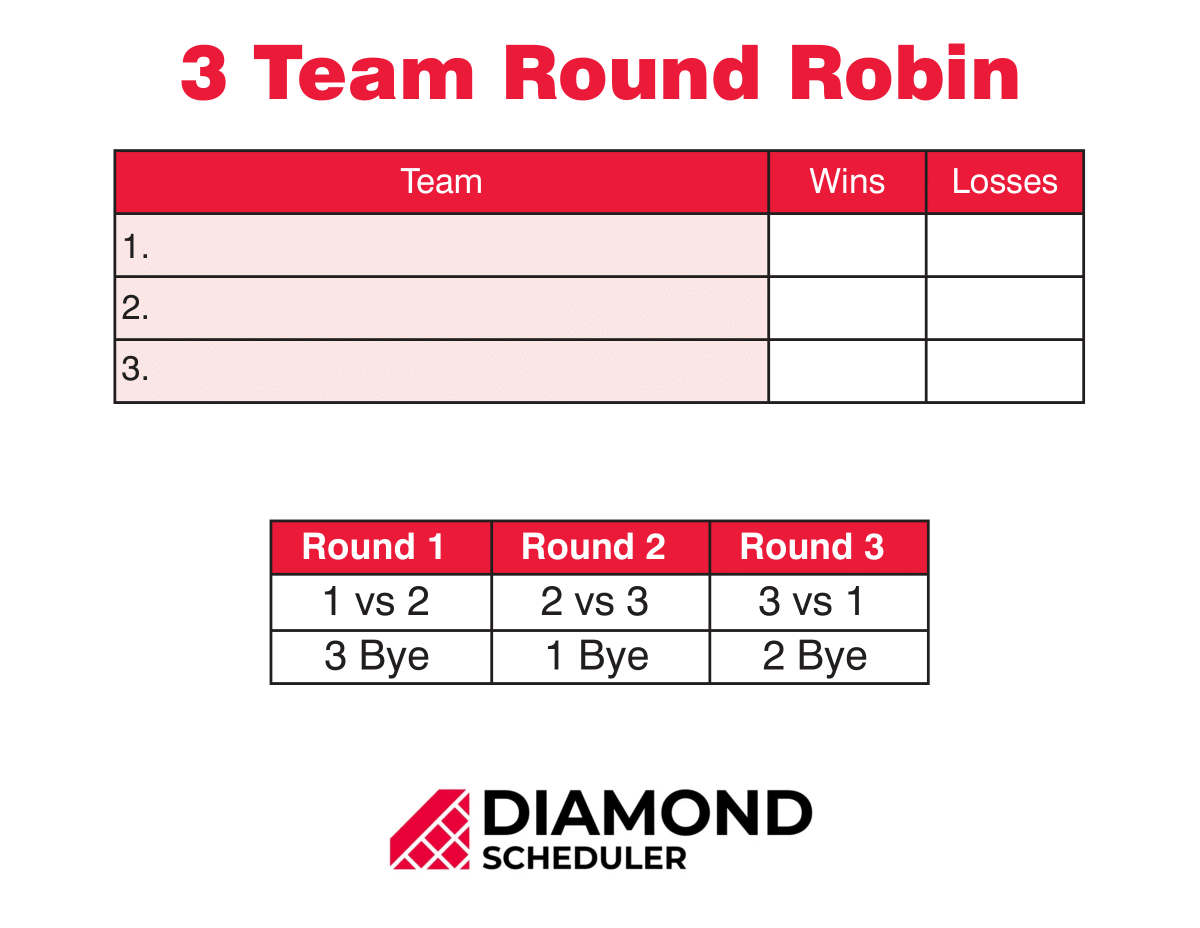
The core idea is straightforward: one team rests while the other two compete. This rotation continues until every possible pairing has played. While this might seem obvious, having a structured template clarifies which teams are playing and which team has a bye, making it easy to communicate the schedule to all participants. It sets clear expectations and prevents any confusion about who is supposed to be where and when.
Understanding the Basic Rotation
Let’s imagine our three teams are Team A, Team B, and Team C. To complete one full round where each team plays every other team once, you will need three games. Here is how that basic rotation typically works, providing a solid foundation for any 3 team league schedule template:
- Game 1: Team A vs Team B (Team C rests)
- Game 2: Team B vs Team C (Team A rests)
- Game 3: Team C vs Team A (Team B rests)
This cycle ensures that each team has played two games and had one rest period. If you want your teams to play each other more than once, perhaps twice, three times, or even four times throughout the season, you simply repeat this basic three-game round. For instance, if you want each team to play every other team twice, you would just run through the above set of three games again, perhaps reversing home and away teams for the second round to add variety. This modular approach makes scaling your season incredibly easy.
The flexibility of this system is one of its greatest strengths. You can allocate these games across days, weeks, or even months, depending on the intensity and duration you desire for your league. The underlying structure remains constant, making the management of your league remarkably straightforward.
Practical Application and Customization Tips
Once you have the basic round-robin structure down, the next step is to overlay it with practical details to create a comprehensive schedule. This involves assigning specific dates, times, and venues to each game, and considering factors like player availability, rest periods, and any logistical constraints. Even for a small three-team league, thoughtful planning can prevent last-minute headaches.
For a longer season, where each team plays every other multiple times, you would repeat the three-game round robin as many times as needed. For example, if your league dictates that each team plays every opponent four times, your season schedule would simply comprise four iterations of the basic three-game sequence, totaling 12 games. You can then strategically place these games over several weeks, ensuring teams have adequate rest between matches and that the overall pace of the season feels right. Remember to alternate home and away designations if applicable to your sport, adding another layer of fairness.
Documenting your schedule clearly is paramount. A simple spreadsheet is often the best tool for this, allowing you to easily list all the necessary information for each game. Distributing this detailed schedule to all team captains, players, and officials well in advance will foster a smooth-running league and minimize confusion.
Here are some key elements you should always include in your detailed 3 team league schedule template:
- Date of Game
- Scheduled Time of Game
- Venue Location
- Designated Home Team
- Designated Away Team
- Team on Bye (for clarity)
- Any specific notes or rules for the game
Consider also how you will determine final standings, especially in a three-team league. Simple head-to-head records are often sufficient, or you might incorporate tie-breaker rules based on points difference or total wins. Having these rules established upfront, alongside your schedule, ensures transparency and avoids disputes at the end of the competition. Effective communication of the final schedule through various channels like email, messaging apps, or a dedicated bulletin board is also crucial for success.
Implementing a clear and consistent schedule, even for a small three-team setup, elevates the experience for everyone involved. It allows participants to focus on their performance and enjoy the competition without worrying about organizational hiccups. By spending a little time upfront to craft your schedule, you ensure a season that is fair, well-organized, and fun for all.