Embarking on a journey to understand and address mental health concerns can feel like navigating a complex labyrinth. For both mental health professionals and individuals seeking clarity, having a structured approach is invaluable. This is where a well-designed assessment tool truly shines, providing a roadmap for gathering essential information, identifying core issues, and ultimately, guiding effective intervention strategies. It’s about laying a solid foundation for personalized care and support.
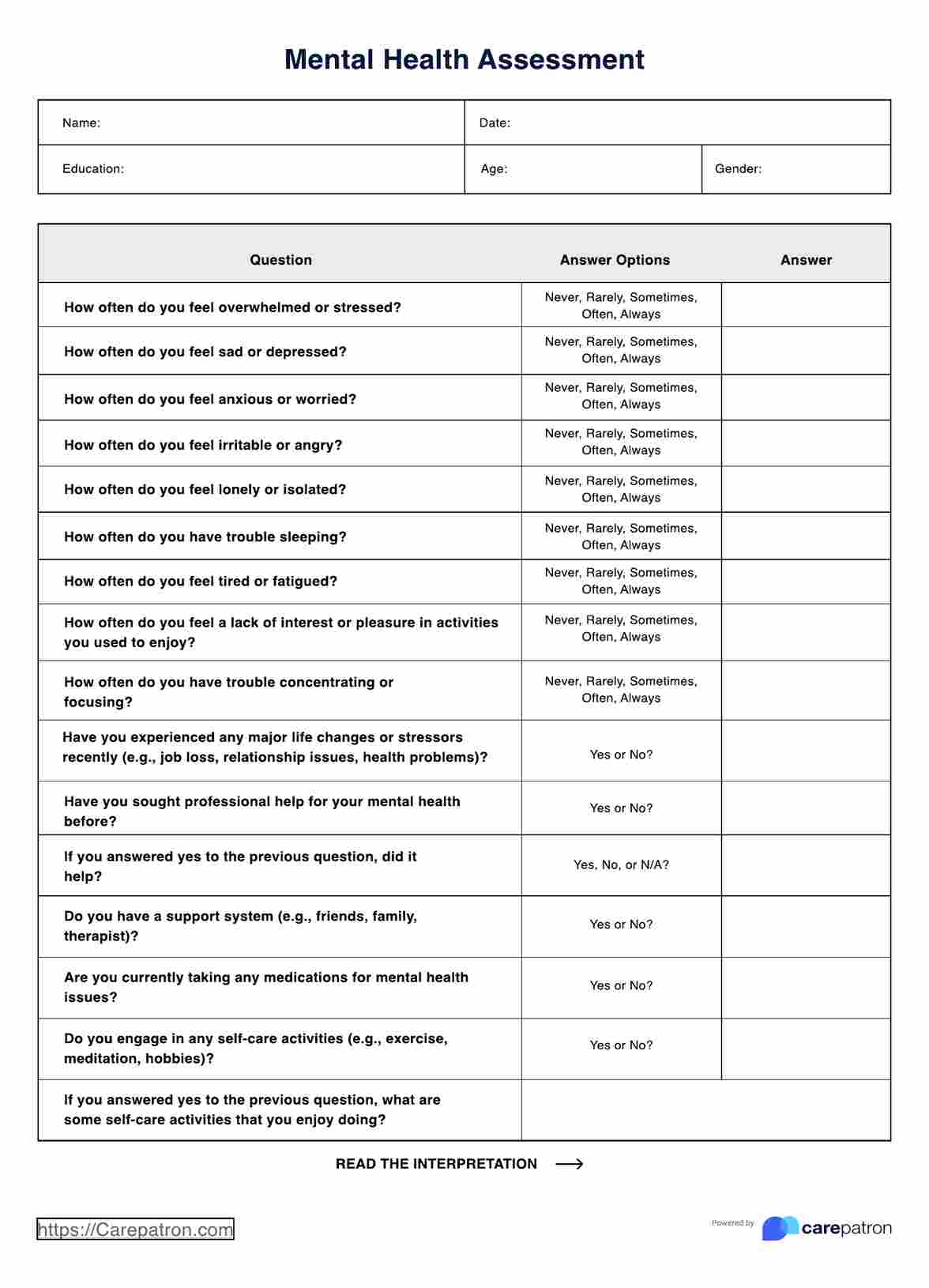
A thorough evaluation isn’t just a formality; it’s a critical step toward fostering well-being. It helps to differentiate between various conditions, uncover underlying factors, and determine the most appropriate course of action. Without a systematic process, crucial details might be missed, leading to misdiagnoses or ineffective treatment plans. That’s why having a robust framework, like a comprehensive mental health assessment template, becomes an indispensable asset in the mental health landscape.
What Should a Comprehensive Mental Health Assessment Template Cover?
A truly comprehensive mental health assessment template needs to be a dynamic tool, capable of capturing a wide array of information that paints a complete picture of an individual’s mental health. It goes beyond simply listing symptoms, delving into the intricate layers of their life experiences, biological predispositions, and current functioning. The goal is to understand not just what someone is experiencing, but why and how it impacts their daily life. This holistic perspective is crucial for developing targeted and effective treatment plans that resonate with the individual’s unique circumstances.
Key Areas for Exploration:
- **Demographic and Intake Information:** This foundational section captures basic details like name, age, gender, contact information, and referral source. It also includes the primary reason for seeking assessment, providing an immediate focus for the session.
- **Presenting Problem and History of Presenting Illness:** Here, the template guides the exploration of current symptoms, their onset, duration, intensity, and any triggers or alleviating factors. It’s essential to understand the individual’s own words describing their distress and how it manifests.
- **Past Psychiatric History:** Details about previous diagnoses, hospitalizations, therapy experiences, medication trials (including dosages and responses), and any history of self-harm or suicide attempts are critical. This helps to identify patterns and inform future treatment approaches.
- **Medical History:** Physical health significantly impacts mental well-being. The template should prompt questions about current medical conditions, medications, allergies, surgeries, and any family history of medical illnesses that might have a genetic component.
- **Substance Use History:** A thorough inquiry into past and present use of alcohol, illicit drugs, prescription medications, and nicotine is vital, as substance use can often co-occur with or exacerbate mental health conditions.
- **Developmental History:** Understanding an individual’s early life experiences, including childhood trauma, significant developmental milestones, and family dynamics, can shed light on current difficulties.
- **Psychosocial History:** This broad category covers a range of areas including family background, education, employment, housing, legal issues, social support systems, hobbies, and cultural or spiritual beliefs. These factors provide context for an individual’s life and challenges.
- **Risk Assessment:** Perhaps one of the most crucial sections, this involves evaluating the risk of harm to self or others. It includes screening for suicidal ideation, homicidal ideation, and any history of aggression or impulsivity.
- **Mental Status Examination (MSE):** A systematic observation of the individual’s appearance, behavior, speech, mood, affect, thought process, thought content, perception, cognition (orientation, memory, attention), and insight/judgment.
By meticulously covering these areas, a comprehensive mental health assessment template ensures that no stone is left unturned. It provides a structured yet flexible framework for gathering the nuanced information necessary to formulate an accurate diagnostic impression and a personalized treatment plan.
Tips for Effectively Using Your Mental Health Assessment Template
Simply having a comprehensive mental health assessment template isn’t enough; knowing how to use it effectively is paramount to its success. This isn’t a rigid questionnaire to be mechanically filled out, but rather a dynamic guide to facilitate a meaningful conversation and thorough exploration. The true value lies in how you engage with the individual, interpret their responses, and adapt the template to suit unique circumstances. It’s about striking a balance between structure and fluidity, ensuring all critical areas are covered while allowing space for unexpected insights to emerge.
One crucial tip is to approach each assessment with an open mind and a person-centered perspective. While the template provides a checklist of topics, the conversation should feel natural and empathetic, not interrogative. Use the questions as prompts to encourage individuals to share their story in their own words, validating their experiences and building a trusting rapport. Remember that some sensitive topics might require a gentle approach and repeated assurances of confidentiality and safety. Allowing space for silence can also be incredibly powerful, giving the individual time to gather their thoughts and feel heard.
Furthermore, integrate your clinical judgment and observational skills throughout the process. The template guides what questions to ask, but your professional expertise will help you discern what information is most salient, identify non-verbal cues, and follow up on subtle leads. A comprehensive mental health assessment template is a tool for data collection, but you are the interpreter of that data. Your ability to synthesize information from various sections of the template and identify interconnections between different life areas is what makes the assessment truly powerful. For instance, a history of childhood trauma combined with current relationship difficulties might point to specific therapeutic interventions.
Finally, remember that assessment is an ongoing process, not a one-time event. While the initial comprehensive evaluation sets the stage, mental health needs can evolve over time. The template serves as an excellent baseline against which progress can be measured and adjustments to the treatment plan can be made. Regularly reviewing and updating your templates based on new research, best practices, and personal experience will also ensure that they remain relevant and effective, ultimately enhancing the quality of care provided.
Having a robust framework for assessing mental health is an indispensable asset for any professional in the field. It not only ensures that no critical detail is overlooked but also provides a structured approach to understanding the complex interplay of factors contributing to an individual’s well-being. By utilizing such a template thoughtfully and with empathy, you can lay a strong foundation for effective interventions and genuine support.
Ultimately, the goal is to empower individuals on their journey toward better mental health. A comprehensive and well-executed assessment process leads to a clearer understanding of their unique challenges and strengths, paving the way for targeted strategies that foster healing and resilience. It’s about providing hope and a clear path forward.