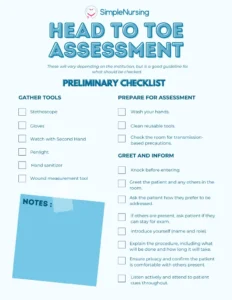
Understanding a person’s health status is a cornerstone of effective care, whether you’re a seasoned healthcare professional or a student just embarking on your clinical journey. It’s about more than just checking boxes; it’s about forming a comprehensive picture of an individual’s wellbeing, recognizing subtle changes, and providing the best possible support. This detailed observation and interaction is fundamental to identifying needs and planning interventions.
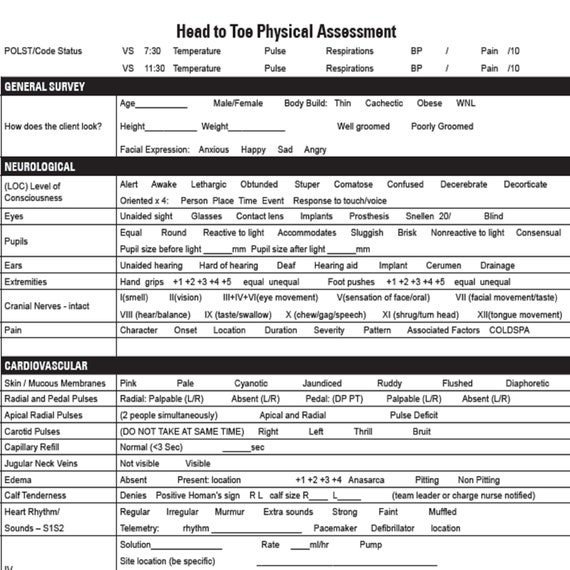
To ensure consistency, thoroughness, and accuracy in this vital process, a structured approach is indispensable. This is where a well-designed head to toe physical assessment template becomes an invaluable tool. It guides you through a systematic examination, making sure no critical area is overlooked and that all relevant information is captured methodically and efficiently.
The Core Components of a Comprehensive Head to Toe Assessment
A comprehensive physical assessment is far more than a simple checklist; it’s a dynamic and systematic method for gathering crucial objective data about a patient’s physical and mental state. It allows healthcare providers to build a holistic picture of health, identify potential problems, track changes over time, and formulate appropriate care plans. The “head to toe” logic is particularly effective because it ensures a consistent flow, reducing the chances of missing vital signs or symptoms that might otherwise go unnoticed.
This systematic approach typically begins with a general overview and then progresses methodically through each body system, moving downwards from the patient’s head to their feet. This consistency is not only excellent for learning and practice but also for ensuring that every patient receives the same high standard of initial evaluation. It helps in preventing diagnostic oversights and supports a thorough understanding of the patient’s condition.
General Survey and Initial Observations
Before even touching a patient, a significant amount of information can be gathered through careful observation. This initial general survey sets the stage for the entire assessment. You’re looking for things like their overall appearance, their level of consciousness and alertness, their mood and affect, and any obvious signs of distress or discomfort. Observing their posture, gait, hygiene, and how they interact with their environment provides critical early clues. Vital signs—temperature, pulse, respiration, and blood pressure—are also often taken at this initial stage, offering foundational data points about their physiological status.
System-Specific Examination
Following the general survey, the assessment moves into a detailed, system-by-system examination, strictly adhering to the head-to-toe sequence. This structured approach helps organize findings and ensures all major body systems are reviewed.
By following this meticulous sequence, a healthcare professional can systematically uncover findings, both normal and abnormal, creating a thorough documentation of the patient’s current physical status. This comprehensive approach is what makes a head to toe physical assessment template such an essential asset in clinical practice.
Maximizing the Effectiveness of Your Assessment Template
Simply possessing a head to toe physical assessment template is only the first step; the true value comes from how effectively you utilize it in your practice. It’s important to view the template not as a rigid script to be followed blindly, but rather as a flexible guide that supports critical thinking and comprehensive evaluation. The goal is to develop a keen eye and ear, allowing the template to streamline your process while you actively observe and interpret findings beyond what’s explicitly listed.
One of the greatest strengths of a good template is its adaptability. Depending on the clinical setting—whether it’s an emergency department, a routine clinic visit, a long-term care facility, or home health—the focus and depth of certain parts of the assessment might need to be adjusted. A patient presenting with an acute respiratory issue, for example, will require a more in-depth focus on their respiratory and cardiovascular systems, while a routine check-up might allow for a broader, less detailed sweep. The template should be a tool that can be customized to the patient’s specific needs and the context of the assessment.
Effective documentation is another critical aspect that a well-structured template supports. A clear and comprehensive head to toe physical assessment template aids in recording findings accurately and concisely, ensuring that all relevant data points are captured. This meticulous documentation is vital for several reasons: it provides a baseline for future comparisons, facilitates continuity of care among different providers, supports clinical decision-making, and serves as a legal record of the patient’s condition and the care provided.
Furthermore, remember that assessment is often a dynamic and ongoing process, especially in acute care environments. While the initial head-to-toe assessment provides a crucial baseline, subsequent focused assessments might be necessary to monitor changes or evaluate the effectiveness of interventions. The template helps ensure that even these follow-up assessments are systematic and thorough, building upon the initial data without redundancy. Regular practice with the template allows you to refine your assessment skills, making you more proficient at identifying subtle changes and trends, which ultimately enhances the quality of patient care.
Embracing a systematic approach to patient examination empowers healthcare professionals to deliver high-quality, patient-centered care. By providing a clear framework, these templates not only enhance efficiency and accuracy in data collection but also foster a deeper understanding of the patient’s overall health picture. They are a foundational element in developing the keen observational skills and critical thinking necessary for excellent clinical practice. The consistent use and thoughtful application of such a guide significantly contribute to improved patient outcomes and the comprehensive, holistic management of health.