Navigating the complexities of supporting pregnant employees in the workplace is a crucial responsibility for any employer. It’s not just about legal compliance; it’s about fostering a caring, inclusive environment that prioritizes the health and well-being of expectant mothers and their unborn children. Understanding the unique considerations and potential risks involved can seem daunting, but thankfully, there are clear pathways to ensure safety and support throughout this significant life stage.
Effectively managing these responsibilities often hinges on a structured approach to identifying and mitigating hazards. This is where a well-designed pregnant employee risk assessment template becomes an invaluable tool. It simplifies a potentially intricate process, guiding employers through the necessary steps to evaluate workplace conditions, make reasonable adjustments, and maintain open communication, ensuring a secure and supportive journey for pregnant staff members.
Understanding the Importance of Risk Assessments for Pregnant Employees
A robust risk assessment for a pregnant employee is far more than a mere tick-box exercise; it’s a fundamental aspect of workplace health and safety and a legal imperative in many regions. Employers have a duty of care to protect all employees, but this duty takes on additional significance when an employee is pregnant, has recently given birth, or is breastfeeding. The aim is to identify any hazards that could potentially affect the mother, the developing baby, or indeed, the baby after birth, and then to take appropriate action to remove or reduce those risks.
These assessments are not about singling out pregnant employees; rather, they acknowledge that pregnancy can bring about physiological changes that might make certain tasks or environments more hazardous than usual. For instance, factors like exposure to certain chemicals, prolonged standing, heavy lifting, or even increased susceptibility to fatigue and stress can pose different levels of risk during pregnancy. A comprehensive assessment ensures that these specific vulnerabilities are carefully considered and addressed proactively.
Key Areas to Consider in a Pregnant Employee Risk Assessment
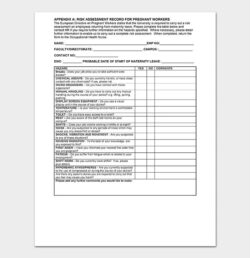
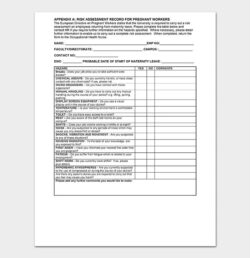
When embarking on a risk assessment, a systematic approach is essential. A good pregnant employee risk assessment template will prompt you to examine various facets of the work environment and the job role itself. This involves not only looking at the obvious physical demands but also subtle environmental factors that could have an impact.
Here are some key areas to consider and investigate:
- Physical Demands: This includes tasks involving manual handling, repetitive movements, prolonged standing or sitting, working at heights, or those requiring unusual postures.
- Chemical Exposure: Assessment of any hazardous substances, fumes, or agents the employee may come into contact with, and ensuring compliance with exposure limits.
- Biological Agents: Risks from infections, viruses, or bacteria, especially in healthcare or laboratory settings.
- Working Environment: Factors such as extreme temperatures (hot or cold), noise levels, radiation exposure, or vibration.
- Workplace Stress and Mental Well-being: Considering workload, working hours, and any potential for stress, anxiety, or bullying, which can be heightened during pregnancy.
- Working Hours and Patterns: Evaluating the impact of night shifts, long hours, or irregular working patterns on a pregnant employee’s health and fatigue levels.
- Display Screen Equipment (DSE) Usage: Ensuring ergonomic workstations and regular breaks to prevent discomfort or strain.
By methodically addressing these areas, employers can identify specific risks and implement the necessary control measures. This proactive approach not only fulfills legal obligations but also demonstrates a genuine commitment to the well-being of the employee, fostering trust and a supportive work culture. The use of a structured pregnant employee risk assessment template is instrumental in ensuring no critical area is overlooked.
Steps to Effectively Use a Pregnant Employee Risk Assessment Template
Utilizing a pregnant employee risk assessment template effectively involves more than just filling in blanks; it requires a thoughtful, collaborative, and ongoing process. The first crucial step is open communication. As soon as an employee informs you of their pregnancy, initiate a private and supportive conversation. This allows them to raise any concerns they might have and provides you with the necessary information to begin the assessment process tailored to their specific needs and job role.
Once initial communication has been established, the next phase involves systematically working through your chosen pregnant employee risk assessment template. This means identifying potential hazards within their specific work environment and tasks, evaluating the level of risk these hazards pose, and then deciding on appropriate control measures. Remember, the goal is to eliminate risks where possible, and if not, to reduce them to an acceptable level. This might involve adjusting working hours, modifying tasks, providing ergonomic equipment, or even temporarily reassigning duties.
Here are the practical steps to take:
- Inform and Discuss: As soon as you are notified of a pregnancy, schedule a confidential meeting with the employee to discuss potential concerns and their specific needs.
- Identify Hazards: Use the template to systematically review the employee’s role, work environment, and any substances or activities they encounter. Think about physical, chemical, biological, and psychological hazards.
- Assess Risks: Evaluate the likelihood and severity of harm from each identified hazard specifically for a pregnant individual.
- Implement Control Measures: Based on your assessment, put into place reasonable adjustments. This could range from providing more frequent breaks, adjusting shifts, to modifying equipment or reassigning tasks.
- Document Everything: Keep clear records of the assessment, identified risks, actions taken, and communication with the employee. This is vital for legal compliance and future reference.
- Review Regularly: Pregnancy is a dynamic state. The assessment should be reviewed as the pregnancy progresses, after significant changes in the work environment, or if the employee reports new concerns.
Remember that flexibility and empathy are key throughout this process. What might be a minor inconvenience in early pregnancy could become a significant challenge later on. Regularly reviewing the assessment and maintaining an open dialogue ensures that the support provided remains relevant and effective, adapting as the employee’s needs evolve during their pregnancy journey.
Creating a safe and supportive workplace for pregnant employees is not merely about adhering to legal mandates; it’s about cultivating an environment where every individual feels valued and protected. A well-executed risk assessment process, guided by a comprehensive template, empowers employers to proactively identify and mitigate potential hazards, ensuring the well-being of both the mother and the developing child.
By consistently applying these principles, businesses not only safeguard their pregnant staff members but also enhance their reputation as responsible and considerate employers. This commitment to employee welfare contributes significantly to a positive workplace culture, fostering loyalty and productivity long after the employee returns from parental leave.