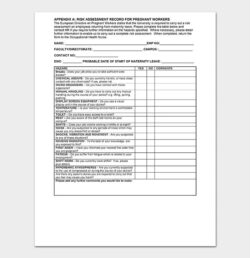
Navigating the journey of pregnancy is a significant life event, and for many, it happens while continuing their professional life. Ensuring a safe and supportive working environment for pregnant employees is not just a legal obligation but also a fundamental aspect of fostering a caring and inclusive workplace culture. Employers have a crucial responsibility to protect the health and safety of pregnant workers and their unborn children from any potential risks that may arise in their work environment.
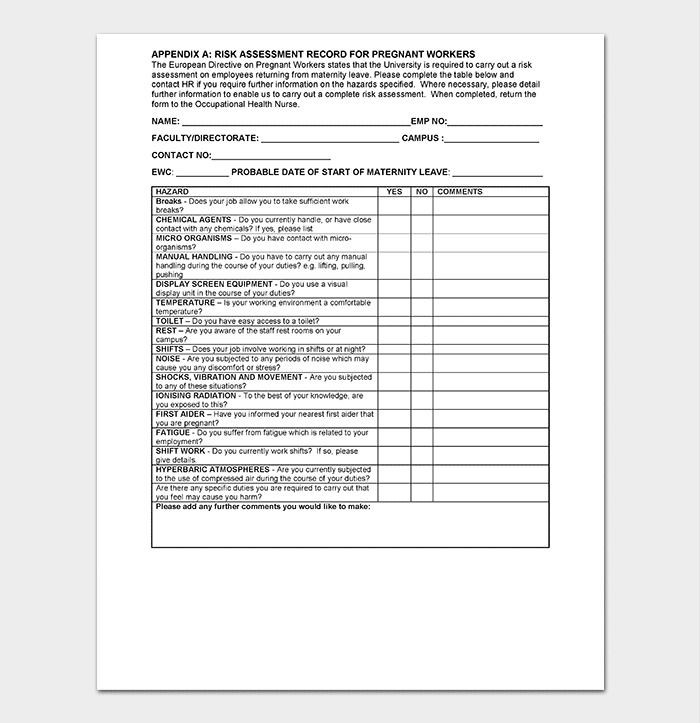
This commitment to safety often begins with a thorough and proactive approach to identifying and mitigating hazards. A well-structured pregnancy workplace risk assessment template can serve as an invaluable tool for organizations to systematically evaluate potential dangers, implement necessary control measures, and provide the assurance that expectant mothers are fully supported during this special time. It helps ensure compliance with health and safety regulations while demonstrating genuine care for employee well-being.
Why a Pregnancy Workplace Risk Assessment is Crucial
For any organization, understanding and acting upon the specific needs of pregnant employees is paramount. A workplace can present various hazards that might typically be manageable for other employees but could pose a greater risk to an expectant mother or her developing baby. From exposure to certain chemicals or biological agents to physical demands or prolonged standing, the range of potential risks is broad and diverse, necessitating a careful and tailored evaluation.
Without a systematic assessment, these potential dangers might go unnoticed, leading to adverse health outcomes for the employee or their child, and potentially legal repercussions for the employer. Conducting a dedicated risk assessment allows employers to proactively identify these specific hazards. It means looking at the job role through a different lens, considering how standard tasks or the work environment itself might need adjustments to accommodate the physiological changes and vulnerabilities associated with pregnancy.
This process involves more than just a quick check; it requires a detailed review of all aspects of the job. It’s about being thorough and thoughtful, making sure no stone is left unturned when it comes to the safety and comfort of an expectant worker. The assessment aims to minimize or eliminate risks, ensuring that the employee can continue to work safely and without undue stress or danger.
Key Areas to Consider in Your Assessment
- Physical Strain: Lifting heavy objects, excessive bending, prolonged standing or sitting, working at heights.
- Chemical Exposure: Contact with solvents, pesticides, cleaning agents, or other hazardous substances.
- Biological Agents: Risk of exposure to infections, viruses, or bacteria common in healthcare or laboratory settings.
- Ergonomic Risks: Poor workstation setup, repetitive tasks that cause strain.
- Psychological Stress: High pressure, demanding deadlines, long working hours, lack of control over work.
- Environmental Factors: Extreme temperatures, noise, radiation, vibration.
- Working Hours and Patterns: Night shifts, extended hours, irregular schedules.
- Lone Working: Tasks performed alone where immediate assistance might not be available.
- Access to Facilities: Adequate rest areas, accessible toilets, facilities for expressing milk.
Ultimately, a comprehensive pregnancy workplace risk assessment isn’t just about ticking a box; it’s about creating an environment where pregnant employees feel safe, valued, and fully supported. It allows organizations to make informed decisions about reasonable adjustments, alternative duties, or even temporary changes in working patterns, all aimed at protecting the well-being of the mother and child while maintaining productivity.
Implementing Your Pregnancy Workplace Risk Assessment Template
Once an employee informs their employer of their pregnancy, the process of conducting a risk assessment should commence promptly. This isn’t a one-time activity but rather an ongoing commitment that adapts as the pregnancy progresses and the employee’s needs evolve. The key to successful implementation lies in clear communication, active participation from the pregnant employee, and a structured approach, which is precisely where a robust pregnancy workplace risk assessment template proves its worth.
The initial step involves clearly identifying the employee and their specific job role, including all tasks, responsibilities, and the environment in which they operate. Following this, a detailed review of their job is undertaken, comparing it against known potential risks for pregnant workers. This systematic approach ensures that nothing is overlooked and that the assessment is tailored to the individual’s circumstances, not just a generic overview.
Crucially, the pregnant employee must be an active participant in this process. Their input is invaluable as they are best placed to articulate how their work affects them personally and to voice any specific concerns or discomforts they might be experiencing. Their feedback helps to ensure that the assessment is truly effective and that any proposed control measures are practical and appropriate for their situation.
Here are the general steps typically followed when utilizing a pregnancy workplace risk assessment template:
- Consult the Employee: Discuss their role, any existing health conditions, and their concerns.
- Identify Potential Hazards: Review all aspects of their work environment and tasks that could pose a risk.
- Evaluate the Risks: Determine the likelihood and severity of harm from each identified hazard.
- Implement Control Measures: Put in place actions to eliminate or reduce the risks, such as adjusting duties, providing protective equipment, or changing working patterns.
- Review and Update Regularly: The assessment should be reviewed as the pregnancy progresses, after any changes in the workplace, or if the employee reports new concerns.
Once risks are identified, the next critical phase is to implement effective control measures. This might involve simple adjustments like providing a more ergonomic chair or additional rest breaks, to more significant changes such as temporary redeployment to a different role with fewer hazards. Documentation of these steps is essential for compliance and to demonstrate due diligence. A well-maintained pregnancy workplace risk assessment template not only guides these actions but also provides a clear record of the process, ensuring consistency and accountability.
Ensuring the safety and well-being of pregnant employees goes beyond initial assessments; it requires ongoing vigilance and a willingness to adapt. By proactively using a structured approach, organizations can foster a workplace where all employees feel secure and supported. This commitment translates into a more positive and inclusive work environment for everyone.
Investing in comprehensive safety measures for expectant parents in the workplace is a testament to an organization’s values and its dedication to its people. It’s about building a foundation of trust and respect, ensuring that employees feel valued and protected during one of life’s most significant transitions. This proactive approach not only safeguards individual health but also strengthens the overall fabric of the company culture.