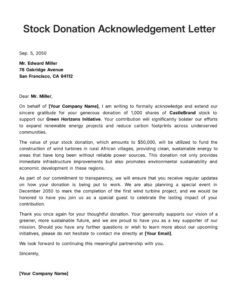
Donating to a worthy cause offers immense satisfaction, knowing you’ve contributed to something meaningful. Beyond the altruistic reward, these generous acts can also provide financial benefits when it comes to tax time. Many individuals and businesses overlook potential tax savings simply because they lack the proper documentation for their charitable contributions. This is where a well-structured tax write off donation letter template becomes an invaluable asset.
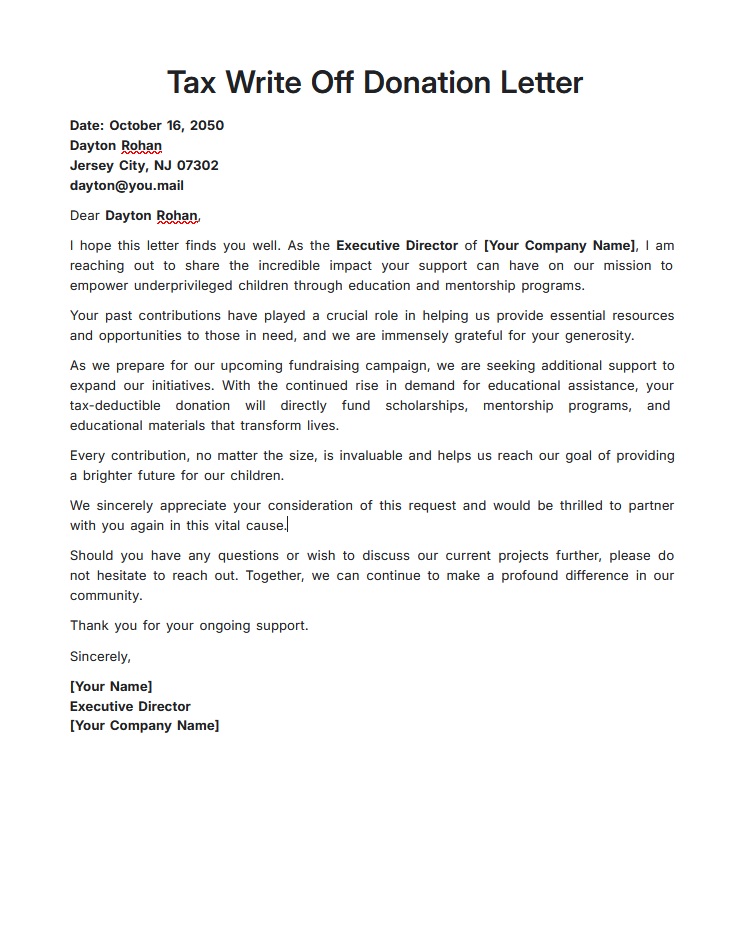
Securing the correct documentation for your donations is not just good practice; it’s a requirement from the IRS if you plan to claim those contributions as deductions. Without official proof, your generous gifts might not translate into the tax savings you deserve. Understanding what constitutes acceptable proof and how to obtain it is crucial for maximizing your charitable deductions.
This comprehensive guide will walk you through the specifics of what the IRS expects, the essential elements your donation acknowledgment needs, and provide guidance on creating or utilizing an effective tax write off donation letter template. We’ll also highlight common pitfalls to avoid, ensuring your charitable giving provides both societal benefit and personal financial advantage.
Understanding IRS Requirements for Charitable Contribution Deductions
Claiming charitable contributions as tax deductions can reduce your taxable income, potentially leading to a lower tax bill. However, the Internal Revenue Service (IRS) has strict rules about what qualifies as a deductible donation and what documentation is necessary. Knowing these regulations upfront helps ensure your generosity is fully recognized.
Who Can Claim Charitable Tax Deductions?
Generally, individuals and businesses can claim deductions for contributions made to qualified charitable organizations. These organizations must be recognized by the IRS as tax-exempt under Section 501(c)(3) of the Internal Revenue Code. Before making a substantial donation, it’s always wise to verify the charity’s status with the IRS. You can typically do this using the IRS Tax Exempt Organization Search tool.
To claim a deduction, you must itemize your deductions on Schedule A (Form 1040) rather than taking the standard deduction. Millions of Americans itemize, finding that their total deductions, including charitable giving, exceed the standard deduction amount. This makes careful record-keeping even more important.
When is a Donation Letter Required by the IRS?
A contemporaneous written acknowledgment (often called a donation letter or receipt) from the charity is required for any single contribution of $250 or more. This applies to both cash and non-cash donations. If you made multiple smaller donations that individually total less than $250 but collectively are substantial, you still need proper records for each.
For cash contributions under $250, you typically need a bank record (like a canceled check or credit card statement) or a written communication from the charity showing the name of the organization, the date, and the amount of the contribution. Without this essential documentation, the IRS may disallow your deduction, even if the contribution was genuinely made.
Differentiating Between Cash and Non-Cash Contributions
The IRS has specific rules for valuing and documenting different types of charitable gifts. Cash contributions are straightforward, referring to donations made by check, credit card, electronic funds transfer, or actual currency. The amount deductible is generally the amount of the contribution.
Non-cash contributions include items like clothing, household goods, vehicles, stock, or real estate. For these, you can deduct the fair market value of the property at the time of the donation. If the non-cash donation is valued over $500, you may also need to file IRS Form 8283, Noncash Charitable Contributions, and for items over $5,000, a qualified appraisal is usually necessary.
Key Components of an Effective Tax Write Off Donation Letter Template
Having a reliable tax write off donation letter template is crucial for both donors and non-profits. This template ensures that all necessary information is captured, complying with IRS substantiation rules. Failing to include specific details can lead to disallowed deductions, so precision is key.
Essential Information from the Charity
Every compliant donation acknowledgment letter must clearly identify the charitable organization. This includes its full legal name, address, and its Employer Identification Number (EIN). The EIN verifies the charity’s tax-exempt status, which is vital for your deduction.
The letter should also state the date the contribution was received. This helps establish the tax year for which the deduction can be claimed. Furthermore, the letter must include a statement that no goods or services were provided by the charity in exchange for the contribution, or if they were, a good-faith estimate of their value. This ensures that only the truly charitable portion of your donation is deducted.
Details to Include About Your Donation
For cash contributions, the exact amount of the donation must be clearly stated in the letter. For non-cash contributions, the letter needs to include a description of the property donated, but not its value. It is the donor’s responsibility to determine the fair market value of non-cash donations, especially for items over $500.
The date of the contribution is also paramount. If you made multiple donations throughout the year, each separate contribution of $250 or more requires its own acknowledgment or a single letter detailing all contributions made within that calendar year. This careful logging helps keep your records pristine.
Special Considerations for Quid Pro Quo Contributions
A “quid pro quo” contribution occurs when a donor receives goods or services in exchange for a donation that exceeds $75. For example, if you pay $100 for a dinner ticket to a charity event, and the dinner itself is valued at $40, then only $60 of your contribution is tax-deductible. The charity must provide a written disclosure statement for such events.
The disclosure statement from the charity must inform you that the amount deductible for federal income tax purposes is limited to the excess of the contribution over the value of the goods or services provided. It must also include a good-faith estimate of the value of those goods or services. This ensures transparency and helps you accurately calculate your deduction.
Best Practices for Using Your Donation Letter Template
Beyond merely obtaining a tax write off donation letter template, understanding how to effectively use and manage your documentation is paramount. Proactive record-keeping and careful attention to detail can save you considerable hassle and potential tax liabilities down the line.
Maintaining Accurate Records for Tax Purposes
Good record-keeping is the cornerstone of successful tax deduction claims. It’s not enough to simply receive a donation letter; you must keep it in a safe, accessible place. Digital copies, along with physical ones, are often recommended. Consider creating a dedicated folder for all your charitable contribution receipts and letters.
For non-cash donations, keep detailed inventories, photographs, and any valuation records. For instance, if you donate a vehicle, retain all documentation related to its sale by the charity. The IRS requires you to maintain records for at least three years from the date you file your original return or two years from the date you paid the tax, whichever is later.
Requesting a Timely Acknowledgment from Non-Profits
While charities are generally diligent about providing donation letters, it’s ultimately the donor’s responsibility to ensure they receive one. If you’ve made a donation of $250 or more and haven’t received a letter within a reasonable timeframe (e.g., a few weeks), reach out to the organization. The acknowledgment must be “contemporaneous,” meaning you must receive it by the earlier of the date you file your tax return for the year of the contribution or the due date (including extensions) for filing that return.
Be clear in your request, providing details about the donation date, amount, and type. Most non-profits understand the importance of these letters for tax purposes and will readily provide them. Establishing good communication with the charities you support can streamline this process significantly.
Common Pitfalls to Avoid with Donation Deductions
One common mistake is failing to verify the charity’s tax-exempt status. Donating to an organization that isn’t a qualified charity means your contribution won’t be deductible. Another pitfall is deducting the full amount of a quid pro quo contribution without subtracting the value of benefits received.
Many donors also forget to properly document non-cash contributions, especially regarding their fair market value. Guessing the value of donated goods can lead to discrepancies with the IRS. Always err on the side of caution, seeking appraisals for higher-value items and keeping meticulous records for everything else. Understanding and avoiding these common errors ensures your generous acts are properly acknowledged for tax benefits.
Claiming tax deductions for your charitable contributions can be a rewarding aspect of your financial planning. By understanding IRS requirements and utilizing an effective tax write off donation letter template, you empower yourself to accurately document your generosity. This diligence not only ensures compliance but also maximizes your potential tax savings.
Taking the time to obtain and organize proper documentation provides peace of mind and simplifies the tax filing process. Be proactive in your record-keeping and communicate effectively with the charities you support. Your thoughtful planning will ensure that your donations benefit both the causes you care about and your financial well-being.