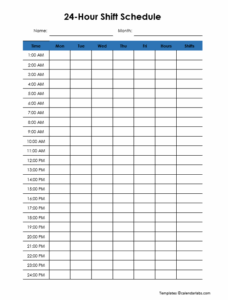
Running an operation that never sleeps presents a unique set of challenges, especially when it comes to staffing. Whether you manage a hospital, a manufacturing plant, a security team, or any other continuous service, ensuring you have the right people in the right place at all times is paramount. The complexity of balancing employee needs, operational demands, and regulatory compliance can often feel overwhelming, leading to exhaustion for managers and staff alike.
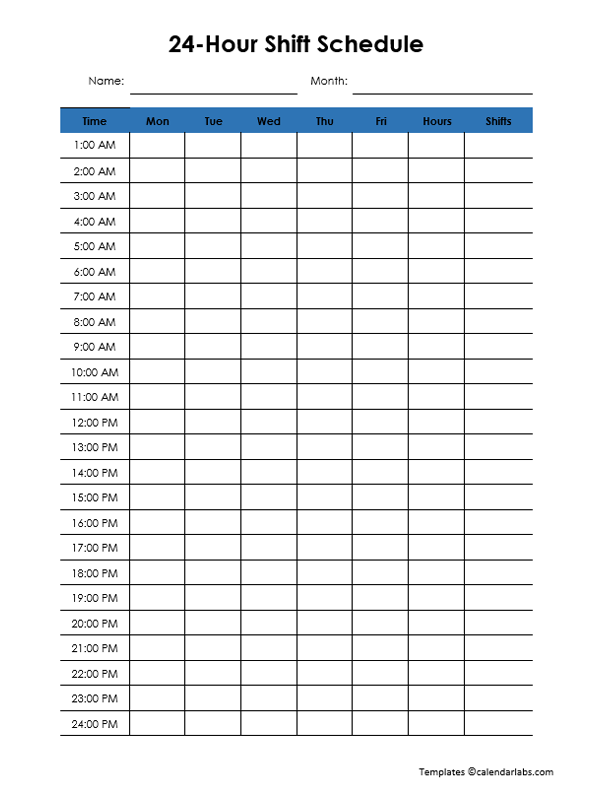
This is where a robust and thoughtful approach to scheduling becomes not just helpful, but essential. A well-designed 24 hour shift schedule template can be the cornerstone of your operational efficiency, promoting fairness among employees, reducing errors, and ensuring seamless transitions between shifts. It’s about creating clarity and consistency in an environment that naturally operates around the clock.
The Core Components of an Effective 24-Hour Shift Schedule
Designing a schedule that caters to a 24-hour operation is far more intricate than simply filling slots. It requires careful consideration of various factors to ensure both employee well-being and peak operational efficiency. A truly effective 24-hour shift schedule template takes into account not just when people work, but also how their work impacts their rest, health, and overall job satisfaction. Overlooking these details can lead to burnout, decreased productivity, and higher turnover rates.
The goal is to create a rhythm that sustains itself without constant intervention, allowing for predictable work-life balance for employees while guaranteeing coverage for all critical functions. This balance often involves navigating different shift durations, rotation patterns, and how breaks and handovers are managed. Understanding the foundational elements that contribute to a resilient schedule is the first step towards building a system that works for everyone involved.
Consider the different ways shifts can be structured and the implications of each choice. The pattern you select will significantly influence employee morale, fatigue levels, and the overall stability of your operation.
Understanding Different Shift Patterns
- Fixed Shifts: Employees work the same shift every day or week (e.g., permanent day, evening, or night shifts). This offers predictability but can lead to imbalances in preferred shifts.
- Rotating Shifts: Employees cycle through different shifts over a period (e.g., day, evening, night). This ensures fairness but requires careful management to prevent excessive fatigue. Common examples include the DuPont schedule (four teams, 12-hour shifts, rotating between days, nights, and rest days) or the Pitman schedule (two days on, two nights on, four days off).
- Compressed Workweeks: Employees work full-time hours in fewer than five days (e.g., four 10-hour shifts or three 12-hour shifts), often allowing for longer periods of rest.
Ultimately, the best pattern for your organization will depend on industry specifics, employee preferences, and regulatory requirements. A flexible 24 hour shift schedule template allows you to visualize and experiment with these patterns, ensuring you find the right fit that balances all critical needs and maintains a healthy, productive workforce around the clock.
Implementing and Customizing Your 24-Hour Shift Schedule Template
Once you grasp the fundamental components of various 24-hour shift patterns, the next crucial step is to adapt a generic template to fit your unique operational context. No two organizations are exactly alike, and what works perfectly for one might be completely unsuitable for another. This customization process involves a detailed understanding of your team’s specific requirements, skills, and availability, as well as the fluctuating demands of your operational environment.
The real power of a template lies in its adaptability. It provides a structured starting point, a framework upon which you can build a schedule that truly reflects the nuances of your business. This means moving beyond just assigning names to slots and delving into the specifics of roles, responsibilities, and even individual preferences where possible. The more accurately your template reflects these realities, the more effective and sustainable your schedule will be.
To customize your 24 hour shift schedule template effectively, you’ll need to gather specific information and be prepared to populate the template with detailed data. Here are some key elements you’ll want to include:
- Staff Names and Contact Information: Essential for easy communication and quick reference.
- Designated Shift Times: Clearly defined start and end times for each shift (e.g., 0600-1400, 1400-2200, 2200-0600), ensuring everyone knows when they’re expected.
- Roles and Responsibilities for Each Shift: Specifying who is responsible for what tasks helps in seamless handovers and accountability.
- Break Schedules: Mandatory breaks need to be clearly outlined and factored into coverage.
- On-Call or Standby Rotations: If applicable, these need to be integrated to ensure continuous support outside of regular shifts.
- Leave and Holiday Tracking: A clear system to mark approved time off prevents scheduling conflicts and ensures adequate staffing.
Modern scheduling software can greatly assist in this customization process, offering drag-and-drop interfaces, automated conflict detection, and easy distribution to your team. Regardless of the tools you use, the emphasis should always be on creating a schedule that is clear, equitable, and easy to understand for everyone involved.
Embracing a well-structured approach to your 24-hour staffing needs significantly streamlines operations and fosters a more harmonious working environment. By taking the time to implement and customize a schedule that truly fits your organization, you’re investing in both your team’s well-being and your continued success. This proactive approach minimizes confusion, enhances communication, and ensures that your critical services run smoothly, day in and day out.