Dealing with an insurance claim denial can be incredibly frustrating and disheartening. You’ve paid your premiums, and when you need your insurance company most, they might refuse to cover your damages or losses. Fortunately, a denial isn’t always the final word, and you have the right to appeal their decision.
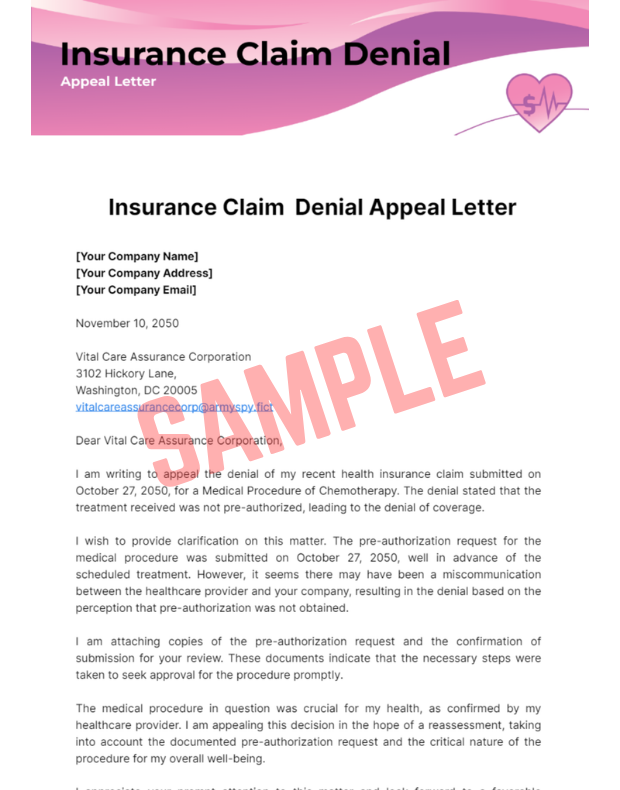
A well-crafted letter is often your first and most effective step in challenging an insurer’s ruling. This is where an insurance claim dispute letter template becomes an invaluable tool. It provides a structured approach to articulate your case clearly and professionally, significantly increasing your chances of a successful appeal.
This comprehensive guide will walk you through the process of understanding claim denials, gathering the necessary evidence, and utilizing an effective insurance claim dispute letter template. By the end, you’ll feel more confident in advocating for the coverage you deserve.
Understanding Common Reasons for Insurance Claim Denials
Before you can effectively dispute a claim, it’s crucial to understand why your insurance company might have denied it in the first place. Insurers have various reasons for rejecting claims, and identifying the specific one impacting you is the first step toward a successful appeal. Knowledge of these reasons empowers you to directly address their concerns in your appeal letter.
Typical Causes for a Denied Insurance Claim
Insurance companies might deny a claim for several common reasons, often outlined in their denial letter. Sometimes, it’s a simple misunderstanding of policy language or a lack of specific documentation. Other times, it could involve more complex interpretations of coverage.
Common reasons include policy exclusions, such as damage from floods if you only have standard homeowner’s insurance. Another frequent cause is insufficient documentation, where the insurer believes you haven’t provided enough evidence to support your loss. Delays in reporting the claim can also lead to denial, as policies often have strict reporting deadlines.
How to Interpret Your Insurance Policy and Denial Letter
Your insurance policy is the contract between you and your insurer, detailing what is covered and what is not. Carefully reviewing your policy documents, especially the sections pertaining to your specific type of loss, is critical. Look for clauses related to exclusions, deductibles, and reporting requirements.
The denial letter from your insurance company should explicitly state the reason for the denial and reference specific policy provisions. If the reason is unclear, don’t hesitate to call your claims adjuster for clarification. Understanding these details will allow you to tailor your insurance claim dispute letter template to directly counter their arguments.
Gathering Essential Evidence to Support Your Appeal
A strong appeal relies heavily on robust supporting evidence that contradicts the insurer’s reason for denial. This evidence serves to validate your claim and demonstrate why the initial decision should be overturned. Without sufficient proof, your appeal might lack the necessary weight.
Collect all relevant documents, including photographs of damages, police reports, medical records, repair estimates, and receipts for temporary living expenses. If your claim involves damage, obtaining an independent appraisal or expert opinion can significantly strengthen your position. Organize these documents clearly, making them easy to reference in your dispute letter.
Crafting an Effective Insurance Claim Appeal Letter
Once you understand the reasons for your denial and have gathered your supporting evidence, the next step is to compose a compelling appeal letter. The goal of this letter is to present your case logically, persuasively, and professionally, guiding the insurance company towards reconsideration. A structured approach is key to achieving this.
Structuring Your Dispute Letter for Maximum Clarity
A well-structured dispute letter is easy to read and follows a logical flow, making it simple for the claims department to understand your argument. Begin with your contact information, the claim number, and the date. Address the letter to the specific adjuster or the claims department supervisor.
Clearly state that you are appealing a denied claim, referencing the denial letter’s date. Each paragraph should present a single idea, starting with a statement of the issue and then providing your evidence. Maintain a professional and polite tone throughout, even if you feel frustrated.
What to Include in Your Supporting Documentation
Your dispute letter should refer to the evidence you’ve collected, but the actual documents should be attached as exhibits. Do not send original documents; always provide copies. Create a detailed list of all attachments, which can be included at the end of your letter.
This might include photos, videos, written statements from witnesses, medical reports, repair invoices, or expert evaluations. For example, if your insurer denied a roof damage claim, you might include an independent contractor’s report stating the damage was caused by a covered peril. Clearly label each piece of evidence to match the references in your letter.
The Importance of Timeliness and Persistent Follow-Up
Insurance policies often have strict deadlines for filing appeals, so submitting your dispute letter promptly is crucial. Review your denial letter for any stated appeal deadlines and mark them on your calendar. Missing these windows could result in forfeiting your right to appeal.
After sending your letter, follow up with the insurance company to confirm its receipt and inquire about the review process. Keep a detailed log of all communications, including dates, names of individuals spoken to, and summaries of conversations. Persistence, combined with organized record-keeping, significantly improves your chances of a favorable resolution.
Your Comprehensive Insurance Claim Dispute Letter Template
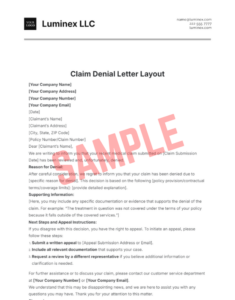
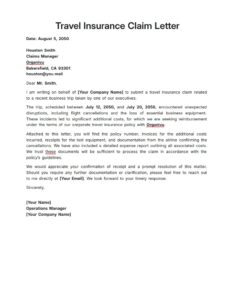
Below is an insurance claim dispute letter template you can adapt for your specific situation. Remember to replace all bracketed information [ ] with your personal details and specific claim information.
[Your Name]
[Your Address]
[Your City, State, Zip Code]
[Your Phone Number]
[Your Email Address]

[Date]

[Insurance Company Name]
[Claims Department Address]
[Claims Department City, State, Zip Code]

Subject: Appeal of Denied Claim – Policy No. [Your Policy Number], Claim No. [Your Claim Number]

Dear [Name of Claims Adjuster or "Claims Department Supervisor"],

I am writing to formally appeal the denial of my claim under policy number [Your Policy Number], specifically claim number [Your Claim Number]. My claim, originally filed on [Date of Original Claim Filing], was for [Brief description of loss, e.g., "water damage to my property," "medical expenses related to an accident"].

I received your denial letter dated [Date of Denial Letter], which stated the reason for denial as [Quote or clearly state the exact reason for denial given by the insurer, e.g., "lack of coverage for flood damage," "insufficient documentation of loss"].

I respectfully disagree with this decision, and I believe my claim should be re-evaluated and approved based on the following points and supporting documentation:

1.  **[Point 1 of your argument]:** For example, "Your denial cites 'lack of coverage for flood damage,' but my policy (Section X, Paragraph Y) clearly defines 'water damage' to include sudden pipe bursts, which was the cause of my loss, not natural flooding."
2.  **[Point 2 of your argument]:** For example, "Contrary to the assertion of 'insufficient documentation,' I have provided comprehensive evidence including photos, repair estimates, and expert assessments. These documents clearly demonstrate the extent of the damage and its direct cause."
3.  **[Point 3 of your argument]:** For example, "Furthermore, the independent appraisal from [Name of Appraiser/Expert] dated [Date of Appraisal] concludes that the damage is consistent with [covered peril], directly refuting your assessment."

Attached to this letter, please find the following supporting documents for your review:

*   Copy of my insurance policy, highlighting relevant sections.
*   Copy of the original claim filing and all related correspondence.
*   Copy of your denial letter dated [Date of Denial Letter].
*   Photographs and videos of the damage, taken on [Dates].
*   Detailed repair estimates from [Name of Repair Company].
*   [Any other relevant documents, e.g., police report, medical records, independent appraisal].

I request that you reconsider my claim based on the evidence provided and the terms of my policy. I am confident that a thorough review will lead to an approval of my claim.

I look forward to your prompt response and a favorable resolution. Please contact me at [Your Phone Number] or [Your Email Address] if you require any further information.

Sincerely,

[Your Signature (if sending hard copy)]

[Your Typed Name]
Successfully navigating an insurance claim dispute requires diligence, organization, and clear communication. By utilizing an insurance claim dispute letter template and meticulously preparing your case, you significantly enhance your chances of overturning an unfavorable decision. Remember, your policy is a contract, and you have rights as a policyholder that you should exercise.
Persistence and a well-reasoned argument are your strongest allies in this process. Do not be discouraged by an initial denial; instead, empower yourself with the knowledge and tools, like this template, to advocate for the coverage you are entitled to.