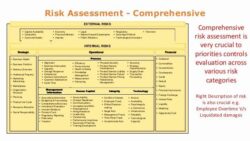
In the ever-evolving financial landscape, banks face a myriad of risks ranging from operational missteps to complex compliance failures. Navigating this intricate environment effectively demands a proactive and systematic approach to risk management. One of the most powerful tools in a bank’s arsenal for achieving this is a robust Risk Control Self Assessment, or RCSA. It empowers institutions to internally evaluate their controls, identify vulnerabilities, and ensure that their defenses against potential threats are as strong as they need to be.

Developing a truly effective RCSA program can seem daunting, especially when considering the sheer volume and complexity of regulations financial institutions must adhere to. This is where a well-designed risk control self assessment template for banks becomes indispensable. It provides a structured framework, guiding teams through the assessment process, ensuring consistency, and ultimately helping to foster a culture of heightened risk awareness across the organization. Let’s explore what makes such a template so valuable and how it contributes to a bank’s overall resilience.
Understanding the Core Components of an Effective RCSA Template
At its heart, a Risk Control Self Assessment is a process where management and staff, who are closest to the day-to-day operations, assess the risks inherent in their activities and the effectiveness of the controls in place to mitigate those risks. It moves beyond just identifying problems and instead encourages internal stakeholders to own the assessment of their risk landscape. This bottom-up approach offers invaluable insights that might be missed by external audits alone, creating a more comprehensive picture of the bank’s risk profile.
The benefits of a well-executed RCSA are manifold. It enhances risk awareness among employees, leading to better decision-making and a stronger control environment. Furthermore, it serves as crucial evidence for regulators that a bank is actively managing its risks, demonstrating a commitment to sound governance and compliance. Without a clear, consistent approach, however, these benefits can be diluted, which is why a standardized template is so vital.
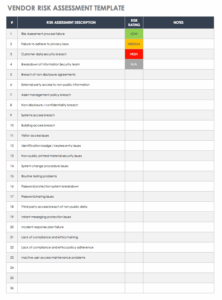
A robust risk control self assessment template for banks is more than just a questionnaire; it is a strategic tool designed to capture a wide array of information systematically. It ensures that all relevant aspects of risk and control are considered, from initial risk identification to the development of actionable remediation plans. Such a template brings structure and clarity to what could otherwise be a fragmented and inconsistent process across different departments.
Key Elements You’ll Find in a Robust Template
These elements collectively ensure that the assessment is thorough and that the insights gained are actionable. By standardizing these components, a bank can aggregate results across departments and obtain a holistic view of its control environment. This structured approach is what transforms a simple assessment into a powerful strategic instrument for risk management.
Implementing and Maximizing Your RCSA Template’s Value
Simply having a sophisticated risk control self assessment template for banks is only half the battle; its true value is unlocked through effective implementation and ongoing commitment. The process should not be viewed as a one-off compliance exercise, but rather as an integral part of a bank’s continuous risk management cycle. This requires careful planning, dedicated resources, and a clear understanding of what the assessment aims to achieve.
A critical step in maximizing the template’s effectiveness involves thoroughly training the individuals who will be completing the assessments. They need to understand not only how to fill out the template, but also the underlying concepts of risk, control, and the bank’s risk appetite. Consistency in interpretation and application is paramount to ensure that the data collected is accurate and comparable across different business units. Ambiguity can lead to varied results that hinder overall analysis.
Furthermore, a robust review and challenge process is essential. The self-assessment results should not just be passively accepted; they need to be critically evaluated by senior management, risk committees, or internal audit. This independent challenge ensures objectivity, identifies potential biases, and confirms that the assessments accurately reflect the true risk and control environment. It fosters a culture where issues are openly discussed and addressed rather than swept under the rug.
The insights gleaned from completing a risk control self assessment template for banks should then feed directly into other risk management activities. This includes updating risk registers, informing internal audit plans, adjusting capital allocation, and developing targeted training programs. It also provides valuable input for strategic decision-making, allowing management to make informed choices that balance risk and reward. Regular updates to the template itself are also crucial to reflect changes in the business environment, regulatory requirements, and emerging risks.
The disciplined and consistent use of a well-designed Risk Control Self Assessment template is not merely a regulatory requirement; it is a strategic imperative for any financial institution. It forms the bedrock of a strong internal control framework, equipping banks with the foresight to anticipate potential threats and the agility to respond effectively.
By empowering employees to actively participate in the identification and mitigation of risks, banks can foster a culture of shared responsibility and continuous improvement. This proactive stance significantly enhances operational resilience and safeguards the institution against an increasingly complex and unpredictable financial world.